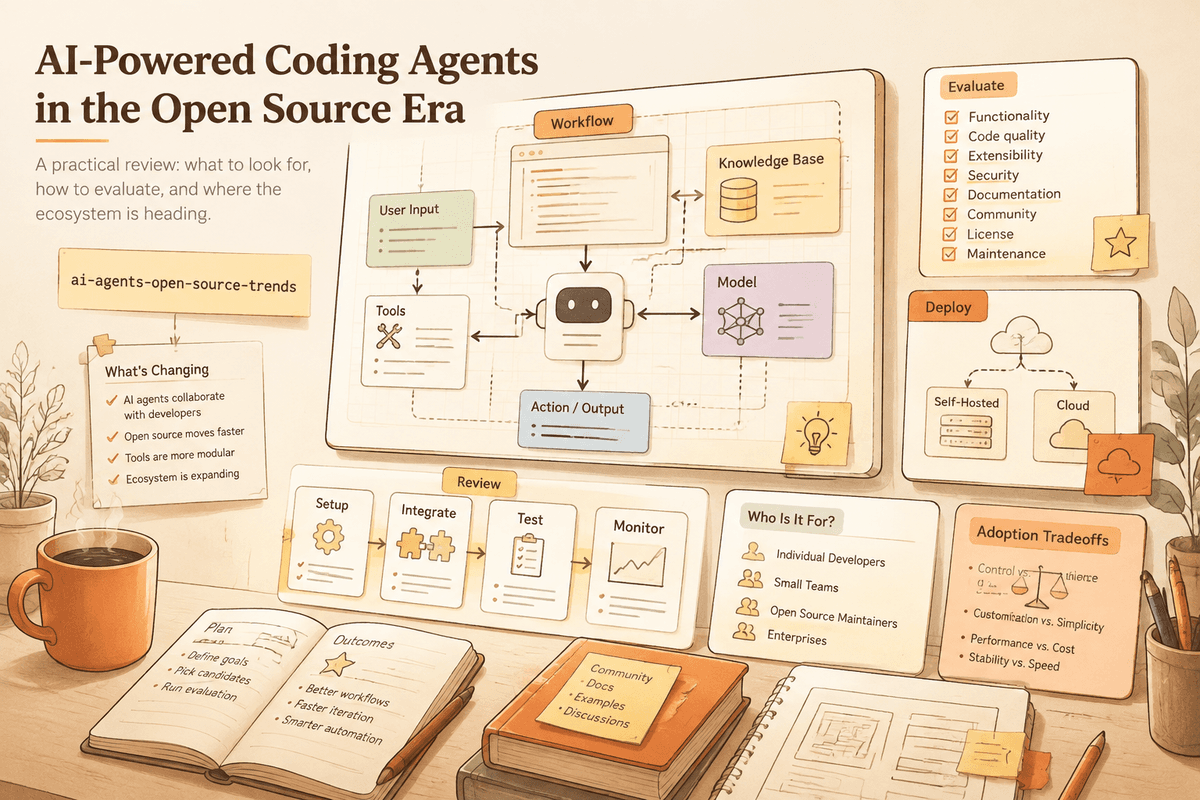
The Rise of AI Agents in Open Source: Trends and Evaluation
How AI-powered coding agents are reshaping the open-source landscape, what to look for when evaluating them, and where the ecosystem is heading.
The open-source ecosystem has experienced a fundamental shift since large language models became broadly accessible. AI agents—autonomous systems that can write code, debug issues, execute multi-step workflows, and interact with development tools—have moved from research curiosities to practical tools used in production environments. GitHub's public repository ecosystem now includes a fast-moving mix of coding agents, workflow agents, and agent-building frameworks.
At Git-Stars, we track this category closely. Here is our analysis of where the ecosystem stands, what distinguishes high-quality agent projects from vaporware, and how to evaluate these tools for your own use.
What Defines an AI Agent
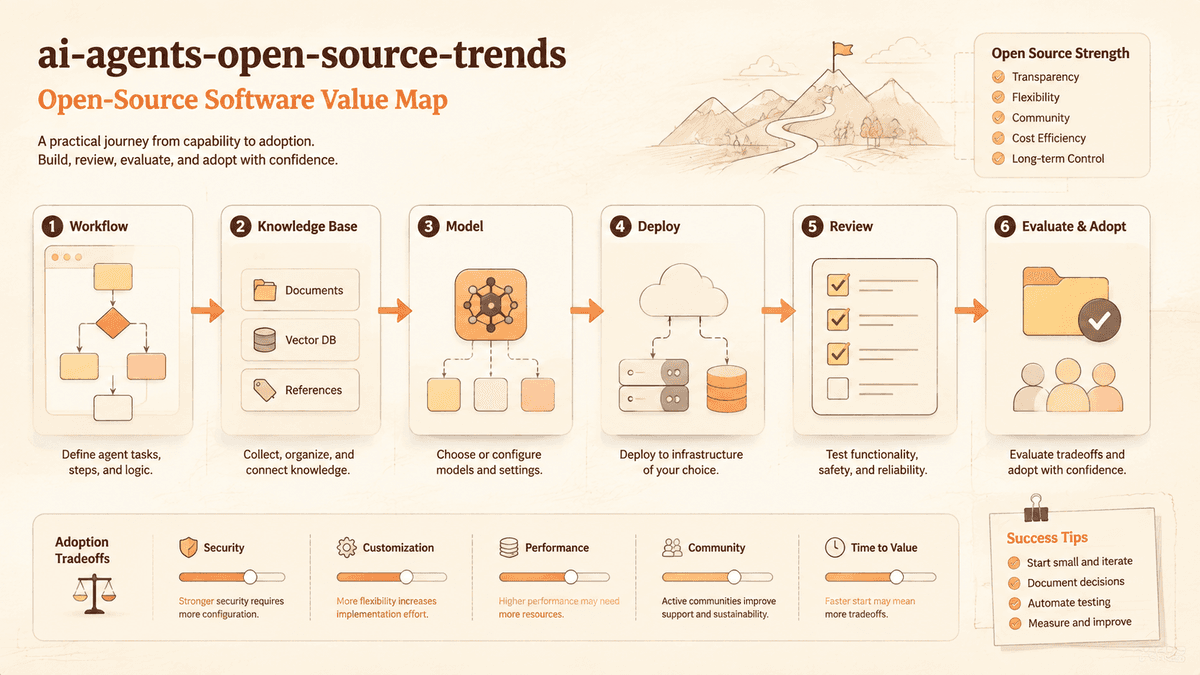
The term "AI agent" has become overloaded to the point of meaninglessness in marketing contexts. For our analysis, we define an agent as software that combines an LLM with tool use—the ability to take actions in an environment beyond generating text. This includes code execution, file system access, API calls, browser automation, and interaction with development infrastructure.
A chatbot that answers questions is not an agent. A system that can receive a bug report, locate the relevant code, write a fix, run tests, and open a pull request—that is an agent. The distinction matters because the evaluation criteria are entirely different.
The Current Landscape
The AI agent ecosystem on GitHub clusters into several categories:
General-purpose coding agents operate across languages and frameworks. They accept natural language instructions and produce working code changes. Projects in this space range from thin wrappers around API calls to sophisticated systems with planning, memory, and self-correction capabilities.
Specialized workflow agents target specific tasks—code review, test generation, documentation, dependency updates, or security scanning. These tend to be more reliable than general-purpose agents because their scope is constrained and their output can be validated programmatically.
Agent frameworks provide the infrastructure for building custom agents—orchestration, memory management, tool integration, and evaluation harnesses. These are tools for tool-builders rather than end-user products.
Multi-agent systems coordinate multiple specialized agents to accomplish complex tasks. One agent might plan the work, another writes code, a third reviews it, and a fourth runs tests. These architectures mirror human team structures.
Agent Ecosystem by Category (August 2026)
| Category | Representative Projects | Maturity | Typical Stars | Best For |
|---|---|---|---|---|
| General-purpose coding | OpenHands, Codex CLI, Claude Code | Production | 50K?00K | Full issue-to-PR automation |
| Specialized workflow | Alibaba Open Code Review, Sweep, Greptile | Growing | 5K?0K | Focused CI/CD integration |
| Agent frameworks | LangGraph, CrewAI, AutoGen | Mature | 30K?0K | Custom agent development |
| Multi-agent orchestration | Archon, MetaGPT | Emerging | 10K?0K | Complex multi-step pipelines |
| Agent skills / guidance | agent-skills, AGENTS.md | New | 10K?0K | Improving agent reliability |
| Personal agents | Hermes Agent, OpenClaw | Fast-growing | 100K?00K | Long-running personal assistants |
Evaluating AI Agent Projects
Traditional repository health metrics apply to agent projects, but additional dimensions matter:
Evaluation infrastructure. Serious agent projects include benchmarks, test suites that exercise the agent against real-world tasks, and metrics beyond simple pass/fail. If a project claims 90 percent accuracy but provides no evaluation methodology, treat that claim skeptically.
Model flexibility. Agent projects tightly coupled to a single model provider create vendor lock-in and limit your ability to optimize cost, latency, and capability for different sub-tasks. Look for projects that abstract the model layer.
Safety and sandboxing. An agent that can execute arbitrary code needs robust sandboxing. Evaluate whether the project runs agent-generated code in isolated containers, whether file system access is scoped, and whether there are guardrails preventing destructive actions. Projects that skip safety considerations are not production-ready.
Cost transparency. Agent workflows consume tokens at scale—a single complex task might require dozens of LLM calls. Projects that provide token usage tracking, cost estimation, and optimization strategies demonstrate production awareness.
Observability. When an agent produces incorrect output, you need to understand why. Look for structured logging of the agent's planning process, tool calls, intermediate results, and decision points. Black-box agents are difficult to debug and improve.
Red Flags in Agent Repositories
Our analysis has identified patterns that correlate with low-quality agent projects:
Repositories that consist primarily of prompts wrapped in minimal code. While prompt engineering matters, a production agent needs error handling, retry logic, context management, and graceful degradation.
Projects that demonstrate only cherry-picked examples without systematic evaluation. Every agent can solve simple problems—the question is how it handles ambiguity, incomplete information, and edge cases.
Extremely rapid release cadences without corresponding test infrastructure. Shipping daily without testing suggests the maintainers are iterating on demos rather than building reliable software.
Claims of "AGI-level" capability or comparisons to human developers without rigorous benchmarks. These are marketing projects, not engineering projects.
Where the Ecosystem Is Heading
Based on public trending signals, repository metadata, and development velocity in this category, we observe several trajectories:
Specialization is winning over generalization. The most successful agent projects focus on doing one thing exceptionally well rather than attempting to handle all possible tasks.
Integration depth is increasing. Early agents operated in isolation—you pasted code in and got code back. Current agents integrate with version control, CI/CD pipelines, project management tools, and deployment infrastructure.
Evaluation is becoming standardized. Shared benchmarks like SWE-bench have given the community common ground for comparing approaches. Projects that publish results on standard benchmarks gain credibility faster.
How We Track This Space
Git-Stars maintains a dedicated AI Agents category for projects that pass our repository classification and editorial review. We score projects on maintenance health, community engagement, documentation quality, and—unique to this category—evaluation rigor. Our goal is to help developers cut through the hype and identify tools that actually work in production contexts.
More Insights
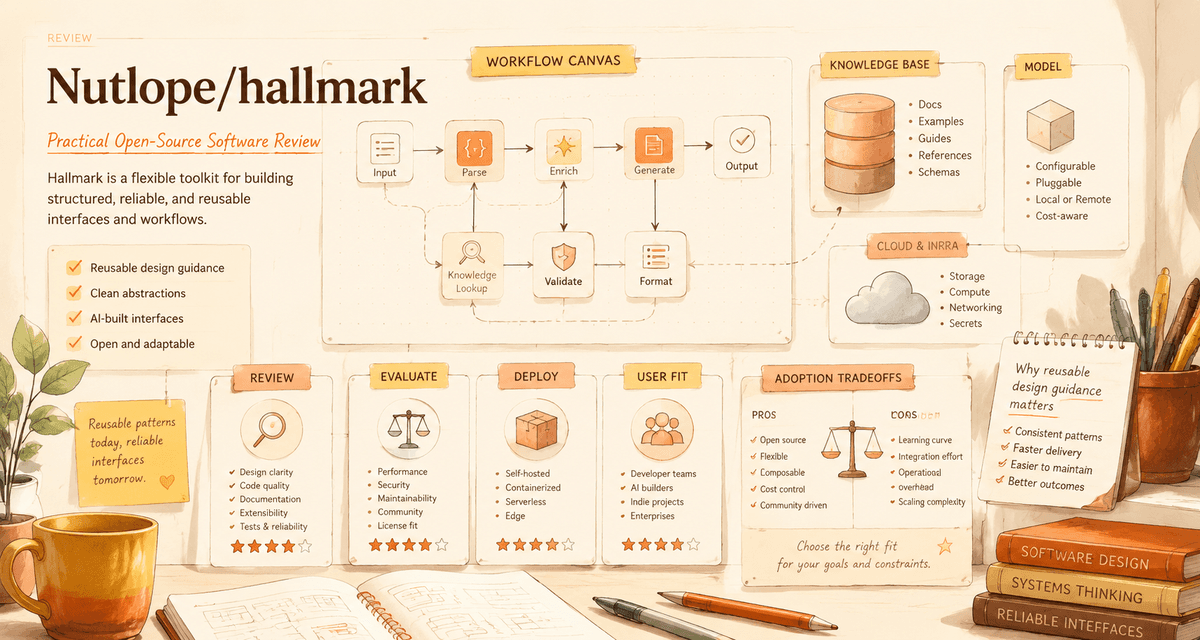
Hallmark and Design Skills: Can Open Source Teach AI Better Taste?
A Git-Stars review of Hallmark, emilkowalski/skills, and why reusable design guidance matters for Codex, Claude Code, and AI-built interfaces.
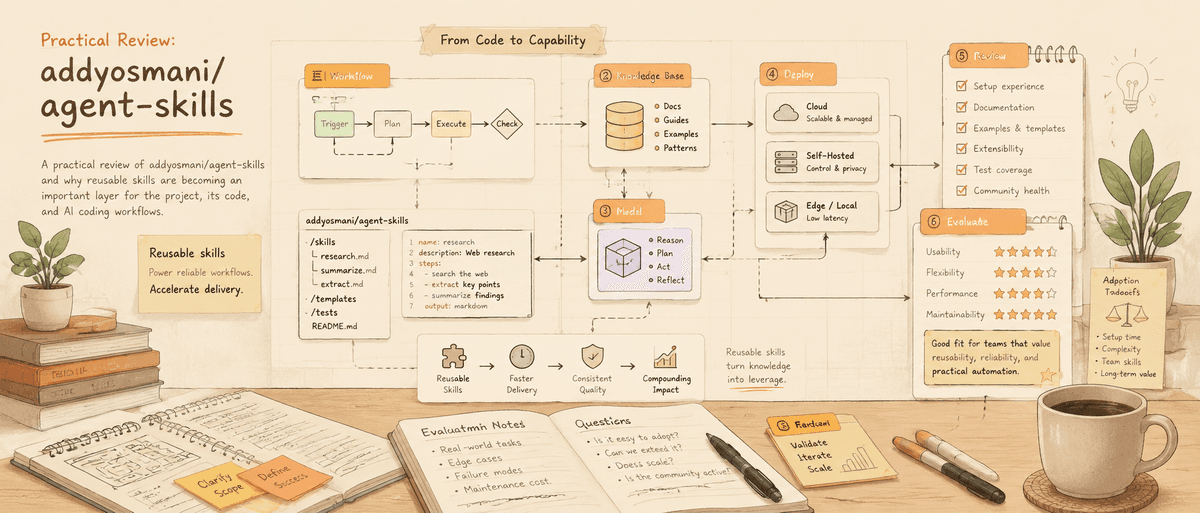
Agent Skills: Why AI Coding Agents Need Reusable Working Memory
A practical review of addyosmani/agent-skills and why reusable skills are becoming an important layer for Codex, Claude Code, and AI coding workflows.
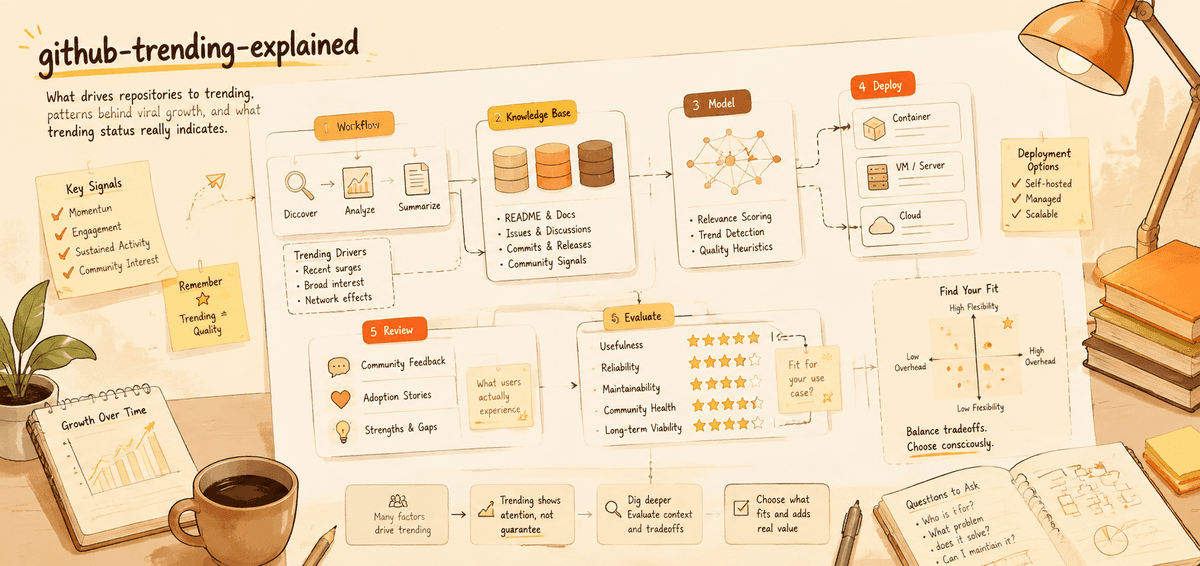
GitHub Trending Explained: How Repositories Go Viral
An analysis of what drives repositories to GitHub's trending page, the patterns behind viral growth, and what trending status actually indicates about project quality.
Newsletter
Join the community
Subscribe to our newsletter for the latest news and updates