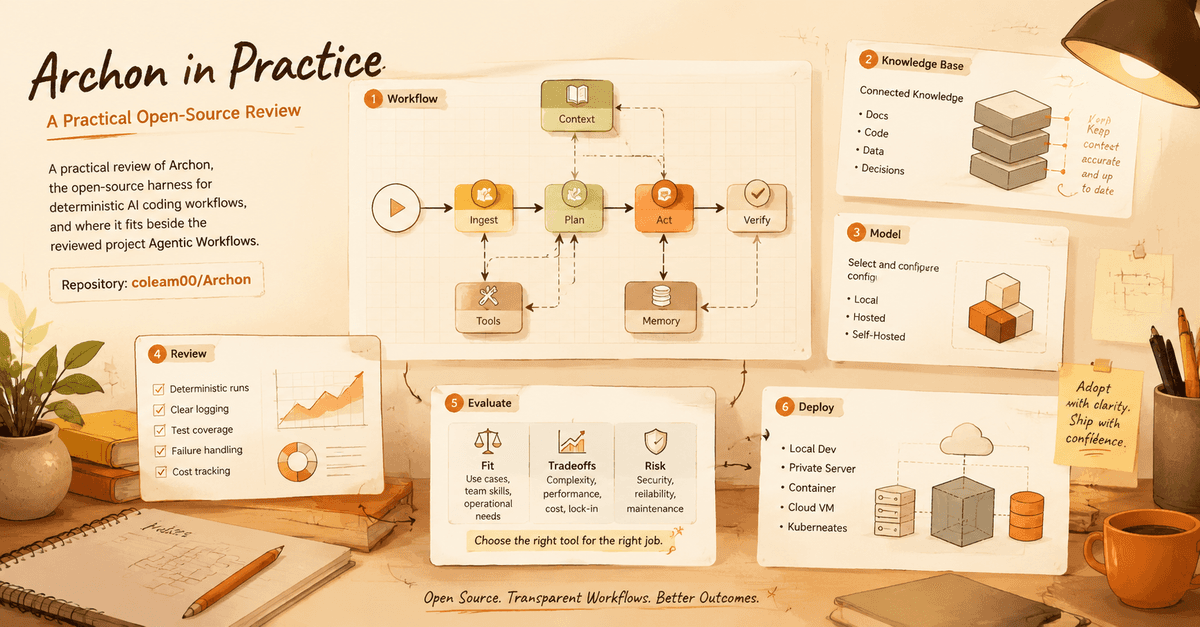
Archon: Can Agentic Coding Workflows Become Repeatable?
A practical review of Archon, the open-source harness for deterministic AI coding workflows, and where it fits beside GitHub Agentic Workflows.
AI coding assistants are useful, but repeatability is still the missing piece. We have seen this firsthand: you ask an agent to fix a bug today and get a plausible result. Tomorrow, the same request follows a different path, skips a check, or produces a patch that is difficult to review. That inconsistency is what keeps most teams from trusting agents for production workflows.
That is the problem Archon tries to address. The project describes itself as an open-source harness builder for AI coding that makes work deterministic and repeatable. TikHub captured a YouTube video comparing Archon with GitHub Agentic Workflows. The video had about 2,457 views and focused on workflow DAGs, isolated branches, pull requests, model choice per step, and starting work from tools such as Slack or GitHub mentions.
When checked on August 13, 2026, Archon had about 23,175 GitHub stars, 3,454 forks, an MIT license, and recent activity.
Why This Is Different From Another Coding Agent
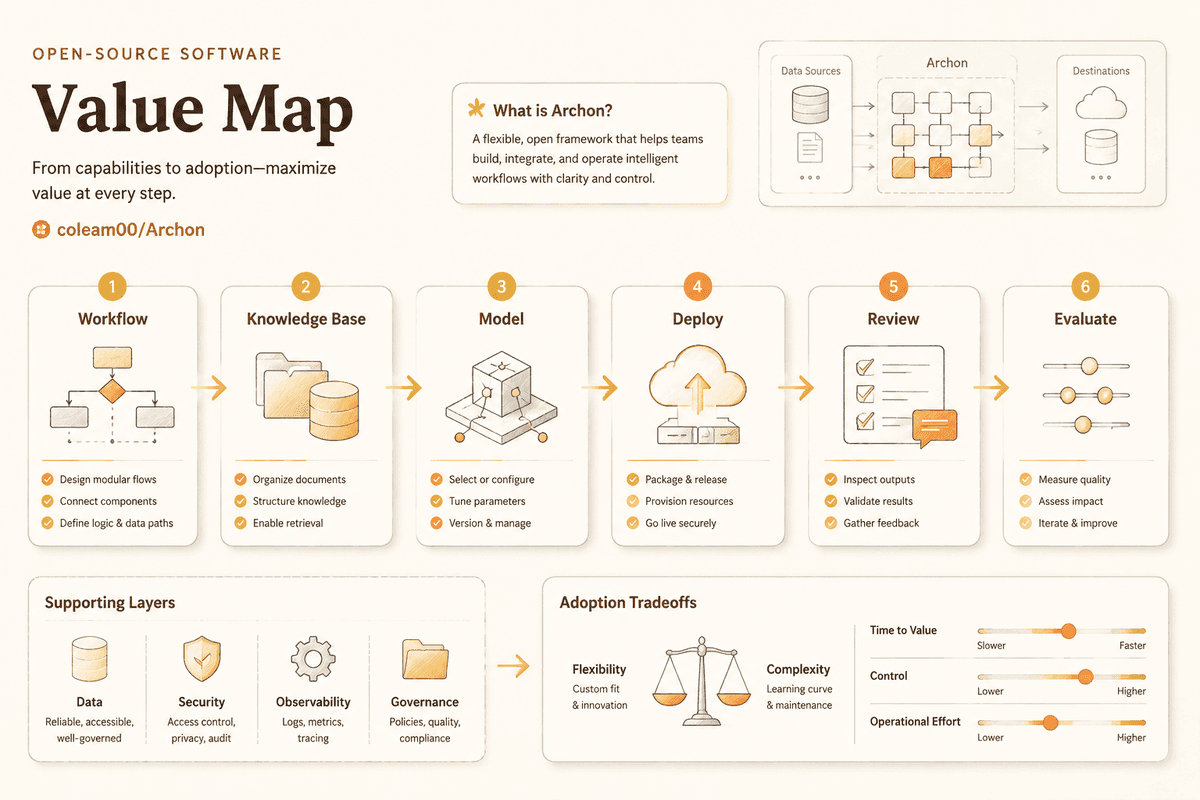
Archon is more interesting as a workflow layer than as a coding personality. The question is not whether it can write code. The question is whether it can make agent work visible, repeatable, and reviewable.
That distinction matters. Teams do not only need an agent that can produce a patch. They need to understand how the patch was produced, which checks ran, which branch contains the work, what human review is expected, and how to avoid conflicts between parallel tasks.
This is where workflow structure matters. A directed workflow, isolated working branches, explicit review steps, and per-node model choices can make agentic coding feel less like improvisation.
What Users and Reviewers Report
Archon evolved significantly in 2026 ?from a PydanticAI agent-builder into a YAML workflow engine for deterministic AI coding. The BetterStack community published a detailed guide describing it as "explicit, auditable, and version-controllable" workflow definitions using YAML DAGs (Directed Acyclic Graphs).
Developers in GitHub Issues and community discussions report that the YAML workflow format eliminates the "black box" feeling of other AI coding tools. One user noted: "I finally know exactly what the agent will do before it does it. No more surprise refactors." The trade-off is that writing YAML workflows requires upfront effort ?you are trading AI spontaneity for engineering predictability.
Community pain points:
- The initial learning curve for YAML DAG syntax is steeper than expected
- Model selection per workflow step is powerful but adds configuration overhead
- Branch isolation works well for single tasks but parallel multi-agent workflows can create merge conflicts
- Documentation is improving but still behind the feature set
The strongest positive feedback: teams using Archon for issue-triage-to-PR pipelines report that PR review time drops because reviewers can see exactly which steps the agent followed. One team described it as "CI for agent work."
Archon vs. Other Agentic Coding Approaches
| Approach | Deterministic | Auditable Steps | Model Choice Per Step | Self-Hosted | Setup Complexity |
|---|---|---|---|---|---|
| Archon (YAML DAGs) | Yes | Yes | Yes | Yes (MIT) | Medium–High |
| GitHub Agentic Workflows | Partial | Yes (Actions logs) | Limited | No (GitHub hosted) | Low–Medium |
| Claude Code /loop | No | Partial | No | Local | Low |
| Raw agent prompting | No | No | Single model | Varies | Low |
| agent-skills | Guided, not enforced | Partial | No | Yes (MIT) | Low |
Deployment Difficulty
Git-Stars score: Medium to High
Archon is not a simple one-command productivity app. It belongs near Git, worktrees, CI, model APIs, and team workflow automation. That makes it more technical than a chat UI, but more structured than raw prompting.
For a solo developer, the first useful test is a small repository with a non-critical issue. The goal should be to observe the workflow rather than maximize automation. Can Archon create an understandable branch? Can it produce a focused pull request? Can the user inspect each step?
For teams, deployment difficulty rises because permissions matter. If an agent can open PRs, trigger workflows, or read private repositories, token scopes and review gates need to be designed carefully.
Commercial Usability
Git-Stars score: High license signal, Medium process risk
Archon reports an MIT license, which is friendly for internal adoption and commercial experimentation.
The commercial risk is process rather than license. Agentic coding workflows can touch source code, CI secrets, issue content, customer bug reports, and deployment pipelines. A company should define which repositories are eligible, which tasks are allowed, which outputs require review, and which credentials the agent never receives.
If that governance exists, Archon can be valuable because it may reduce the chaos of one-off agent prompts. If it does not exist, adding workflow automation may simply make risky behavior faster.
Capability Ceiling
Git-Stars score: High for structured coding work
The ceiling is high when the task can be represented as a repeatable pipeline: triage an issue, inspect the code, run tests, propose a patch, open a PR, and wait for review. That is exactly the kind of work teams want agents to handle without losing control.
The ceiling is lower for ambiguous product decisions, major architecture changes, security-sensitive fixes, and work that needs deep domain context. Those tasks can still use agents, but the workflow should slow down and ask for human checkpoints.
Compared with agent-skills, Archon is more operational. Skills teach the agent how to behave. Archon tries to orchestrate how work flows. Compared with GitHub Agentic Workflows, Archon is an independent open-source path that users can inspect and adapt.
Who Should Try It
Try Archon if you already use AI coding tools and want repeatable issue-to-PR flows. It is especially relevant for teams experimenting with parallel agents, review queues, and automation around GitHub.
Do not use it as a shortcut around code review. The best version of Archon is not "merge whatever the agent writes." It is "make agent work easier to inspect and repeat."
For readers new to repository evaluation, pair this with our deployment difficulty guide. Archon has real value, but only if the surrounding repo and team process are ready for agentic automation.
Git-Stars Verdict
Archon is worth covering because it represents a practical shift in AI coding: from chat-based generation to workflow-based execution. That shift is necessary if agents are going to become part of regular engineering rather than demos.
Its promise is not that AI will write perfect code. Its promise is that AI work can be packaged into a process humans can review. That is a much more useful claim.
More Insights
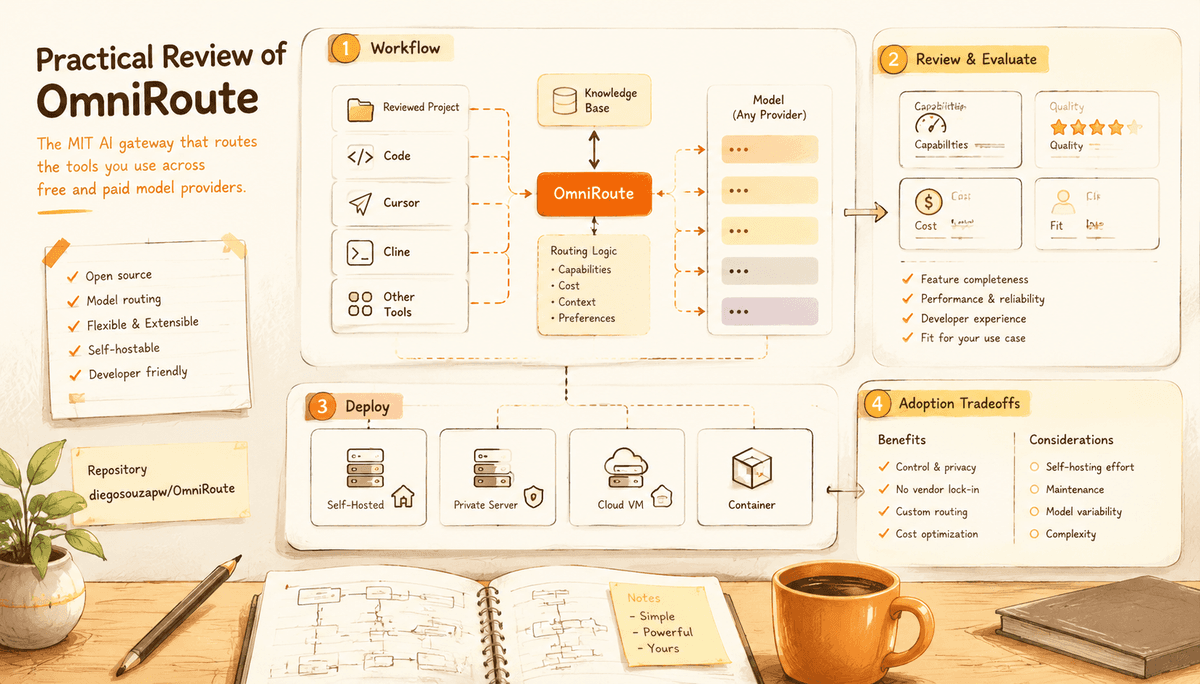
OmniRoute: Can a Free AI Gateway Replace Paid Model Routers?
A practical review of OmniRoute, the MIT AI gateway that routes Codex, Claude Code, Cursor, Cline, and other tools across free and paid model providers.
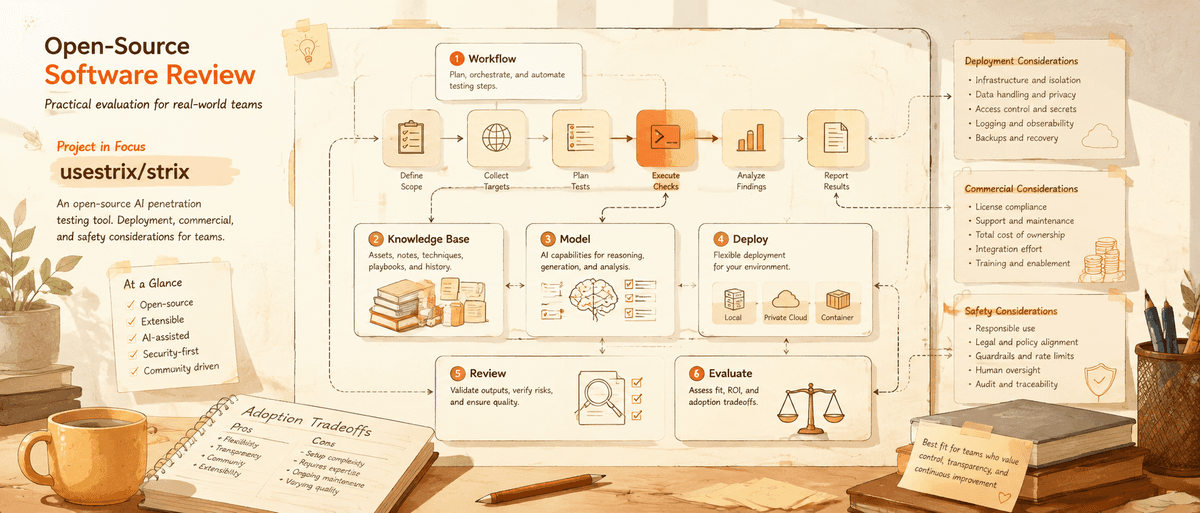
Strix: Where AI Penetration Testing Helps and Where It Needs Guardrails
A practical review of Strix, the open-source AI penetration testing tool, with deployment, commercial, and safety considerations for teams.
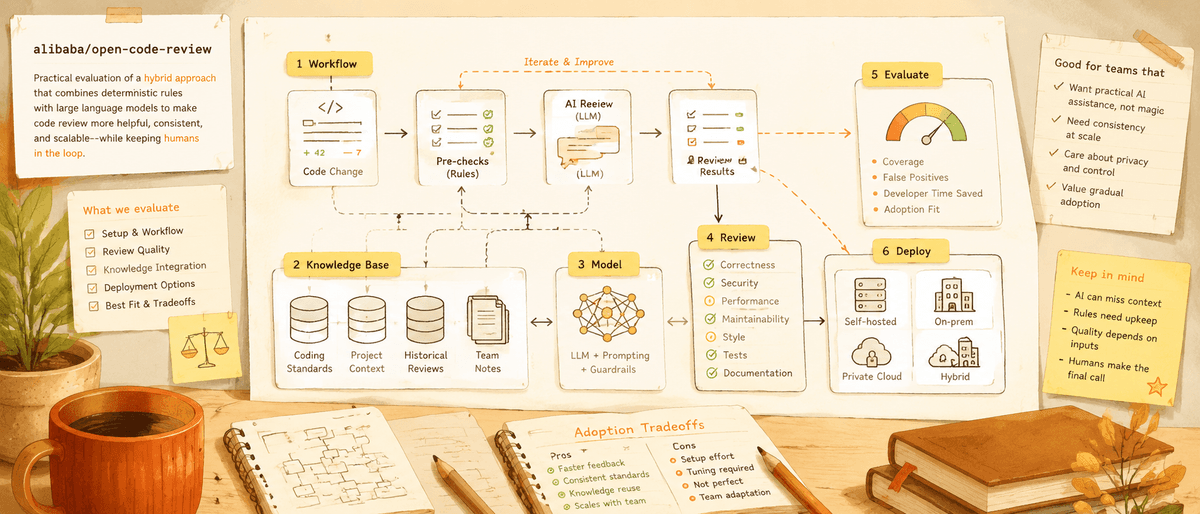
Alibaba Open Code Review: Where AI Review Helps and Where It Should Slow Down
A practical evaluation of Alibaba Open Code Review, its hybrid rules plus LLM approach, and the real limits of AI-assisted code review.
Newsletter
Join the community
Subscribe to our newsletter for the latest news and updates