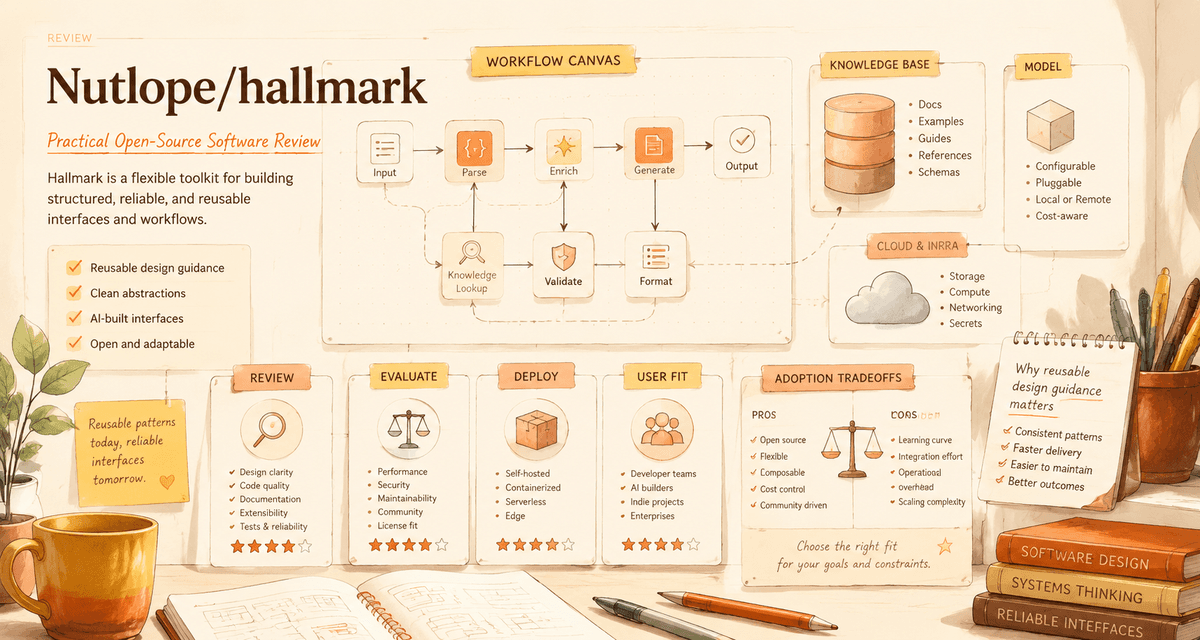
Hallmark and Design Skills: Can Open Source Teach AI Better Taste?
A Git-Stars review of Hallmark, emilkowalski/skills, and why reusable design guidance matters for Codex, Claude Code, and AI-built interfaces.
AI can build interfaces quickly. That is useful, but it also creates a familiar problem: many generated pages feel interchangeable. Same cards, same gradients, same spacing, same dashboard shape, same safe middle.
That is why design-skill repositories are becoming interesting. TikHub captured
a July 2026 YouTube roundup with about 6,079 views that included
Nutlope/hallmark and
emilkowalski/skills. When checked
on August 13, 2026, Hallmark had about 24,538 GitHub stars and an MIT license.
emilkowalski/skills had about 28,789 stars and an MIT license.
These projects are not traditional UI frameworks. They are closer to reusable taste: design principles, patterns, and instructions that help AI coding agents produce interfaces with more intention.
The Problem: AI Slop Is a Workflow Issue
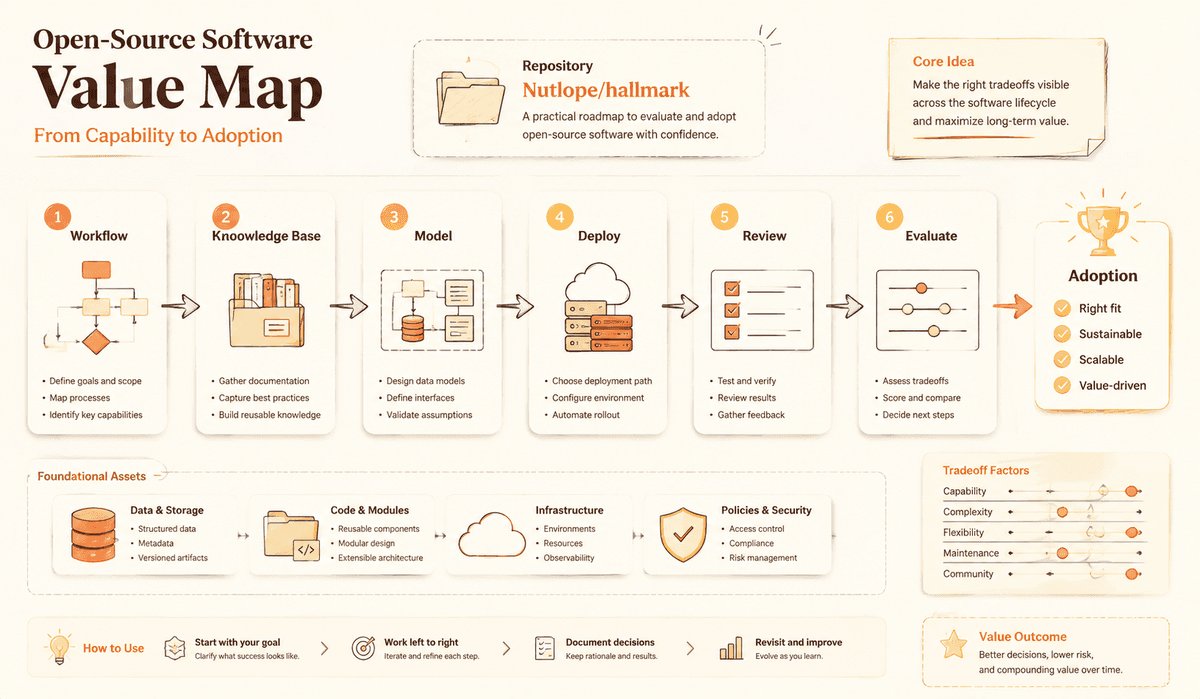
Poor AI-generated UI is not only a visual problem. It is a workflow problem. When an agent does not know the product audience, brand direction, hierarchy, or emotional tone, it defaults to patterns it has seen many times.
The result is not always ugly. Sometimes it is worse: acceptable, generic, and forgettable. For a website trying to build trust, that is dangerous. Users may not identify the design problem precisely, but they feel when a page lacks care.
Design skills try to give the agent a better starting point. Instead of saying "make it modern," they can push the assistant toward specific constraints: strong hierarchy, fewer filler sections, meaningful motion, clearer spacing, and a visual direction that matches the product.
Why This Matters for Open-Source Discovery
GitHub projects are already hard to evaluate. If every repository-analysis site looks like a generic template, users have less reason to trust its judgment. Design quality becomes part of editorial quality.
That is why this topic fits Git-Stars. We are not only tracking code. We are also building a site that explains code to humans. The interface should feel light, readable, and deliberate, not like a recycled SaaS template.
This connects directly to our own editorial standard: useful content is not only text. It is also the way the site helps readers orient themselves.
What Users and Reviewers Report
Hallmark's tagline ?"anti-AI-slop design skill" ?resonates because developers increasingly recognize that AI coding agents produce competent but generic UIs by default. The project by Nutlope (Hassan El Mghari) packages opinionated design constraints specifically for Claude Code, Cursor, and Codex.
A review on OpenTools.ai noted that Hallmark is a static SKILL.md rulebook: "it hands your agent a look and a set of rules, but it cannot see your codebase or adapt dynamically." This is both its strength (zero runtime dependency, instant setup) and its limitation (no awareness of existing brand guidelines unless manually provided). SuperDesign.dev's comparison of design skills confirmed the pattern: "they genuinely improve AI-generated UI, but they are not a substitute for a design system."
Community patterns:
- Developers report "noticeably better" first-pass UI when using Hallmark vs. bare prompting
- The combination of Hallmark + a project-level DESIGN.md produces the best results (Atlassian published a guide on this approach)
- emilkowalski/skills is more component-focused; Hallmark is more principle-focused ?they complement rather than compete
- The 68% of freelance designers now using AI tools daily (per Lovart.ai's 2026 survey) means design skills address a real workflow gap
- Main limitation: skills cannot enforce consistency across multiple pages without a proper design system underneath
Design Skill Projects Compared
| Project | Focus | Approach | Best For | Stars (Aug 2026) |
|---|---|---|---|---|
| Nutlope/hallmark | Anti-slop principles | SKILL.md rules | Landing pages, marketing sites | ~24K |
| emilkowalski/skills | Component patterns | Design recipes | UI components, interactions | ~29K |
| Google DESIGN.md | Brand context | Portable spec | Teams with existing brand | New |
| Taste-Skill | Critique guidance | Review prompts | Design review, feedback | Emerging |
| Open Design | Full prototyping | 72 design systems | Mobile/web mockups | Emerging |
Deployment Difficulty
Git-Stars score: Low
Design skill repositories are easier to adopt than runtime tools. They do not usually require servers, databases, GPUs, or model APIs. A user can read them, copy principles into a project guide, or adapt them into a Codex or Claude Code skill.
The challenge is not installation. The challenge is judgment. Blindly applying any design skill can create another template. The team still needs to decide which principles fit the product, audience, and content density.
For non-designers, the best first use is to ask an agent to compare the current page with the skill's principles and produce a short critique before editing.
Commercial Usability
Git-Stars score: High
Both repositories report MIT licenses, which are generally friendly for commercial and internal use. Because they are guidance-oriented rather than runtime dependencies, adoption risk is relatively low.
Teams should still avoid copying brand assets, screenshots, or visual examples that they do not have rights to use. The safe approach is to reuse principles, not protected creative material.
Capability Ceiling
Git-Stars score: Medium to High
The ceiling is high when these skills are used as critique and direction. They can make an AI assistant ask better design questions and avoid the most common defaults.
The ceiling is lower if users treat them as magic style packs. Taste cannot be fully outsourced. A skill can suggest better spacing, stronger contrast, or more deliberate hierarchy, but the product owner still needs to choose what the site should feel like.
Compared with agent-skills, these repositories focus on design quality rather than general engineering workflow. Compared with component libraries, they are less about ready-made UI and more about how an agent should think.
Who Should Use Them
Use Hallmark or design skills if you rely on AI to create landing pages, dashboards, internal tools, documentation sites, or product prototypes. They are especially helpful when an interface feels technically complete but emotionally flat.
They are also useful for content websites. A better layout can reduce cognitive load, make articles easier to scan, and help users understand why the site exists.
Git-Stars Verdict
Hallmark and design skills are worth covering because they show a quiet but important shift. The next layer of AI development is not only better code. It is better taste, better critique, and better reusable judgment.
For AI-built interfaces, that may matter as much as another component library. The goal is not to make every page fancy. The goal is to make every page feel chosen.
More Insights
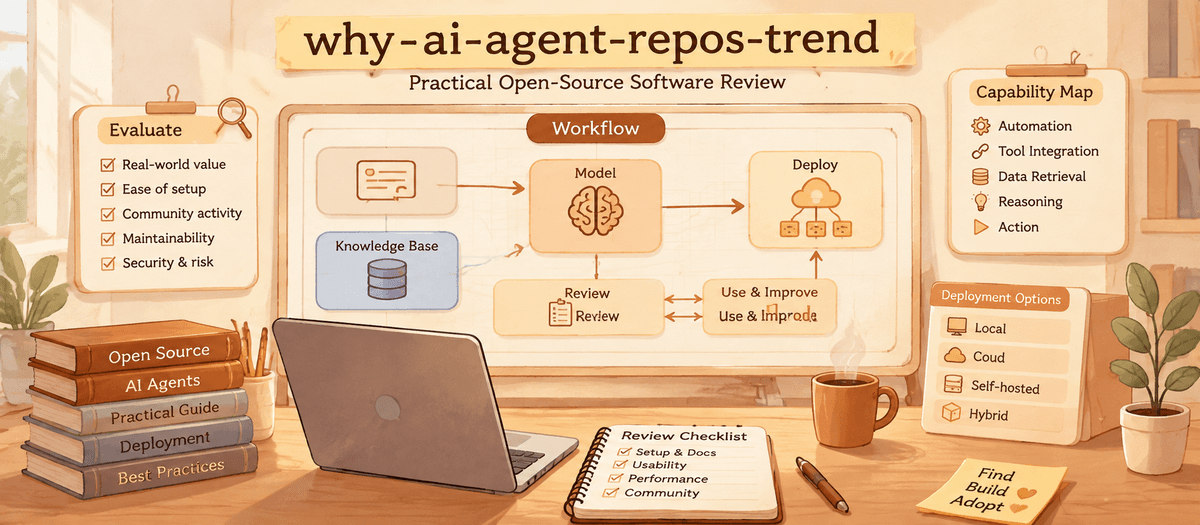
Why AI Agent Repositories Keep Trending on GitHub
An editorial analysis of why AI agent projects spread quickly, which signals matter, and how to separate useful tools from hype.
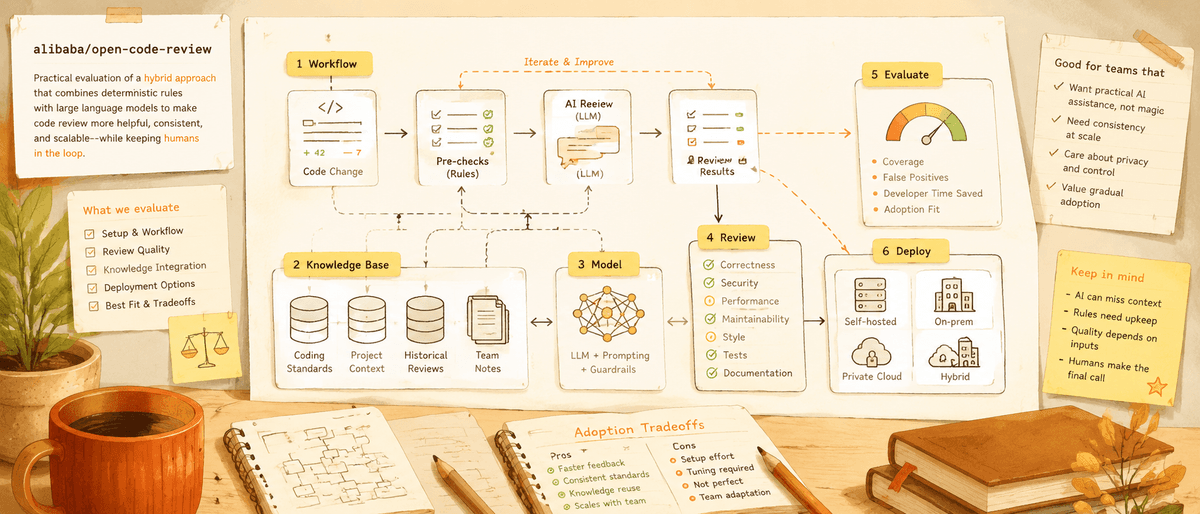
Alibaba Open Code Review: Where AI Review Helps and Where It Should Slow Down
A practical evaluation of Alibaba Open Code Review, its hybrid rules plus LLM approach, and the real limits of AI-assisted code review.
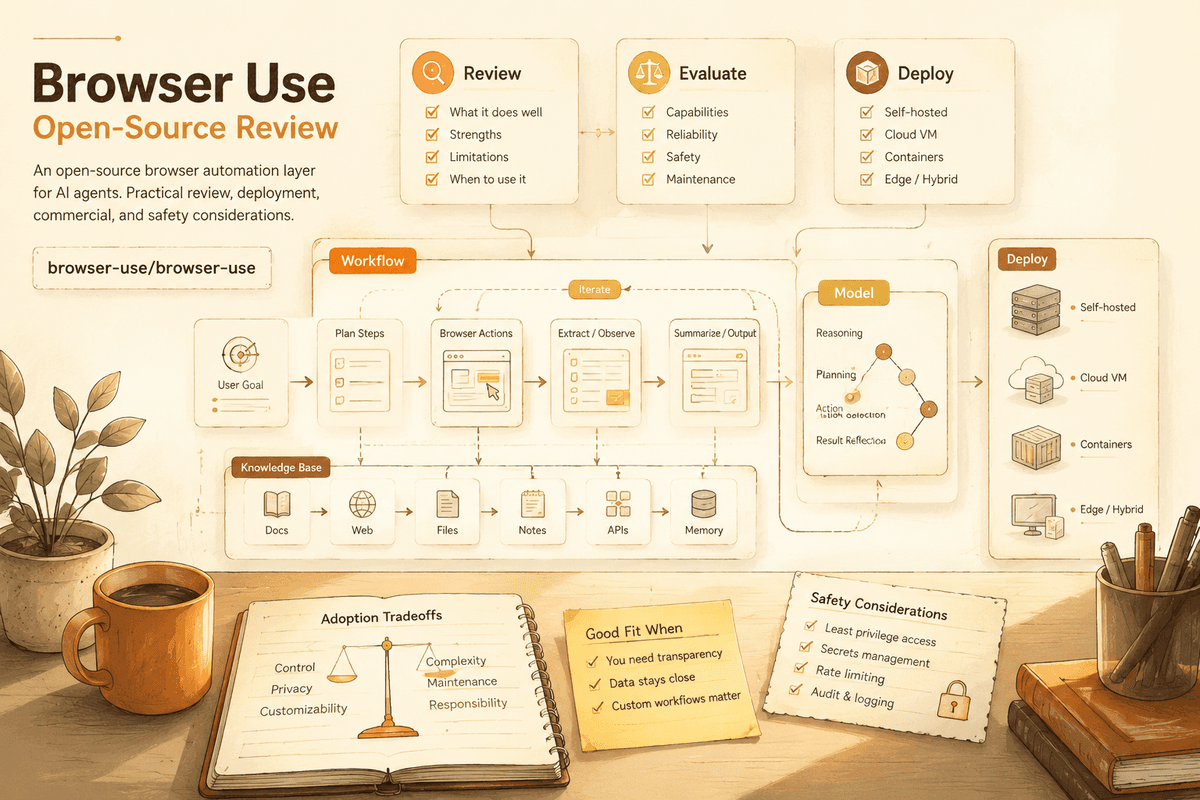
Browser Use: Web Automation Agents Need Permission and Patience
A practical review of Browser Use, the open-source browser automation layer for AI agents, with deployment, commercial, and safety considerations.
Newsletter
Join the community
Subscribe to our newsletter for the latest news and updates