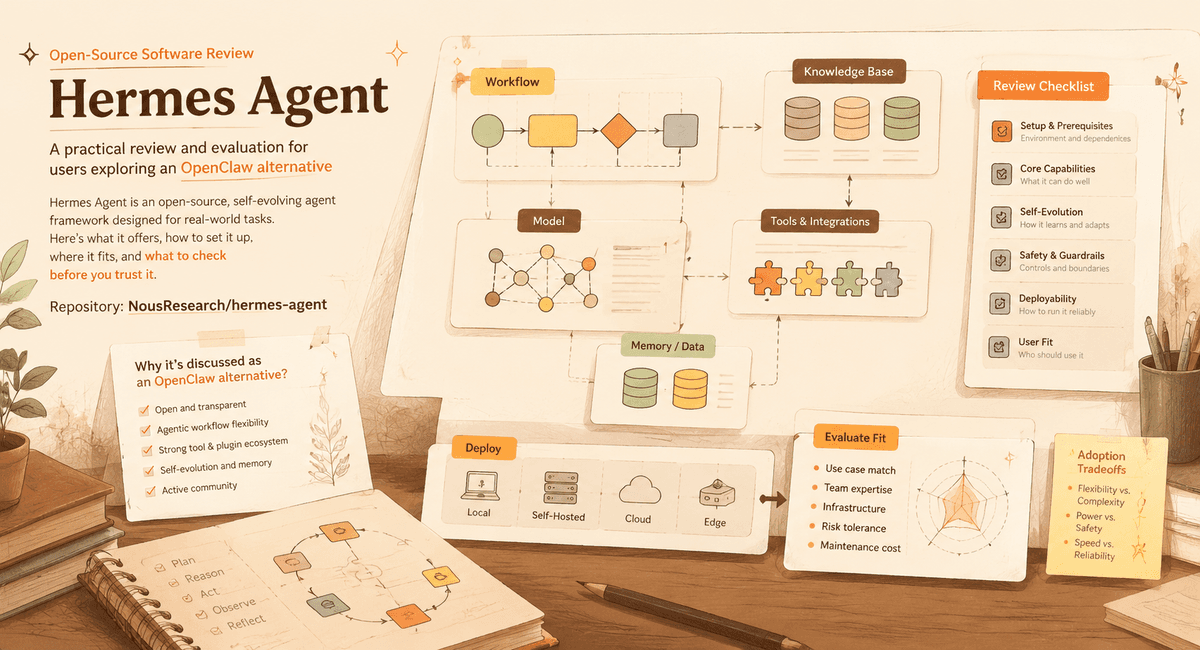
Hermes Agent: Self-Evolving AI Assistant or Another Agent Hype Cycle?
A Git-Stars review of Hermes Agent, why it is being discussed as an OpenClaw alternative, and what users should check before trusting a self-evolving agent.
AI agent projects often go viral because they promise autonomy. Hermes Agent makes a more specific claim: an assistant that grows with you through memory, skills, browser work, and migration from existing agent setups. The question for this review is not whether the promise is exciting ?it is whether the execution delivers enough to justify the complexity.
TikHub captured a Douyin video about Hermes Agent with 505 likes, 395 favorites, and 88 shares. The video framed it as an OpenClaw alternative and focused on self-improvement, security testing, browser automation, and moving skills or MCP configuration from one agent environment to another. We should treat those as creator claims, not final proof, but they show what users find exciting.
When checked on August 13, 2026, NousResearch/hermes-agent had about 229,857 GitHub stars, 45,411 forks, an MIT license, and recent activity. That is a strong public signal, but the repository also had a very large issue count. High attention can create real support pressure.
Why People Care About It
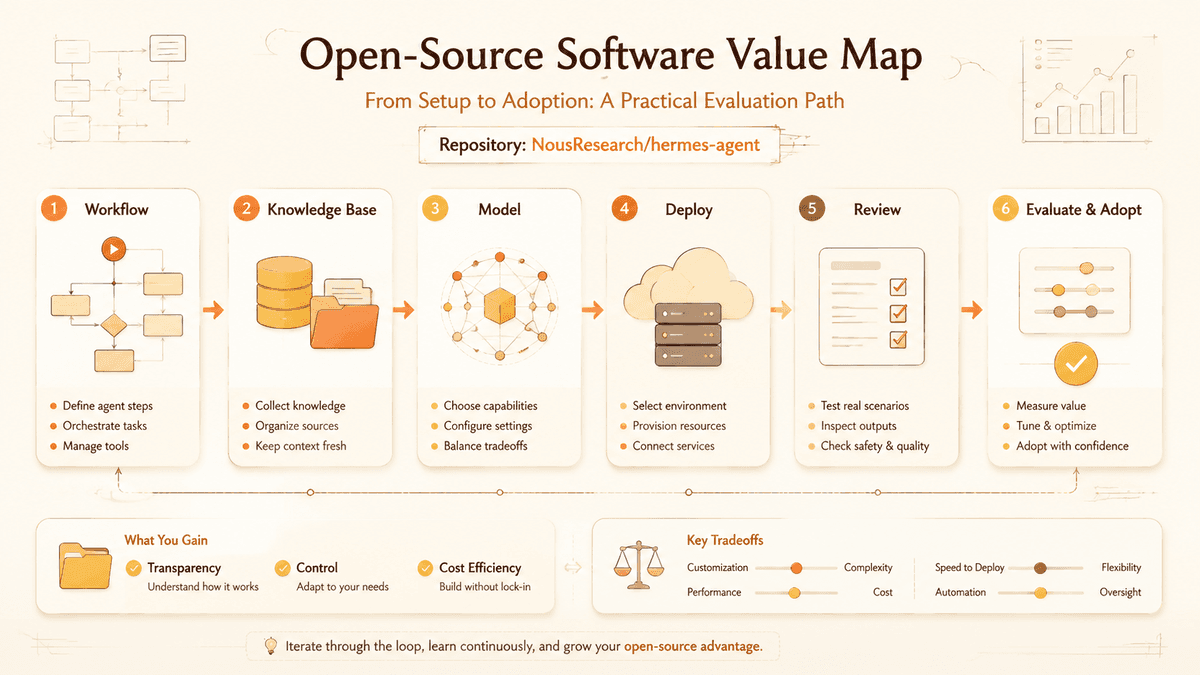
The most useful way to understand Hermes Agent is not "another chatbot." It is closer to a personal agent environment: memory, skills, tool access, and workflow continuity. That matters because people are starting to outgrow single-session AI assistants. If an agent is useful today, users naturally ask whether it can remember patterns, improve routines, and carry configuration between tools.
The OpenClaw comparison gives the story a clear hook. Users who already tried one personal AI assistant want to know whether a newer one fixes painful parts: bugs, missing skills, weak browser control, unsafe actions, or configuration friction.
That does not mean Hermes Agent automatically replaces OpenClaw. Migration claims deserve careful testing. A personal agent stores context, habits, and often secrets. Moving that setup is not the same as copying a theme file.
What Users and Reviewers Report
Hermes Agent crossed 140,000 GitHub stars in under three months after its February 2026 launch by Nous Research, and it reached the top of OpenRouter's daily agent rankings by May 2026. Independent reviews paint a nuanced picture:
Tech reviewers on Vellum and BuildBetter report that the learning loop ?where Hermes improves its own behavior based on past interactions ?is "genuinely novel" among open-source agents. However, users also note the six-backend architecture is complex to debug. One reviewer wrote: "If you like living inside a terminal, it delivers. But after three weeks, I found myself wanting a GUI for reviewing what it had learned about me."
Community patterns from comparison articles and forums:
- The self-improving memory system is the standout feature vs. OpenClaw
- OpenClaw has 400+ open security-related issues; Hermes's smaller surface area is seen as safer
- Migration from OpenClaw is possible but not seamless ?skill formats differ enough to require manual adaptation
- RAM usage is higher than expected due to persistent memory indexing (16 GB minimum recommended)
The most common concern: auditing what the agent "learned." Users running Hermes for weeks report difficulty understanding why the agent made certain choices, since memory accumulates silently without clear summaries.
Hermes Agent vs. Alternatives
| Feature | Hermes Agent | OpenClaw | Paperclip | agent-skills |
|---|---|---|---|---|
| Self-improving memory | Yes | Partial | No | No |
| GitHub stars (Aug 2026) | ~230K | ~310K | ~38K | ~87K |
| License | MIT | Apache-2.0 | MIT | MIT |
| Browser automation | Built-in | Built-in | Plugin | N/A |
| Min. RAM | 16 GB | 8 GB | 4 GB | N/A |
| Setup complexity | High | High | Medium | Low |
| Skill portability | Hermes format | OpenClaw format | N/A | Cross-agent |
| Security audit surface | Smaller | Large (400+ issues) | Small | Minimal |
Deployment Difficulty
Git-Stars score: Medium to High
Hermes Agent is not a beginner install if you want the full experience. A serious setup may involve model providers, browser automation, local files, skills, MCP servers, and persistent memory. Each layer introduces a separate failure mode.
For developers, the setup can be reasonable if they isolate the environment and read the configuration files carefully. For non-coders, it should be treated as a guided experiment with Codex or Claude. The first test should use disposable files, test accounts, and limited API keys.
The most important setup question is not "Can it run?" It is "What can it access?" Browser agents and memory systems are powerful because they see more context. That same access can be risky if the user connects personal accounts before understanding permissions.
Commercial Usability
Git-Stars score: High license signal, Medium operational signal
The repository reports an MIT license, which is generally business-friendly. That is good news for experimentation and internal evaluation.
Commercial use still needs a broader review. Hermes Agent may connect to model APIs, browsers, local files, MCP servers, and cloud services. The license of the agent code does not cover every model, tool, website, data source, or credential the agent touches.
For teams, the safe adoption path is to define boundaries first: which folders the agent can read, which accounts it can use, which actions require human approval, and where memory is stored. Without those boundaries, "self-evolving" can become hard to audit.
Capability Ceiling
Git-Stars score: High, if governance is strong
The upside is clear. If Hermes Agent can reliably use skills, browse, remember preferences, and improve routines, it can become more useful than a stateless assistant. The user would not need to repeat the same setup and instructions every session.
The ceiling is lower when tasks require strict correctness, regulated data, financial decisions, or unattended execution. A self-improving agent should not silently rewrite its own behavior in sensitive workflows. Improvement needs review.
Compared with agent-skills, Hermes Agent is more like an agent environment, while skills are reusable operating procedures. Compared with Open WebUI, Hermes Agent is more action-oriented and less simply a chat interface.
Who Should Try It
Hermes Agent is worth trying if you are already comfortable with AI assistants, local configuration, and permission boundaries. It is especially interesting for users who want a personal agent that can accumulate reusable workflows.
It is not the best first project for someone who has never run an open-source AI tool. If that is you, start with our non-coder open-source guide and practice on lower-risk tools first.
Git-Stars Verdict
Hermes Agent deserves attention because it moves the conversation from "agents can act" to "agents can improve their own working environment." That is an important shift.
The same shift creates the main risk. The more persistent and capable an agent becomes, the more users need auditability, permission limits, and rollback. Hermes Agent is promising, but the right question is not whether it is more exciting than OpenClaw. The right question is whether you can trust and verify how it changes over time.
More Insights
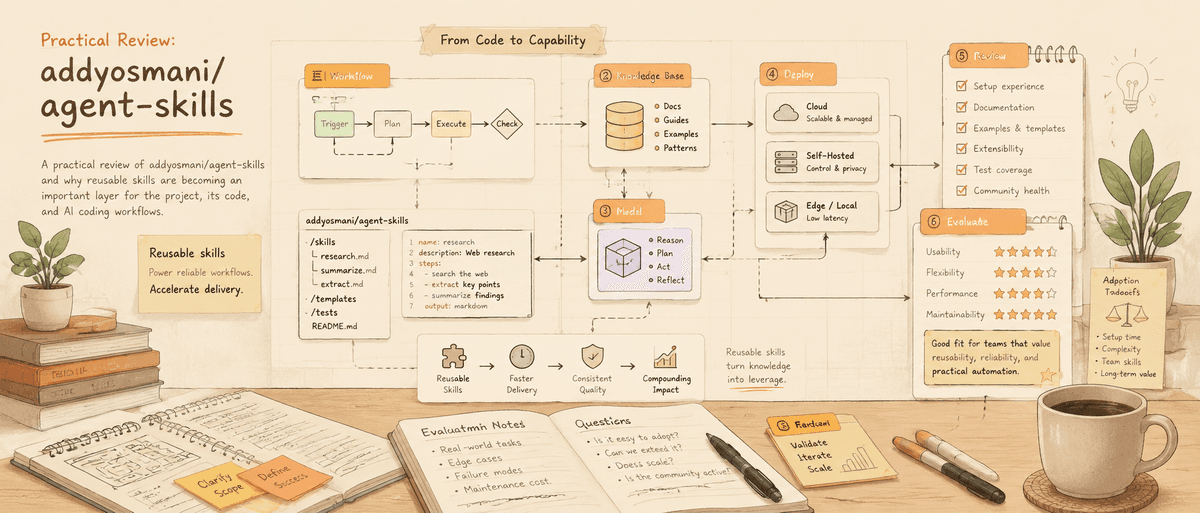
Agent Skills: Why AI Coding Agents Need Reusable Working Memory
A practical review of addyosmani/agent-skills and why reusable skills are becoming an important layer for Codex, Claude Code, and AI coding workflows.
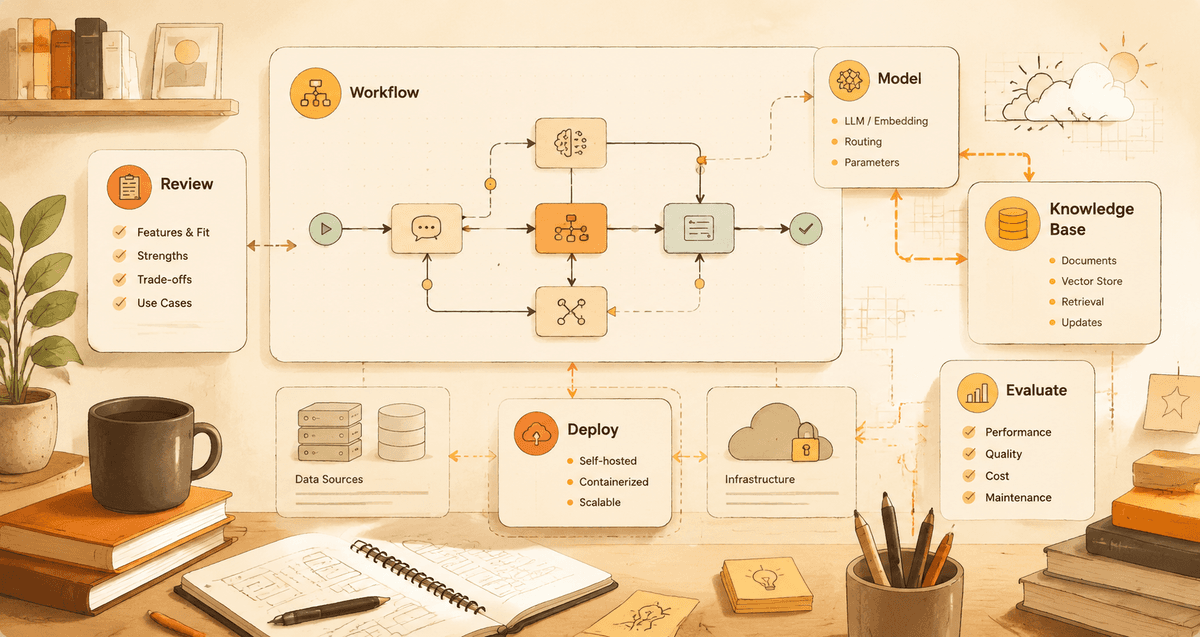
Dify: Low-Code AI Workflows Still Need Product Ownership
A practical review of Dify, its agentic workflow and RAG platform, and what teams should understand before self-hosting or building on it.
Orca: Do Parallel Coding Agents Need Their Own Workspace?
A practical review of Orca, the agent development environment for running Codex, Claude Code, OpenCode, and other coding agents side by side.
Newsletter
Join the community
Subscribe to our newsletter for the latest news and updates