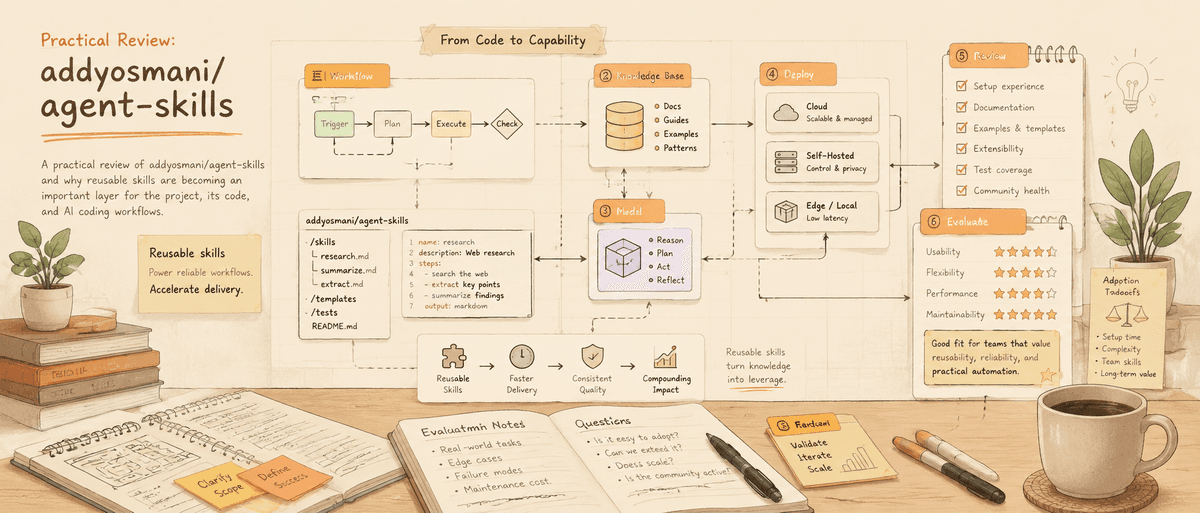
Agent Skills: Why AI Coding Agents Need Reusable Working Memory
A practical review of addyosmani/agent-skills and why reusable skills are becoming an important layer for Codex, Claude Code, and AI coding workflows.
AI coding agents are getting better at the mechanical parts ?reading repositories, editing files, running tests. But capability without process creates a specific failure mode: the agent produces valid code that violates the team's engineering norms. It skips planning, ignores verification steps, or treats every task with the same default approach regardless of risk level.
That is the opening for agent-skills. The project is not another model, IDE, or code-generation benchmark. It is a collection of reusable engineering skills that teach AI coding agents how to handle repeated workflows: planning, testing, code review, debugging, release preparation, documentation, and product thinking.
TikHub captured the project in a June 2026 YouTube video about open-source AI projects with about 148,928 views. The video grouped it with open-notebook and Headroom, which is a telling combination. These are not flashy one-click demos. They are infrastructure for making AI assistants more reliable.
When checked on August 13, 2026, addyosmani/agent-skills had about 86,731
GitHub stars, 9,317 forks, an MIT license, and recent activity. That is a
strong adoption signal for a project whose main output is guidance rather than
a traditional app.
The Problem: Agents Need Process, Not Only Context
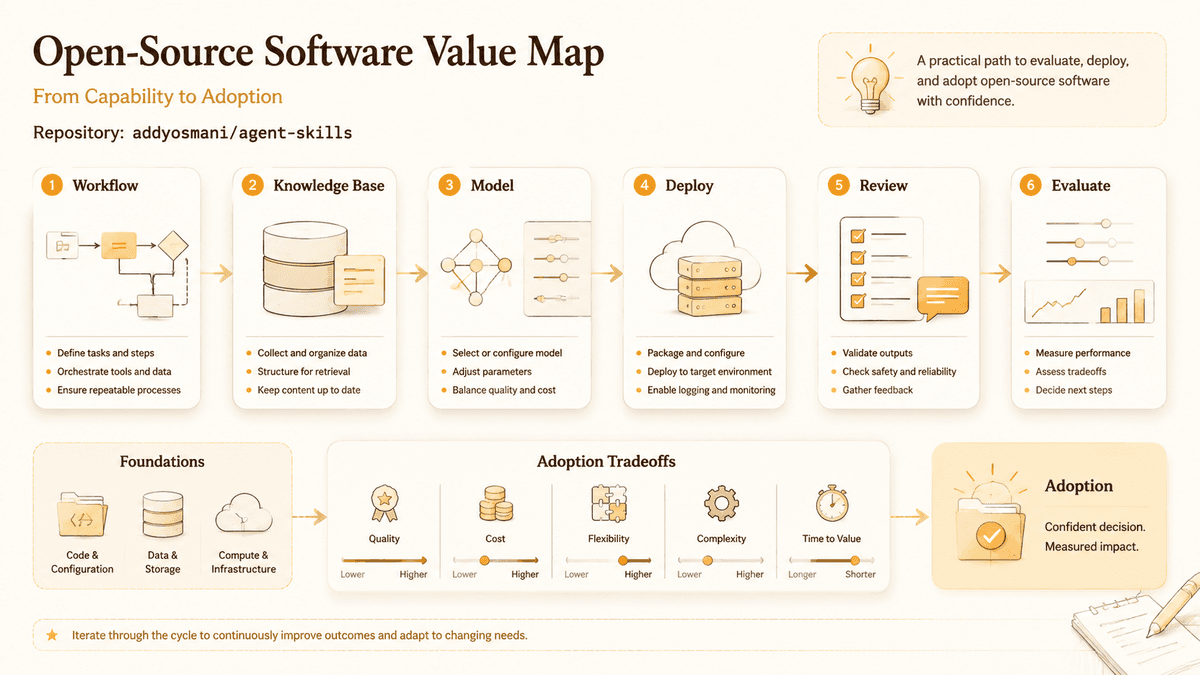
Most AI coding failures are not caused by lack of raw intelligence. They often come from weak process. The agent jumps into implementation before clarifying requirements. It edits without reading surrounding files. It claims tests pass without running them. It treats a design task like a default dashboard. It misses the difference between a code review and a feature request.
Human teams solve this with norms: review checklists, deployment rituals, testing habits, design principles, naming conventions, and incident playbooks. AI agents need a similar layer. A skill is one way to package that layer so the assistant can reuse it instead of rediscovering it every conversation.
This matters especially for tools like Codex and Claude Code. The model may already know how to write React, debug TypeScript, or inspect a build error. The skill tells it how to behave inside a particular work mode.
Why This Became Socially Interesting
The social pitch is subtle but powerful: better prompts are not enough. If an AI assistant is going to work inside real codebases, it needs repeatable operating procedures.
That idea travels well because many developers have already felt the pain. They do not need to be convinced that agents can produce code. They need to trust that an agent will slow down when risk is high, run verification before claiming success, and respect existing code rather than bulldozing it.
agent-skills fits that mood. It suggests a shift from "Can AI code?" to "Can AI follow a professional workflow?" That is a more mature question and a better fit for teams evaluating real adoption.
What Users and the Community Report
The project gained rapid traction partly because of its author's reputation (Addy Osmani, a well-known engineering leader at Google), but the real adoption signal is the fork-to-star ratio and the growing ecosystem of derivatives.
A GitHub Gist discussion explored why Osmani created agent-skills when similar specification formats already existed (spec-kit, openspec.dev, etc.). The consensus: agent-skills is not another spec format ?it is a behavioral framework designed to stop AI agents from "vibe coding," the tendency of LLMs to take the shortest path to code output while skipping verification, planning, and quality gates.
Community feedback patterns:
- Developers report the code-review and verification skills as the highest-impact starting points
- The pack includes 23 skills total ?22 lifecycle skills plus a meta-skill for using the others
- Integration with Claude Code (via CLAUDE.md) and GitHub Copilot (via .github/skills) works out of the box
- Most users customize 2? skills rather than adopting the full set
The main criticism: skills can make agents slower. Each skill adds process steps, which means more tokens and more latency. Teams trading off speed for reliability accept this; teams wanting fast iteration sometimes disable skills for exploratory work and re-enable them for production commits.
Skills vs. Other Agent Guidance Approaches
| Approach | Portability | Scope | Setup Effort | Best For |
|---|---|---|---|---|
| agent-skills (SKILL.md) | Cross-repo, cross-agent | Workflow-level | Low (copy files) | Repeatable quality gates |
| AGENTS.md / CLAUDE.md | Per-repo | Project-specific | Low | Repo conventions |
| MCP servers | Cross-repo | Tool access | Medium (server setup) | Giving agents new capabilities |
| Prompt snippets | Per-conversation | One-shot | None | Quick experiments |
| Custom system prompts | Per-agent config | Global behavior | Low–Medium | Personality / tone control |
Deployment Difficulty
Git-Stars score: Low to Medium
This is one of the friendlier categories of AI tooling because it does not usually require GPUs, databases, Docker, or a model server. The core artifact is textual guidance packaged in a way an AI coding environment can use.
The difficulty depends on where you want to use it. Reading the repository for ideas is easy. Adapting a skill into a local Codex setup is moderately technical because you need to know where skills live, how your agent loads them, and which instructions should be project-specific versus global.
For a solo developer, the best first step is not installing every skill. Pick one recurring failure mode. If your agent often skips tests, start with a verification skill. If it jumps into code too quickly, start with planning or brainstorming guidance. If it produces generic UI, start with product-design rules.
Commercial Usability
Git-Stars score: High
The repository reports an MIT license, which is generally friendly for commercial and internal team use. Because the project is mostly workflow guidance, it does not carry the same operational risk as a server that handles customer data.
The main commercial caution is not licensing. It is governance. A skill can quietly change how an agent behaves. If a company standardizes on skills, it should review them the same way it reviews internal engineering playbooks. Instructions about security, deployment, credentials, or code review should be owned by the team, not copied blindly.
In other words, agent-skills is commercially attractive because it is easy to adapt. That same adaptability means teams should be intentional.
Capability Ceiling
Git-Stars score: Medium to High
Skills do not make a weak model magically excellent, and they do not replace good repository context. They work best as guardrails and operating habits. They can improve consistency, but they cannot guarantee correctness.
The ceiling is high when the workflow is repeated often. A debugging skill can save many poor guesses. A code-review skill can prevent feature summaries from masquerading as reviews. A verification skill can reduce false confidence. A frontend-design skill can push the agent away from default templates.
The ceiling is lower when the task is novel, poorly scoped, or missing domain knowledge. In those cases, the skill can only help the agent ask better questions and avoid premature action.
Useful Comparisons
Compared with prompt snippets, agent skills are more durable. A prompt is often used once. A skill can become part of the assistant's operating environment.
Compared with MCP servers, skills are lighter. MCP gives the agent new tools. Skills teach the agent how and when to use tools. The two are complementary: our local TikHub MCP wrapper gives Codex a way to fetch social-source data; a content-quality skill tells Codex how to evaluate whether that source should become an article.
Compared with project-level files such as AGENTS.md, skills are more
portable. Project instructions describe one repository. Skills describe a
workflow that can travel across repositories.
Who Should Use It
agent-skills is most useful for developers and teams already using AI coding agents regularly. If you only ask a chatbot for occasional snippets, it may be overkill. If an agent is part of your daily workflow, reusable skills become more valuable quickly.
It is also useful for non-coders who work with Codex on local open-source tools. A skill can make the assistant more cautious about setup, credentials, and verification. That supports the workflow we describe in How Non-Coders Can Try Open-Source Tools with Codex.
Git-Stars Verdict
agent-skills is important because it points to a more realistic future for AI coding: not a single perfect agent, but an agent surrounded by better procedures. The project is not exciting in the same way a video generator or local model runner is exciting. It is exciting because it improves the boring parts that make AI useful in real work.
For teams evaluating AI-assisted development, this is the kind of repository that deserves attention beyond its star count. It changes the question from "What can the model generate?" to "What process can the agent reliably follow?" That question is where serious adoption begins.
Author
Categories
More Insights
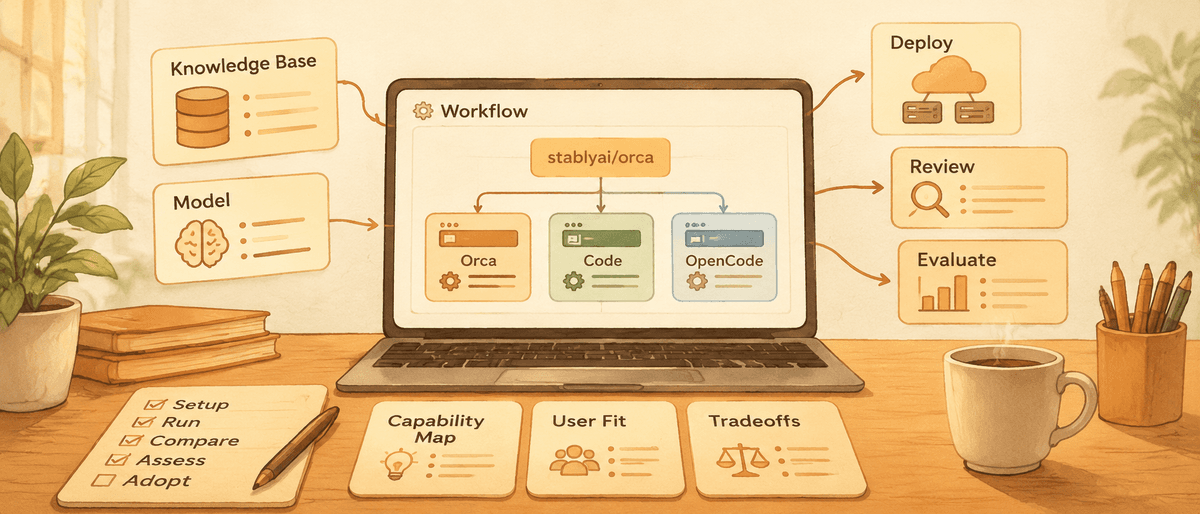
Orca: Do Parallel Coding Agents Need Their Own Workspace?
A practical review of Orca, the agent development environment for running Codex, Claude Code, OpenCode, and other coding agents side by side.
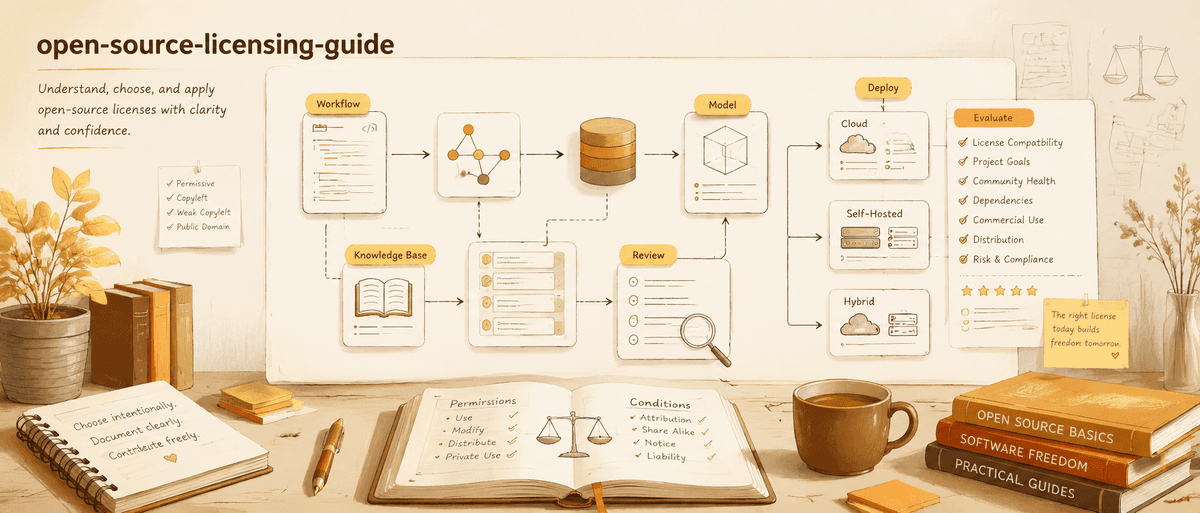
Open-Source Licensing in 2026: A Practical Guide for Developers
Navigate the evolving landscape of open-source licenses, understand what each permits and restricts, and make informed choices for your projects and dependencies.
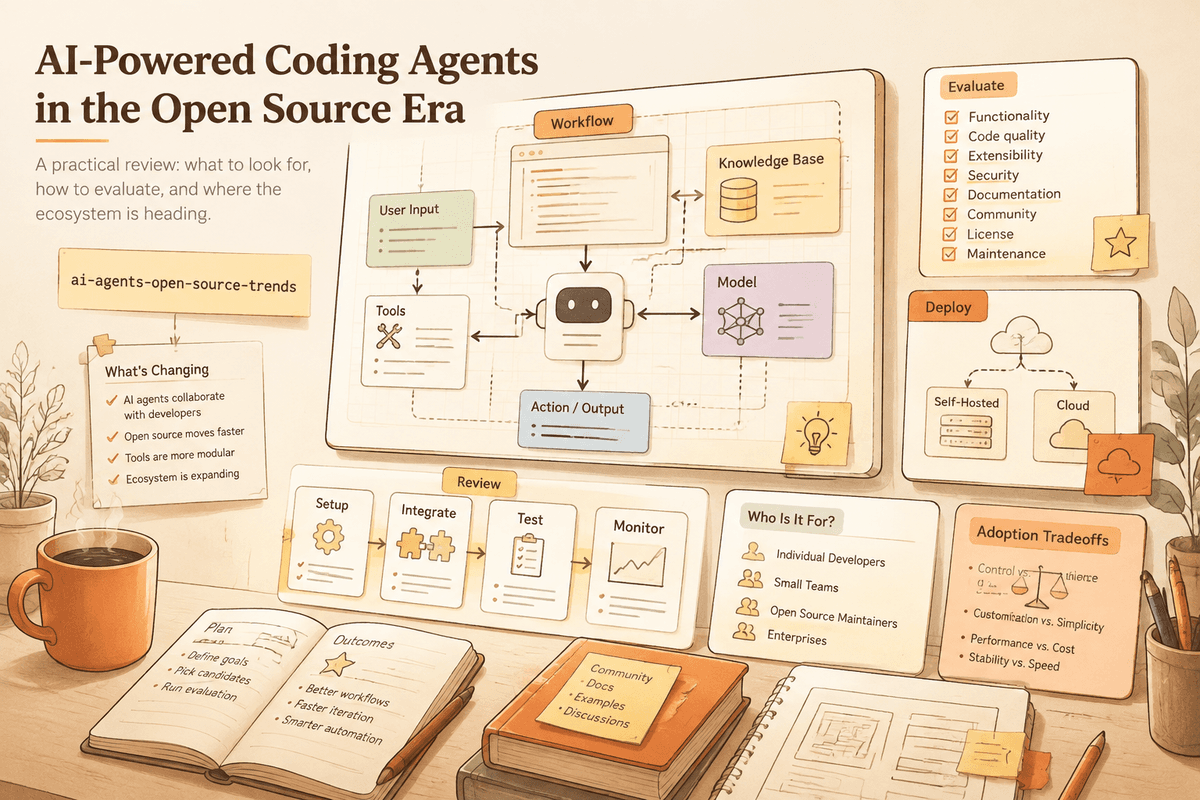
The Rise of AI Agents in Open Source: Trends and Evaluation
How AI-powered coding agents are reshaping the open-source landscape, what to look for when evaluating them, and where the ecosystem is heading.
Newsletter
Join the community
Subscribe to our newsletter for the latest news and updates