
Understanding GitHub Stars: What They Mean and What They Don't
A data-driven analysis of what GitHub stars actually measure, their limitations as a quality signal, and how to interpret star data when making technology decisions.
GitHub stars are the most visible metric in the open-source ecosystem. They appear on every repository page, they power discovery algorithms, and they influence hiring decisions and funding rounds. Yet the data tells a different story than most people assume ?stars correlate weakly with the signals that actually matter for adoption decisions.
Git-Stars treats star data as one signal among repository health, maintenance, and adoption indicators. Here is what stars measure, what they miss, and how to use them responsibly.
What a Star Actually Represents
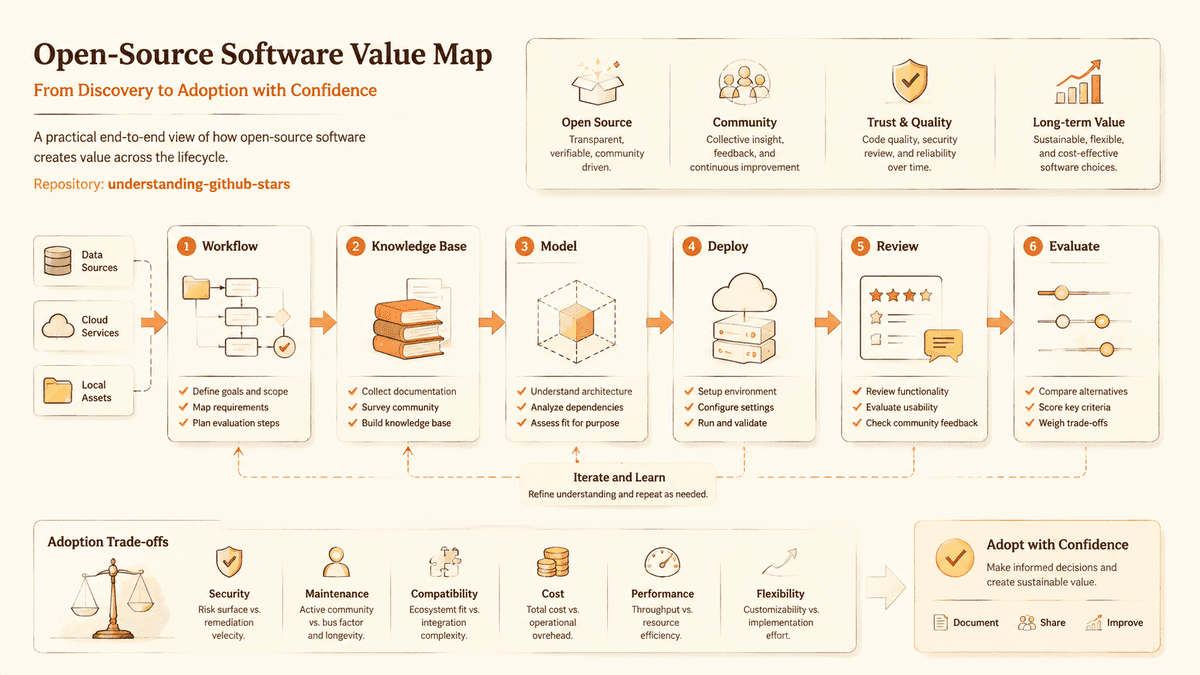
At its most literal, a star is a bookmark. GitHub designed it as a way for users to save repositories they want to find again later. Over time, it evolved into a social signal—a lightweight way to express approval, support, or interest. But the action itself is nearly frictionless: one click, no commitment, no follow-through required.
This means stars accumulate for diverse and sometimes contradictory reasons. Some people star repositories they use daily. Others star projects they found interesting but never tried. Some star out of social obligation—a colleague shipped something and shared the link. A non-trivial number of stars come from bots or purchased services.
The Star Distribution Is Extremely Skewed
The vast majority of GitHub repositories have zero or single-digit stars. The median public repository with at least one commit has exactly zero stars. Among repositories with at least one star, the distribution follows a steep power law—a small number of projects capture the overwhelming majority of stars.
This means comparing star counts across different scales is misleading. The difference between 100 and 200 stars might represent meaningful community growth. The difference between 50,000 and 100,000 stars often reflects media coverage and social virality rather than doubled utility.
Stars Correlate Weakly with Quality
In our analysis, star count shows moderate correlation with documentation quality and README presentation—well-packaged projects attract more attention. But it shows weak correlation with code quality, test coverage, security posture, and maintenance health.
This makes intuitive sense. Stars reward discoverability and first impressions. Code quality is invisible to most visitors who never read the source. A beautifully presented project with mediocre internals will accumulate more stars than a superbly engineered project with a sparse README.
Stars Correlate Strongly with Category
Some project categories inherently attract more stars than others, independent of quality. Learning resources, awesome lists, developer tools, and AI/ML projects accumulate stars faster than niche libraries, infrastructure tools, or domain-specific solutions.
| Category | Typical Star Range (Top Projects) | Primary Audience | Star Motivation |
|---|---|---|---|
| AI/ML frameworks | 50K?00K | Developers + non-developers | Curiosity, FOMO |
| Awesome lists | 100K?50K | Everyone | Bookmarking |
| JavaScript/React tools | 30K?50K | Frontend developers | Daily use |
| Kubernetes operators | 500?K | Platform engineers | Production need |
| Niche language libraries | 50?K | Specialists | Direct dependency |
| Learning resources | 50K?00K | Students, career changers | Aspirational |
A Kubernetes operator with 500 stars might serve more production users than a JavaScript tutorial with 50,000 stars. Comparing them by star count is comparing different categories of engagement entirely.
For more context on how trending mechanics amplify these category differences, see our breakdown of how the GitHub Trending page actually works.
The Temporal Dimension
Stars accumulate over time but they do not decay. A project that was groundbreaking in 2019 but abandoned in 2021 still carries all its historical stars. This creates a survivorship illusion where stale projects appear more established than actively maintained alternatives.
The rate of star growth—star velocity—is more informative than absolute count. A project gaining stars at an accelerating rate signals growing relevance. One losing velocity may be entering decline regardless of its total count.
At Git-Stars, we track velocity over time windows rather than raw totals. This surfaces projects that are gaining momentum now, not projects that were popular three years ago.
Regional and Ecosystem Bias
Star patterns differ significantly by geography and programming ecosystem. Projects from regions with large developer populations but fewer English-language alternatives accumulate stars from concentrated user bases. Projects featured on region-specific aggregators like Juejin or Habr see spikes from those audiences.
Similarly, ecosystems vary in their starring culture. JavaScript/TypeScript developers star more prolifically than systems programmers. AI/ML projects receive stars from a broader audience including non-developers interested in the technology.
How to Use Star Data Responsibly
Stars are best used as a filter for discovery—a way to surface projects worth investigating—rather than a decision criterion. When evaluating a project for production use, stars tell you that other people noticed it. They do not tell you whether those people used it successfully.
Combine star data with stronger signals:
| Signal | What It Measures | Reliability |
|---|---|---|
| Package manager downloads | Actual installation | High |
| Dependent repository count | Production adoption | High |
| Issue response time | Maintainer engagement | Medium–High |
| Commit frequency | Active development | Medium |
| Contributor diversity | Bus factor / health | Medium |
| Star velocity (not count) | Current momentum | Medium |
| Fork-with-changes count | Deep engagement | Medium |
| Star count alone | Awareness / curiosity | Low |
These metrics measure engagement depth rather than engagement breadth. For a framework on how to apply them systematically, see our open-source safety checklist.
Our Approach at Git-Stars
We named our platform after the metric we aim to contextualize. Stars are the starting point for discovery, but our analysis layers multiple dimensions on top—maintenance health scores, community engagement metrics, security posture indicators, and trend analysis. The goal is to transform a single number into a nuanced picture that supports better decisions.
When you browse a project profile on Git-Stars, the star count is visible but never the sole ranking factor. We weight sustained activity, contributor growth, and ecosystem integration alongside popularity. This approach surfaces projects that are both well-known and well-maintained—and flags popular projects that show signs of decline before that decline becomes obvious.
More Insights

Hermes Agent: Self-Evolving AI Assistant or Another Agent Hype Cycle?
A Git-Stars review of Hermes Agent, why it is being discussed as an OpenClaw alternative, and what users should check before trusting a self-evolving agent.

Alibaba Open Code Review: Where AI Review Helps and Where It Should Slow Down
A practical evaluation of Alibaba Open Code Review, its hybrid rules plus LLM approach, and the real limits of AI-assisted code review.
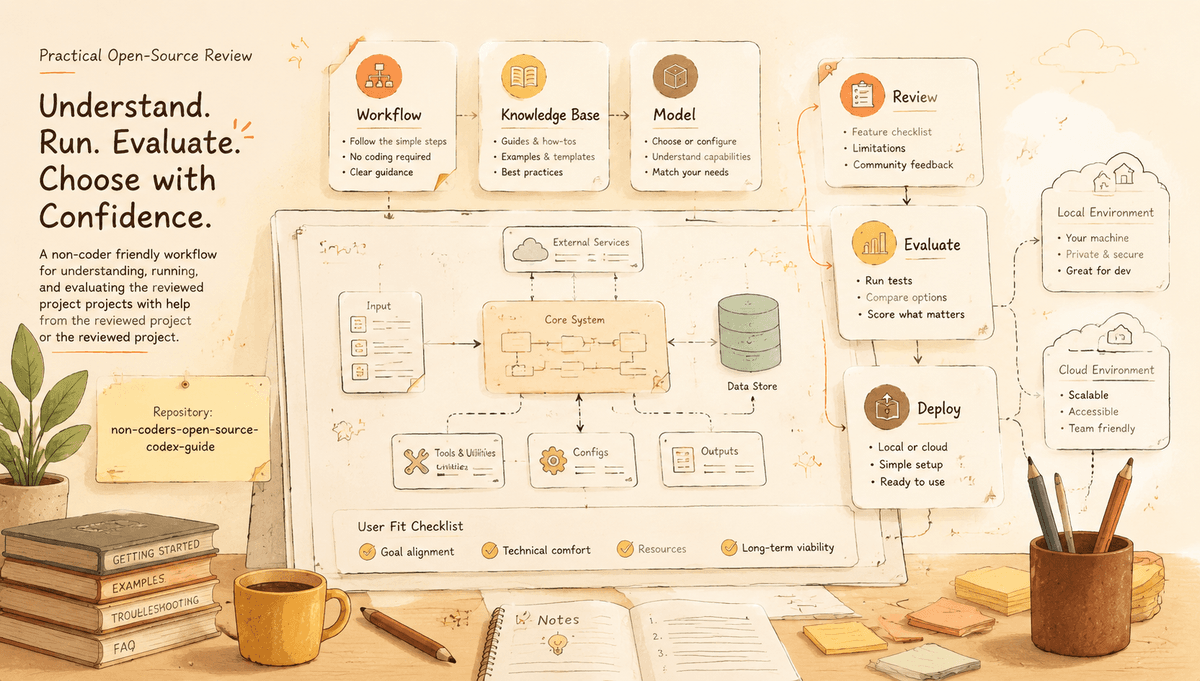
How Non-Coders Can Try Open-Source Tools with Codex
A non-coder friendly workflow for understanding, running, and evaluating GitHub projects with help from Codex or Claude.
Newsletter
Join the community
Subscribe to our newsletter for the latest news and updates