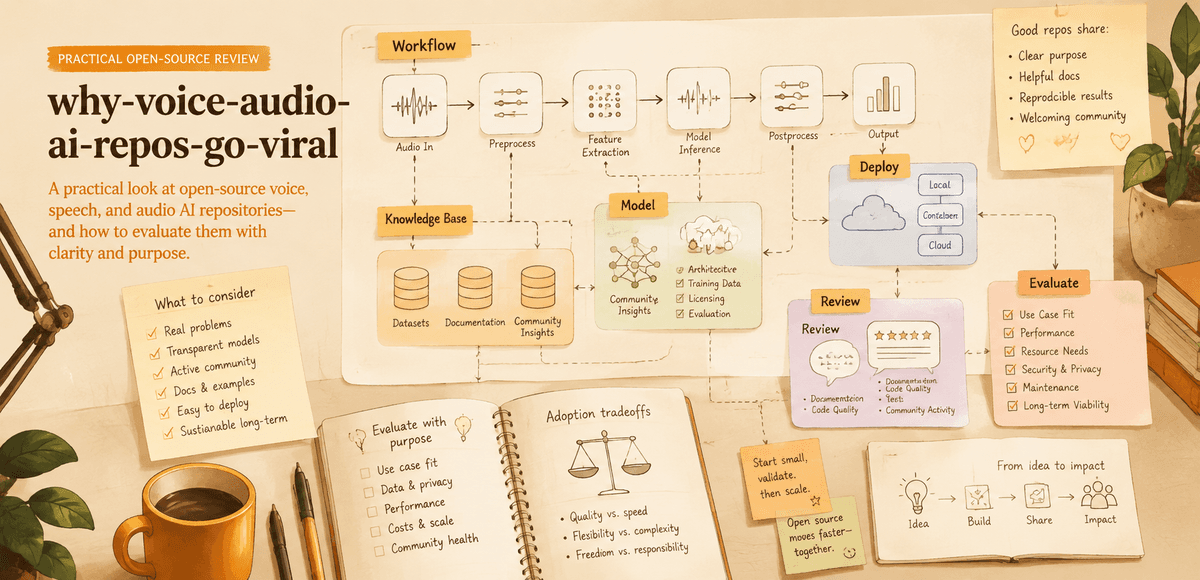
Why Voice and Audio AI Projects Are Becoming Viral
A practical look at why open-source voice, speech, and audio AI repositories attract attention and how users should evaluate them.
Voice and audio AI projects are becoming highly shareable because their output is immediate. You do not need to understand model architecture to react to a natural-sounding voice clone, a clean transcription, or a real-time dubbing demo. The result is emotional and easy to judge. That makes audio repositories especially likely to spread when they work well.
But audio AI is also easy to misunderstand. A demo may sound excellent while the setup is difficult, the license is restrictive, the model is expensive to run, or the quality drops outside the showcased language and sample. Viral attention does not remove the need for careful evaluation.
Git-Stars treats voice and audio repositories as practical tools: what problem do they solve, who can use them, what does deployment require, and what are the legal or ethical limits? That is why audio projects fit naturally into Viral Repos, where attention is translated into adoption questions.
Audio Has a Strong Demo Advantage
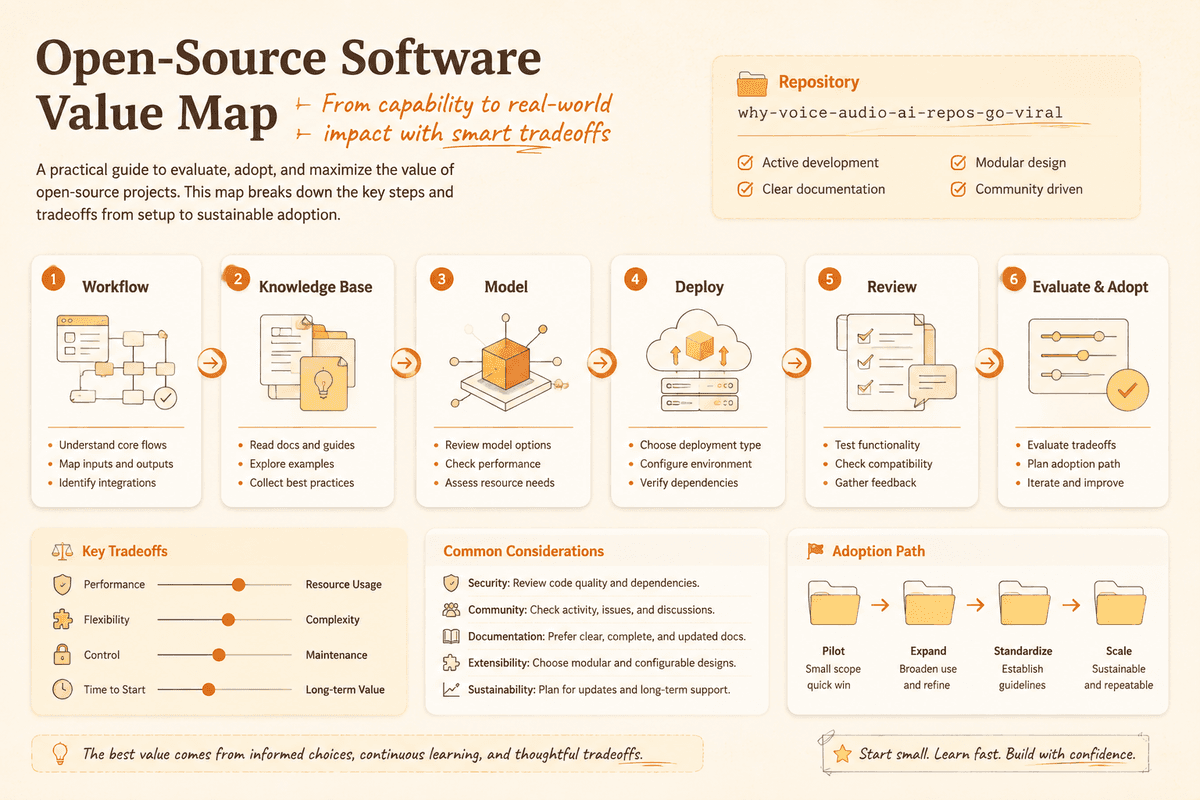
Some open-source projects need long explanations. Audio projects can often prove their value in seconds. A before-and-after clip shows noise removal. A generated voice sample shows text-to-speech quality. A dubbing demo shows timing, translation, and voice style in one artifact.
That demo advantage helps projects such as Piper, Coqui TTS, Whisper.cpp, and newer voice generation systems travel quickly through developer communities and creator circles. The audience is wider than backend engineers. Video editors, educators, podcasters, marketers, game developers, language learners, and indie makers can all understand the value.
The broader the audience, the more likely the repository is to receive stars from people who may never install it. That is not bad, but it changes how you should interpret the signal.
The Use Cases Are Concrete
Voice AI is not only a research curiosity. It maps to everyday workflows:
- Turning articles into narration
- Creating temporary voiceovers for videos
- Transcribing interviews
- Dubbing educational content
- Generating game character voices
- Building accessibility features
- Creating local voice assistants
- Cleaning or segmenting audio files
This practicality makes the category attractive. A small creator can imagine using text-to-speech immediately. A developer can imagine adding transcription to an app. A company can imagine reducing production time for training videos.
Repositories go viral when users can picture their own workflow inside the demo.
Community Experience: What Developers Actually Report
The self-hosting and local AI communities provide grounded feedback on the most popular voice/audio projects. These observations come from GitHub discussions, r/LocalLLaMA, r/selfhosted, and developer blog posts:
Piper TTS users on Raspberry Pi forums report real-time synthesis with negligible CPU usage ?making it viable for home automation and voice assistants on hardware as low as a Pi 4. The trade-off: voice quality varies significantly by language. English voices are rated "good to excellent" by the community, while less-resourced languages sound noticeably robotic.
Whisper.cpp users consistently praise the C++ port for running speech-to-text without Python dependencies or GPU requirements. Developers building local voice assistants (Ollama + Whisper.cpp + Piper) report end-to-end latency under 2 seconds for short utterances on consumer hardware. The main limitation: accuracy drops on overlapping speakers and heavy accents.
Coqui TTS (now maintained as idiap/coqui-ai-TTS after the company shut down) remains the go-to for voice cloning experiments. Community forks have 634+ commits beyond the original. Users report that fine-tuning a voice clone requires 3? minutes of clean audio and 1? hours of training on a mid-range GPU.
Popular Voice/Audio AI Projects Compared
| Project | Type | Runs On | License | Quality (English) | Setup Difficulty |
|---|---|---|---|---|---|
| Whisper.cpp | Speech-to-text | CPU (no GPU needed) | MIT | High | Low |
| Piper TTS | Text-to-speech | CPU (Pi 4+) | MIT | Good–Excellent | Low |
| Coqui TTS (idiap fork) | TTS + voice cloning | GPU recommended | MPL-2.0 | High | Medium |
| Bark (Suno) | Generative audio | GPU required | MIT | High (with artifacts) | Medium |
| XTTS v2 | Multilingual TTS | GPU required | CPML (non-commercial) | Very High | Medium–High |
| F5-TTS | Zero-shot TTS | GPU required | Apache-2.0 | High | Medium |
Deployment Can Be Harder Than the Demo Suggests
Audio AI often carries hidden setup complexity. Some projects require model files. Some depend on GPU acceleration. Some need Python environments that are sensitive to package versions. Some run locally but need careful tuning to produce good results. Others use cloud APIs and shift the difficulty from setup to cost management.
Whisper.cpp is appealing because it makes speech recognition accessible in a local, efficient form, but users still need to choose models and understand performance trade-offs. Piper is attractive for local text-to-speech, but voice availability and language quality matter. Full voice cloning systems may require more careful hardware, sample preparation, and ethical review.
Before adopting an audio repository, check whether it documents:
- Supported languages
- Model sizes
- CPU versus GPU expectations
- Real-time capability
- Voice training requirements
- Commercial usage terms
- Dataset or model license details
- Known quality limits
If these are missing, treat the project as experimental.
Licensing Is More Complicated Than Code
Audio AI projects can involve multiple layers of licensing: repository code, model weights, datasets, voice samples, generated outputs, and third-party dependencies. A permissive code license does not automatically mean the model or training data is commercially usable.
This matters for creators and businesses. You may be allowed to run the code but not use a particular voice commercially. You may be able to generate audio for experiments but not for client work. You may need consent when cloning or imitating a voice.
A serious audio AI repository should be clear about these boundaries. If the license story is vague, ask questions before using outputs in public or paid work.
Ethical Risk Is Part of Product Fit
Voice tools can be misused. Cloning a person's voice without consent, creating deceptive audio, impersonating public figures, or hiding synthetic media in sensitive contexts can harm people and violate platform rules or laws.
That does not make all voice AI projects unsafe. It means responsible projects should include consent guidance, acceptable use boundaries, watermarking or disclosure recommendations where relevant, and warnings against impersonation.
Users should evaluate whether the project helps them create legitimate audio or encourages ambiguous behavior. A repository with impressive output but no ethical framing may carry reputational and legal risk.
Quality Depends on the Input
Audio tools are especially sensitive to input quality. Poor microphones, background noise, short samples, unusual accents, mixed languages, and emotional delivery can all change output quality. A demo may use ideal input. Your use case may not.
For text-to-speech, listen for pronunciation, rhythm, emotional range, and long-form consistency. For transcription, test domain vocabulary, speaker separation, noisy environments, and punctuation. For dubbing, check timing, translation quality, and whether the generated voice still sounds natural in longer clips.
Do not judge an audio AI project from one demo. Test it with the kind of audio you actually have.
How Git-Stars Would Score Audio AI Projects
For Viral Repos, voice and audio tools fit well into the three-axis model:
Deployment difficulty: Does it run locally? Does it require GPU? Are model downloads clear? Can non-coders use it?
Commercial usability: Are code, model, dataset, and output rights clear? Are there voice consent concerns?
Capability ceiling: Does it handle multiple languages, long-form content, real-time use, noisy audio, or production workflows?
This keeps the analysis grounded. A project can have stunning demos but low commercial clarity. Another can be less flashy but easier to deploy and safer for business use.
What to Compare
When evaluating an audio AI repository, compare it against nearby alternatives:
- Local versus hosted
- Text-to-speech versus voice cloning
- Research model versus production app
- Command-line tool versus visual interface
- Permissive license versus restricted model terms
- CPU-friendly versus GPU-heavy
For example, a local TTS tool may be best for privacy and control. A hosted API may be better for reliability and voice quality. A research repo may be useful for experimentation but too unstable for client work.
The best choice depends on the job, not the trend.
Why This Category Will Keep Growing
Voice is one of the most human interfaces in software. As AI models improve, more people will expect apps to speak, listen, summarize, translate, dub, and adapt audio. Open-source repositories will keep turning those capabilities into tools people can test.
The opportunity is real. So is the need for careful evaluation.
When a voice AI project goes viral, enjoy the demo, but ask the practical questions: Can I run it? Can I use it commercially? Do I have consent? Does it work on my real audio? What happens when quality fails?
Those answers matter more than the first impressive sample.
Author
Categories
More Insights
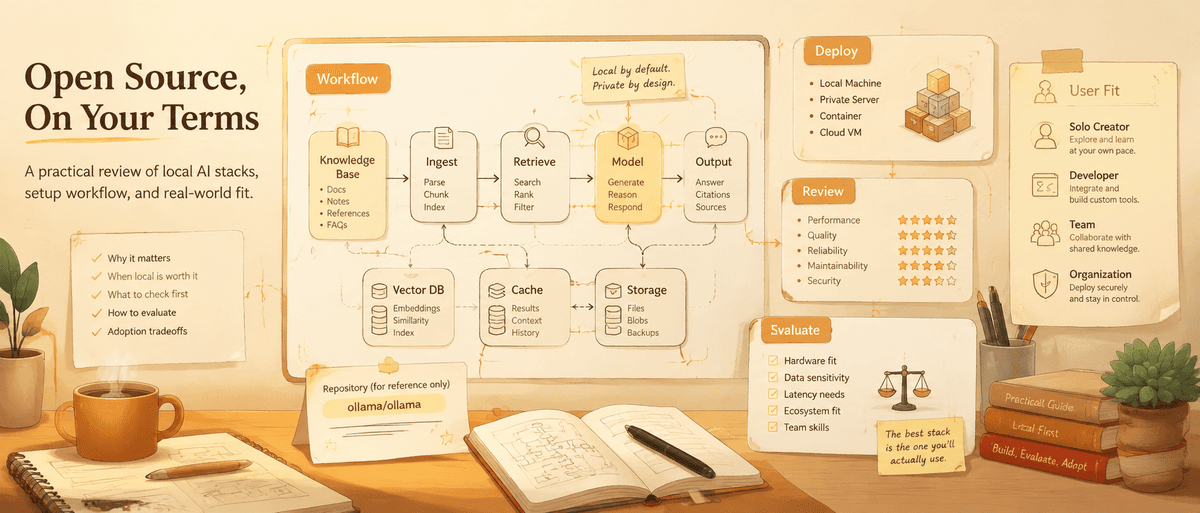
Ollama + Open WebUI: The Local AI Stack Non-Coders Can Actually Understand
A practical guide to why Ollama and Open WebUI keep appearing in social AI discussions, when the local stack is worth it, and what users should check first.
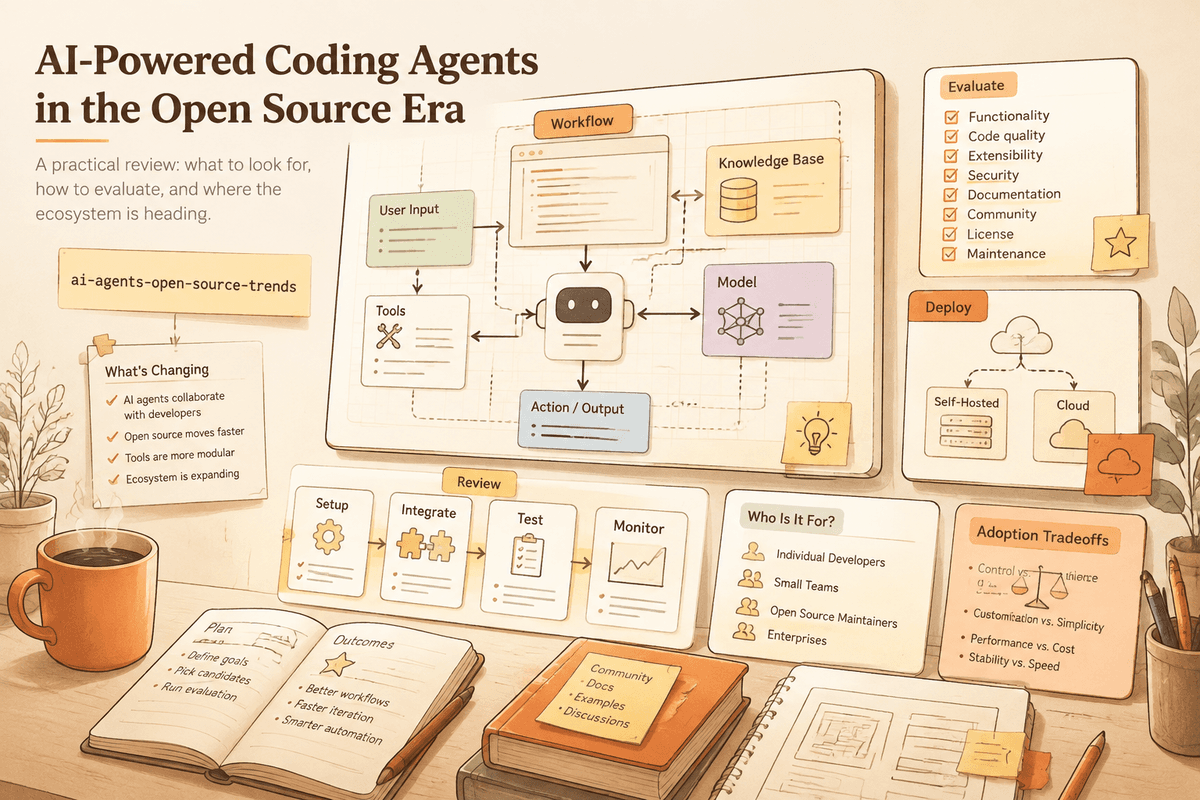
The Rise of AI Agents in Open Source: Trends and Evaluation
How AI-powered coding agents are reshaping the open-source landscape, what to look for when evaluating them, and where the ecosystem is heading.
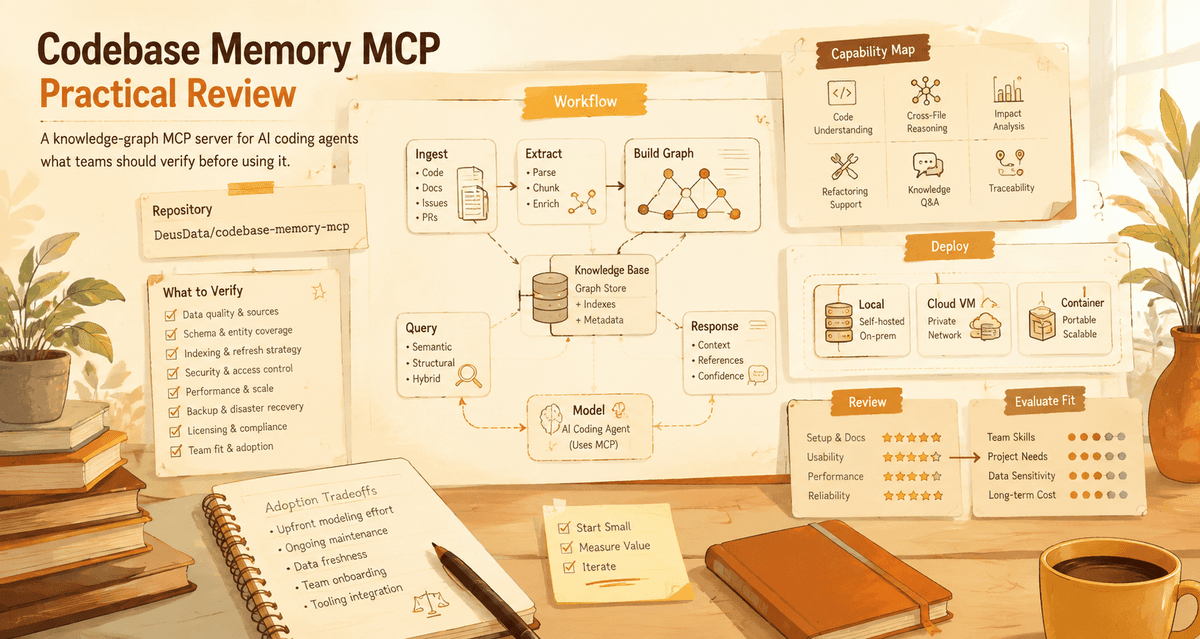
Codebase Memory MCP: Is Code Intelligence Becoming Agent Infrastructure?
A practical review of Codebase Memory MCP, a knowledge-graph MCP server for AI coding agents, and what teams should verify before using it.
Newsletter
Join the community
Subscribe to our newsletter for the latest news and updates