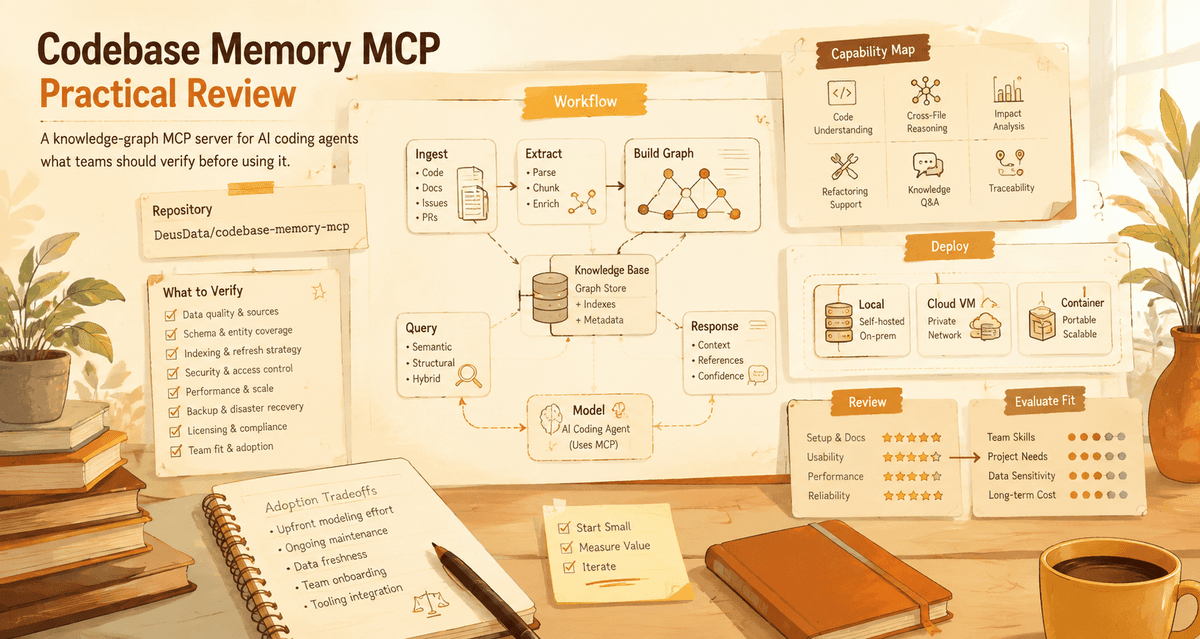
Codebase Memory MCP: Is Code Intelligence Becoming Agent Infrastructure?
A practical review of Codebase Memory MCP, a knowledge-graph MCP server for AI coding agents, and what teams should verify before using it.
AI coding agents often look smarter in small repositories than in real ones. The reason is not only model quality. Large codebases are hard to explore. A useful answer may depend on where a route is declared, which service calls it, which class owns a method, or how a function is reused across packages. Reading files one by one is slow, expensive, and easy to get wrong.
Codebase Memory MCP is interesting because it attacks that problem directly. It describes itself as a high-performance MCP server that indexes a repository into a persistent knowledge graph. Instead of asking an agent to grep blindly through files, it gives the agent structured queries over functions, classes, call chains, routes, and cross-service relationships.
TikHub captured the project in a July 2026 YouTube roundup about AI GitHub repositories that claimed to test popular tools. Another July 31, 2026 roundup framed it as part of the new developer tooling layer for coding agents. When we checked the repository on August 13, 2026, it had about 38,791 stars, 3,090 forks, recent commits, C as its main language, and an MIT license. Its topics include MCP server, model context protocol, tree-sitter, code intelligence, knowledge graph, Codex, Claude Code, Cursor, and developer tools.
The Real Problem It Solves
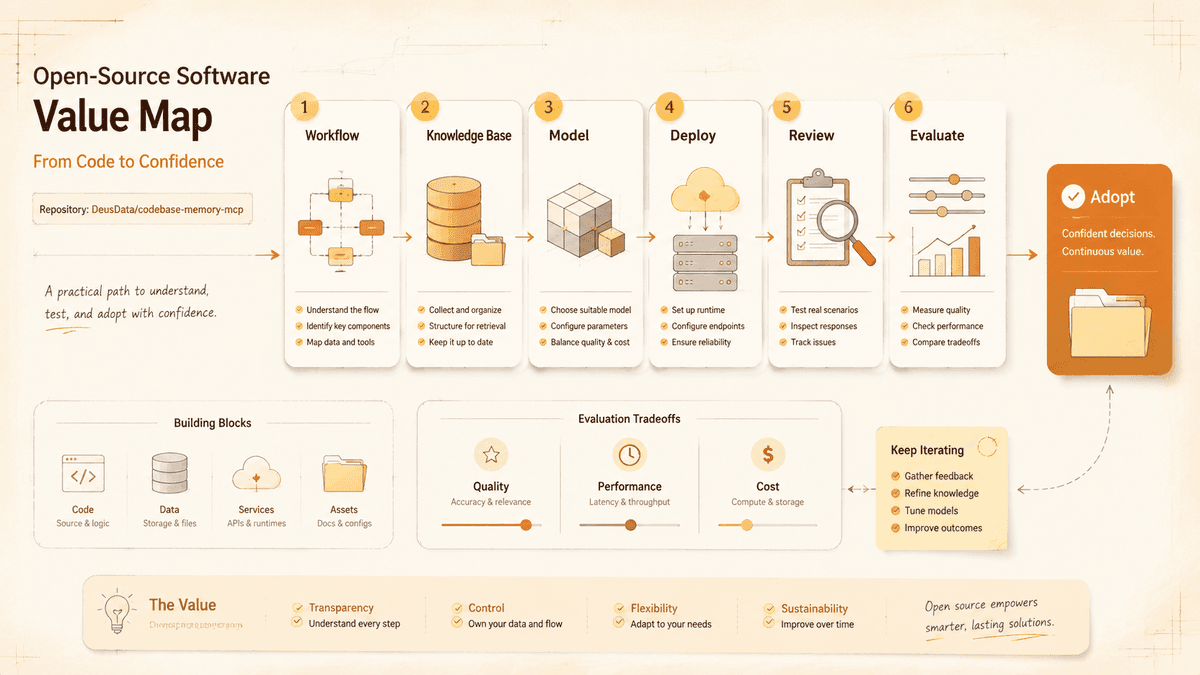
Coding agents need context, but raw context is not enough. A file dump tells the model what text exists. It does not automatically explain dependency structure, call hierarchy, route ownership, or where a symbol is used.
Humans build that map mentally over time. We remember that a billing route calls a service, the service writes through a repository layer, and a shared validation helper appears in three packages. Agents do not have that memory unless the toolchain gives it to them.
Codebase Memory MCP's promise is to make code structure queryable. If the index is accurate, an agent can ask better questions before editing. That can reduce token waste and, more importantly, reduce confident edits in the wrong place.
Why Developers Are Paying Attention
The project sits at the intersection of two trends: MCP adoption and frustration with shallow AI coding. Many AI coding demos succeed because the task fits in a single file. Real maintenance work rarely does.
MCP gives agents a standard way to call local tools. A codebase memory server is a natural fit because it can run close to the repository and expose structured answers without uploading code to a hosted index.
The social pitch is also strong: "99% fewer tokens" and "sub-millisecond queries" are easy to share. Readers should treat those claims as workload dependent, not universal. The important point is still valid: a structured index can be more efficient than repeated file exploration.
Deployment Difficulty
Git-Stars score: Medium
The README positions the project as a native executable with broad platform support. That helps. Users do not need to run a full database cluster or host a cloud service. The hard part is integration: choosing which agent client will use the MCP server, giving it access to the right repository, and understanding what it will modify in agent configuration files.
For developers already using Codex, Claude Code, Cursor, or other MCP-aware tools, deployment should be manageable. The best first test is a small repository you understand well. Ask the agent structural questions, compare answers with your own knowledge, and only then use it on a production codebase.
For non-coders, this is not a first open-source project. It is a helper for people who already work inside repositories. A non-coder can still benefit by asking Codex to install it and explain what the graph says, but the tool's core value is technical.
Commercial Usability
Git-Stars score: High, with local security review
The repository reports an MIT license, which is generally business friendly. The commercial question is less about the license and more about data access. This tool reads your codebase and writes agent configuration. That is expected, but it means teams should treat it as a privileged local developer tool.
The strongest commercial pattern is local or internal deployment. Keep the index near the code, avoid sending private source to third-party services, and review what files the installer changes. If release archives are signed and checksummed as the README describes, verify those checks before rolling it out widely.
Security teams should also define what repositories can be indexed. Internal product code, customer-specific code, and regulated codebases may need different rules.
Capability Ceiling
Git-Stars score: High for code navigation, Medium for product judgment
Codebase Memory MCP can raise the ceiling of coding agents by improving orientation. Better orientation means fewer wasted searches, more accurate impact analysis, and better chances of editing the right files.
It cannot make an agent understand business intent. A knowledge graph can show which function calls which service. It cannot decide whether a product behavior is desirable, whether a migration is politically safe, or whether a user-facing change matches the roadmap.
The tool is strongest for questions like:
- Where is this endpoint handled?
- Which functions call this helper?
- What files will likely be affected by this change?
- Which routes touch this database table?
- Where should a test be added?
It is weaker for ambiguous architecture decisions unless paired with human review and project-specific guidance.
Alternatives and Comparisons
Sourcegraph Cody and similar code intelligence products provide mature hosted or enterprise code search experiences. Codebase Memory MCP is more local and agent-tool oriented.
grep, ripgrep, and IDE search are still excellent for direct text lookup. They are simpler and more transparent, but they do not provide the same structured graph.
RAG over source code can help with semantic search, but source code often needs exact structure. Tree-sitter and language-aware indexing are better aligned with code relationships than embeddings alone.
Headroom attacks a neighboring problem: compressing noisy context before it reaches the model. Codebase Memory MCP focuses on selecting and structuring the right code context in the first place.
Who Should Try It
Teams using AI coding agents on medium or large repositories should watch this category closely. The more files, services, and languages a codebase has, the more valuable structured memory becomes.
Solo developers working in small apps may not need it immediately. If an entire project fits comfortably in an agent's context and the structure is obvious, plain search may be enough.
The project is especially relevant for teams standardizing MCP-based coding workflows. It gives agents a way to ask sharper questions before touching code, which is exactly where many agent failures begin.
Git-Stars Verdict
Codebase Memory MCP is not just another "AI coding" wrapper. It represents a more serious direction: agents need code intelligence infrastructure, not only larger context windows and better prompts.
The adoption decision should be careful but positive. Start locally, verify the index against a repository you know, inspect configuration changes, and compare agent behavior with and without the MCP server. If it reduces blind file exploration and improves impact analysis, it can become a meaningful part of an AI coding stack.
More Insights
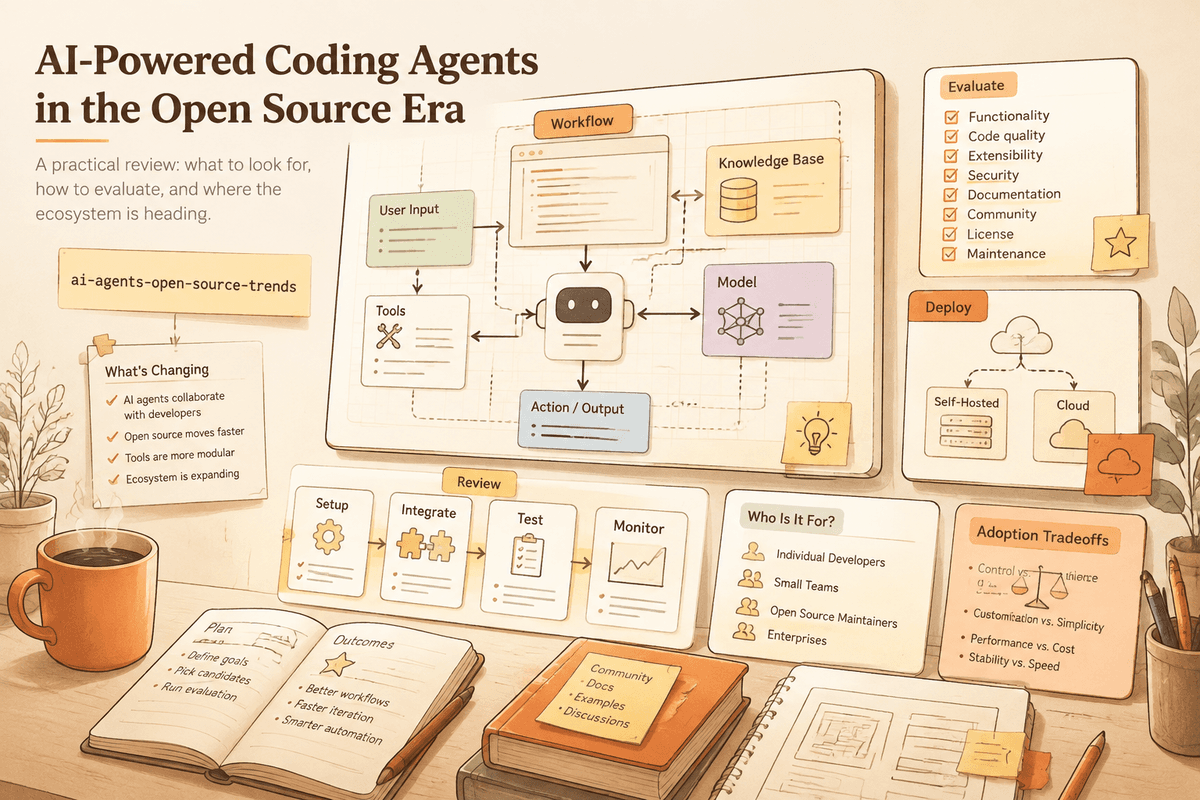
The Rise of AI Agents in Open Source: Trends and Evaluation
How AI-powered coding agents are reshaping the open-source landscape, what to look for when evaluating them, and where the ecosystem is heading.
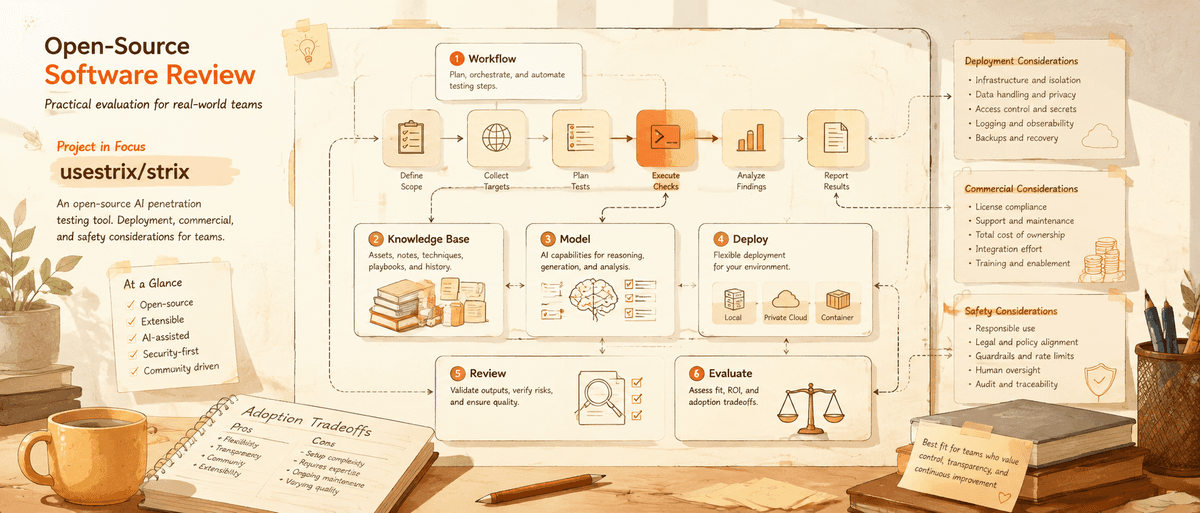
Strix: Where AI Penetration Testing Helps and Where It Needs Guardrails
A practical review of Strix, the open-source AI penetration testing tool, with deployment, commercial, and safety considerations for teams.
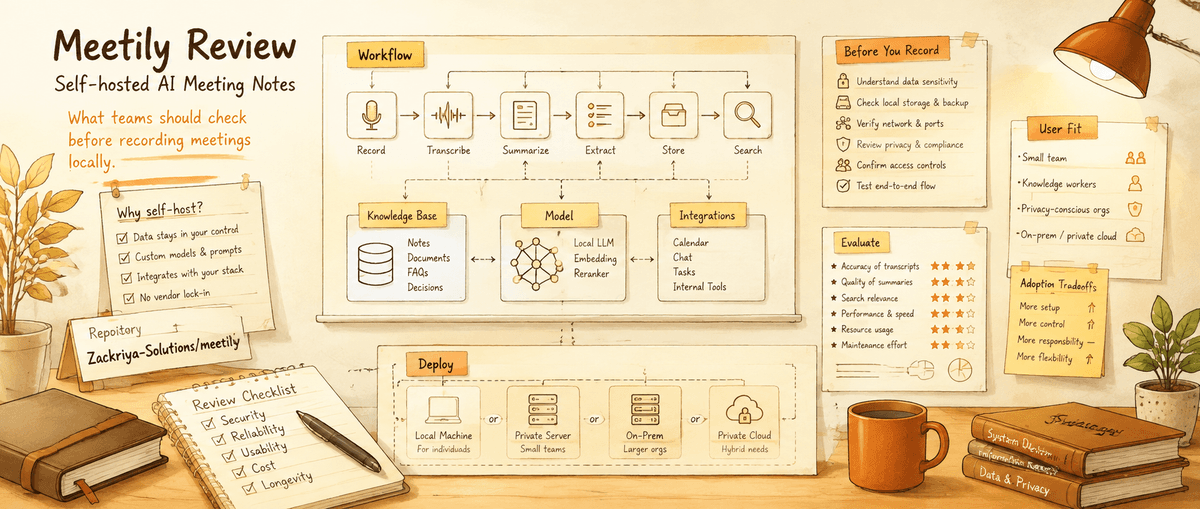
Meetily: Local AI Meeting Notes and the Privacy Trade-Off
A practical review of Meetily, the self-hosted AI meeting note taker, and what teams should check before recording meetings locally.
Newsletter
Join the community
Subscribe to our newsletter for the latest news and updates