Meetily: Local AI Meeting Notes and the Privacy Trade-Off
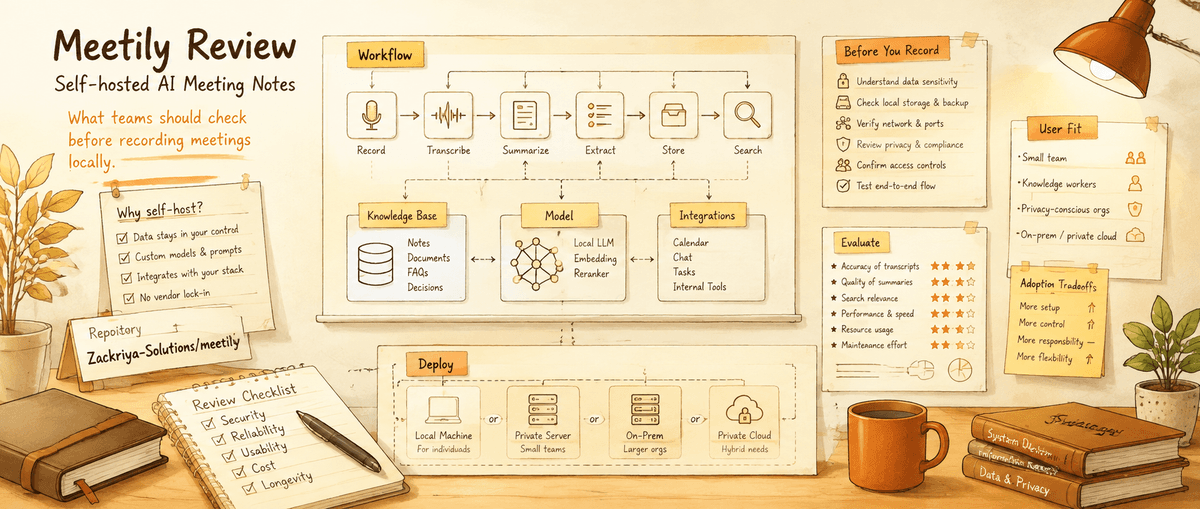
A practical review of Meetily, the self-hosted AI meeting note taker, and what teams should check before recording meetings locally.
Meeting notes are a perfect AI demo and a sensitive data problem at the same time. A useful assistant can transcribe, identify speakers, summarize decisions, and create follow-ups. But meetings often include customer names, financial plans, hiring details, legal concerns, and private strategy. That tension ?high utility, high sensitivity ?is exactly what makes a local-first approach worth evaluating seriously.
That tension makes Meetily worth examining. TikHub captured it in a July 2026 YouTube roundup about AI, privacy, and security focused GitHub repositories. The video had about 6,079 views. When checked on August 13, 2026, Meetily had about 29,029 GitHub stars, 3,069 forks, an MIT license, and recent activity.
The repository describes itself as a privacy-first AI meeting assistant with local processing, live transcription, speaker diarization, and Ollama summarization. That combination is exactly why it spreads: it promises the convenience of meeting AI without sending every conversation to a cloud note taker.
What It Solves
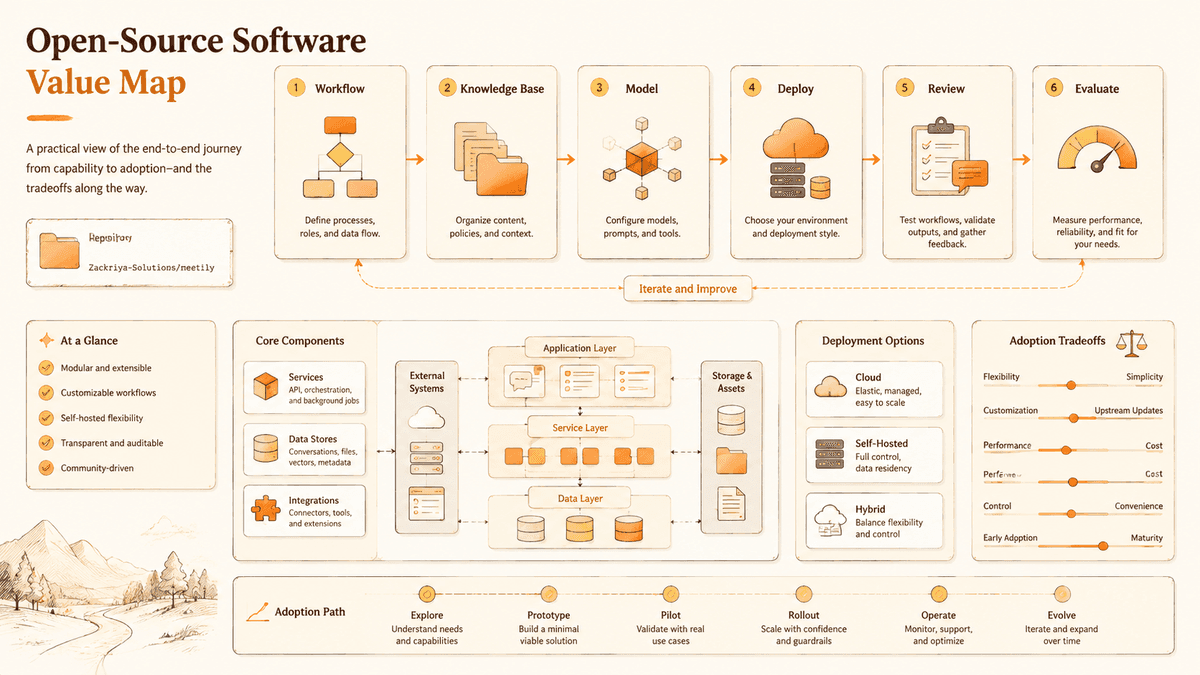
Meetily is for people who want meeting notes but are uncomfortable with fully hosted meeting bots. The user value is straightforward: record a meeting, turn speech into text, identify speakers, summarize the conversation, and keep the workflow local when possible.
That matters for small teams, consultants, founders, legal-adjacent work, health-adjacent workflows, and anyone dealing with sensitive conversations. Even if a team eventually chooses a hosted tool, testing a local option helps them understand what trade-offs they are making.
The project also sits near the local AI trend we covered in Ollama + Open WebUI: users want AI productivity, but they want more control over where data goes.
What Users Actually Report
Meetily (by Zackriya Solutions) has gained traction in the self-hosted community as a "no bot joins the call" alternative to Otter.ai, Fireflies, and other cloud meeting assistants. The v0.0.4 release added meeting history with fully local storage, and the v0.0.3 release brought Windows support ?both driven by community demand.
Users on GitHub Discussions and self-hosting forums report that transcription accuracy with Whisper is "surprisingly good" for clear English meetings with 2? speakers. Accuracy drops with heavy accents, speaker overlap, or poor microphone quality. One common complaint: the initial model download (Whisper large) is 3 GB, which surprises users expecting a lightweight install.
Community patterns from GitHub releases and discussions:
- Captures system audio (Zoom, Meet, Teams) without a bot joining the call ?the most-cited advantage
- Ollama summarization quality depends heavily on model choice; Llama 3.1 8B is the community default
- Speaker diarization works for 2? speakers but struggles above 5
- macOS support is more mature; Windows support arrived in v0.0.3 and still has rough edges
- Users request but do not yet have: calendar integration, auto-record on meeting start, and keyword highlights
The privacy positioning is genuine: audio stays on the local device, and users can verify this by checking network traffic. However, if Ollama is configured with a remote model endpoint, the summarization step will send transcript data externally.
Meetily vs. Alternatives
| Feature | Meetily | Otter.ai | Fireflies | MeetMemo | MeetScribe |
|---|---|---|---|---|---|
| Fully local | Yes | No | No | Yes | Yes |
| Bot joins call | No | Yes | Yes | No | No |
| License | MIT | Proprietary | Proprietary | MIT | MIT |
| Speaker diarization | Yes (Whisper) | Yes | Yes | Yes (pyannote) | Yes (pyannote) |
| Summarization | Ollama (local) | Cloud AI | Cloud AI | Local LLM | Optional |
| Windows support | v0.0.3+ | Yes | Yes | Yes | Linux only |
| Min. disk (with model) | ~4 GB | N/A (cloud) | N/A (cloud) | ~3 GB | ~3 GB |
| Meeting history | v0.0.4+ | Yes | Yes | No | No |
Deployment Difficulty
Git-Stars score: Medium
Meetily is more approachable than a full agent platform but more complex than a simple note app. Audio tools involve microphones, drivers, transcription models, speaker diarization, storage, and summarization models. Each layer can fail differently.
The first test should be small. Use a short non-sensitive recording, confirm that transcription works, check where files are stored, then test summary quality. Do not begin with confidential meetings.
Non-coders should ask Codex to explain three paths before installing: where raw audio is saved, which model does transcription, and whether any part of the workflow calls an external service. Those answers matter more than the feature list.
Commercial Usability
Git-Stars score: High license signal, High privacy responsibility
The repository reports an MIT license, which is generally business-friendly. That makes it suitable for internal experimentation.
But meeting data is sensitive. Commercial use requires consent, retention rules, access control, and clear disclosure to participants. Local processing can reduce exposure, but it does not remove obligations. If audio is stored on a shared machine, if summaries are synced to a cloud folder, or if a model API is used, the privacy story changes.
For teams, the minimum policy should answer: who can record, who can access transcripts, how long files are kept, how participants are notified, and which model processes the data.
Capability Ceiling
Git-Stars score: Medium to High
Meeting tools have a high ceiling because meetings are repetitive and expensive to summarize manually. A good local assistant can save time every week.
The ceiling depends on audio quality, speaker overlap, accents, domain vocabulary, and model choice. If the transcription is weak, the summary will also be weak. If speaker labels are wrong, action items may be assigned to the wrong person.
Compared with hosted meeting assistants, Meetily offers more control but may require more setup and maintenance. Compared with general local AI chat stacks, it has a clearer workflow: audio in, transcript out, summary reviewed by a human.
Who Should Try It
Meetily is worth trying if your team wants local AI meeting notes, values privacy, and can tolerate some setup. It is especially useful for small teams that do not want a cloud bot joining every meeting.
Avoid using it for regulated, legal, medical, or HR meetings until your consent and retention process is clear. A local tool can still create compliance risk if people are recorded without proper notice.
Git-Stars Verdict
Meetily deserves a place in Git-Stars because it makes a common AI workflow more concrete and more responsible. Meeting notes are not just a productivity feature. They are a data-governance decision.
The best reason to try Meetily is not that it is local by default. The best reason is that it forces users to ask the right questions: where does the audio go, who can read the transcript, and what should never be recorded in the first place?
More Insights
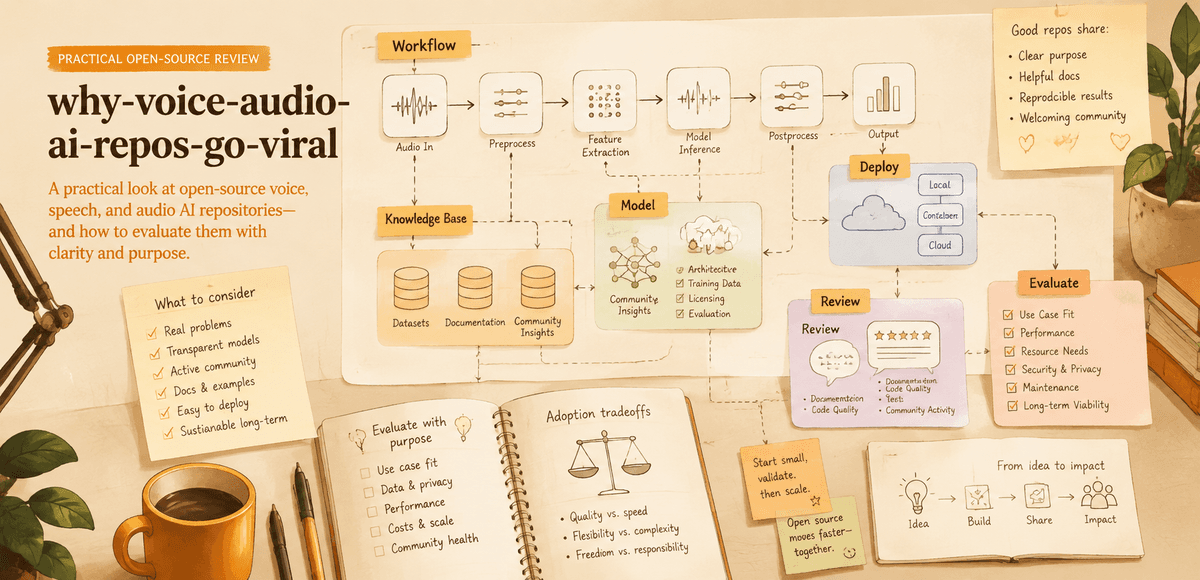
Why Voice and Audio AI Projects Are Becoming Viral
A practical look at why open-source voice, speech, and audio AI repositories attract attention and how users should evaluate them.
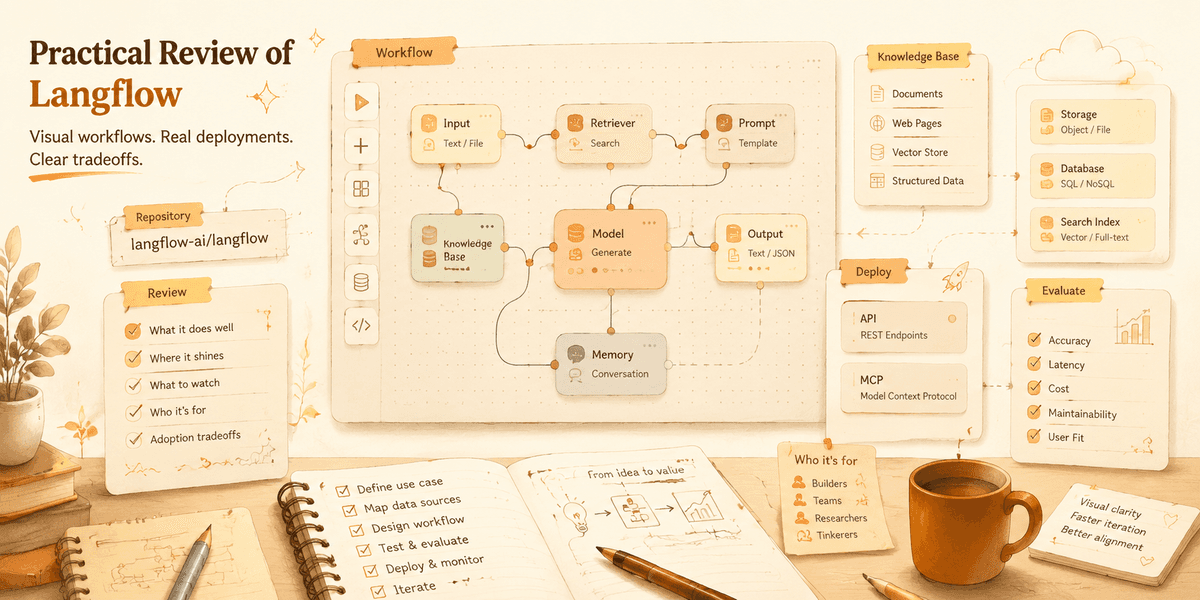
Langflow: Visual Agent Builders Are Useful, But Not Automatic
A practical review of Langflow, its visual workflow model, API and MCP deployment path, and where visual AI builders help or mislead teams.
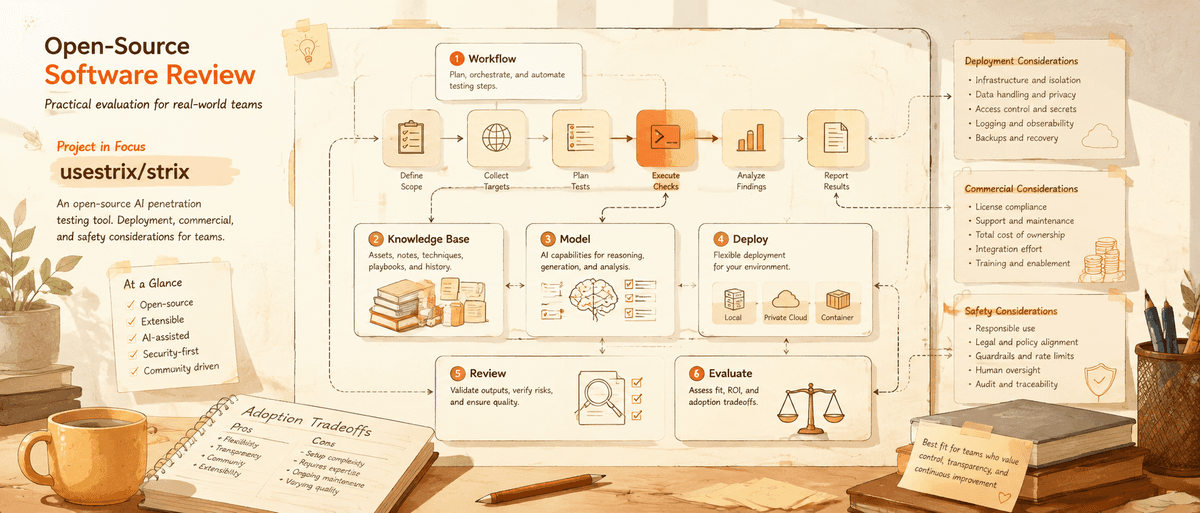
Strix: Where AI Penetration Testing Helps and Where It Needs Guardrails
A practical review of Strix, the open-source AI penetration testing tool, with deployment, commercial, and safety considerations for teams.
Newsletter
Join the community
Subscribe to our newsletter for the latest news and updates