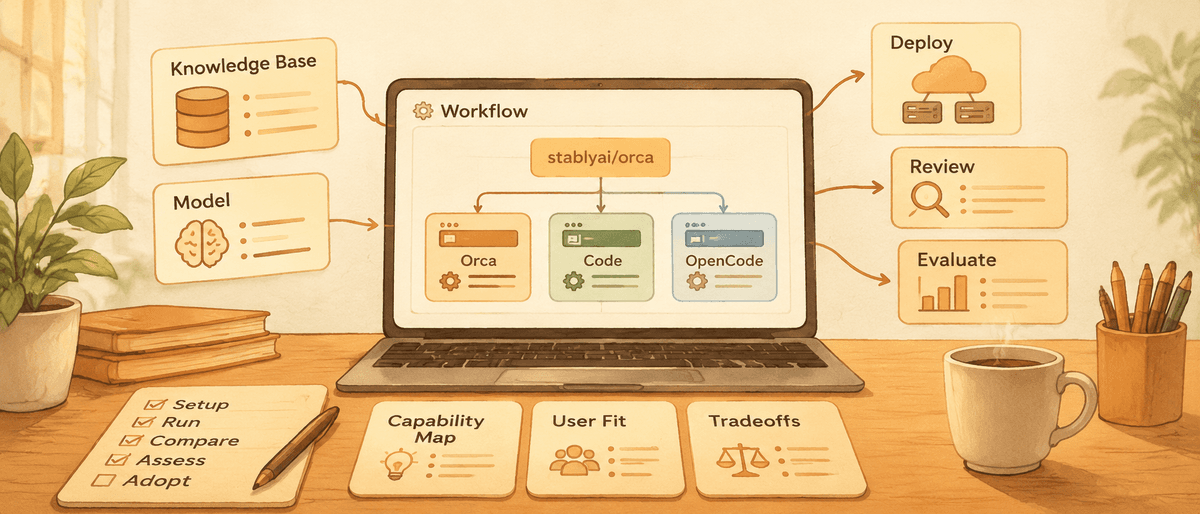
Orca: Do Parallel Coding Agents Need Their Own Workspace?
A practical review of Orca, the agent development environment for running Codex, Claude Code, OpenCode, and other coding agents side by side.
The first wave of AI coding tools made one assistant feel powerful. The next problem is coordination. If one agent can propose a fix, what happens when you want three agents to explore different approaches, each in a clean branch, and then compare the results before merging?
That is the workflow Orca is trying to make normal. It describes itself as an ADE, or agent development environment, for working with a fleet of parallel agents. The repository highlights Codex, Claude Code, OpenCode, Cursor agents, worktrees, terminal splits, desktop and mobile companion workflows, and running agents with your own subscriptions.
TikHub captured Orca in a July 31, 2026 YouTube roundup about AI agents, privacy, and security repositories. The video had 6,079 views when collected. Another July 2026 AI GitHub roundup also listed Orca among tools for parallel agent workflows. When checked on August 13, 2026, Orca had about 44,622 GitHub stars, 3,110 forks, recent commits, TypeScript as its main language, and an MIT license. Its topics include AI agents, agent IDE, parallel agents, worktrees, Codex, Claude Code, OpenCode, and developer tools.
The Real Problem It Solves
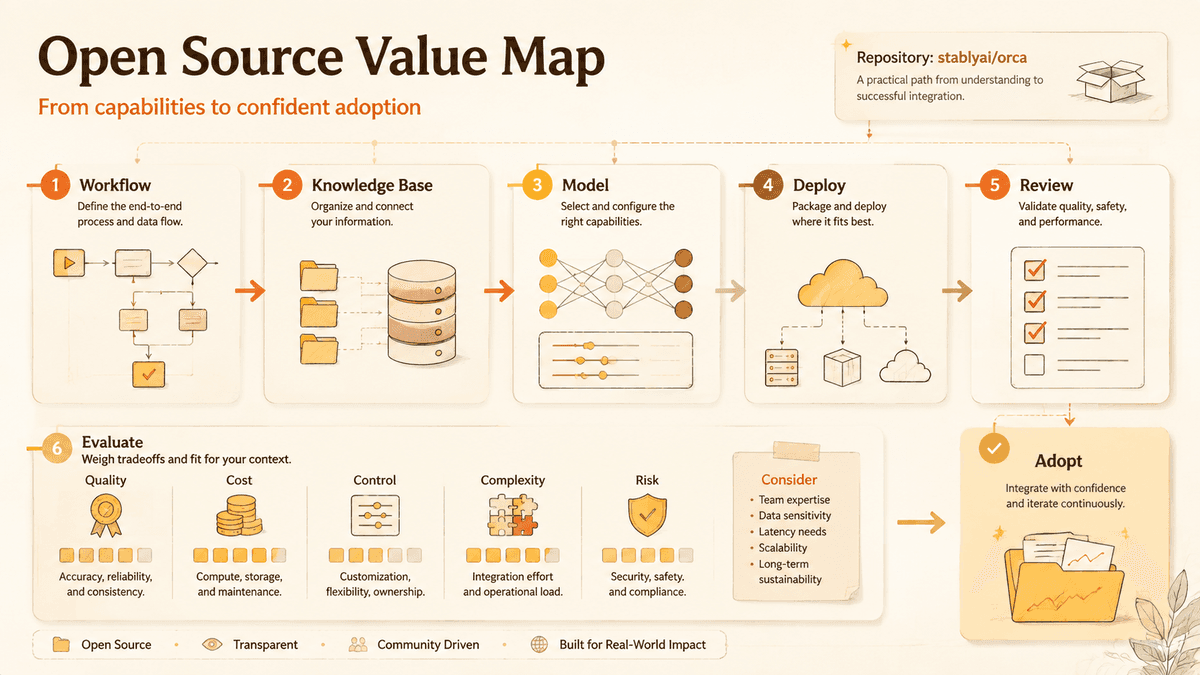
Single-agent coding creates a review problem. You ask for a fix, the agent edits files, and then you must decide whether the answer is good. That works for small tasks. It is less satisfying when the task has several plausible solutions.
Experienced developers often compare approaches mentally: small patch vs. refactor, server-side fix vs. client-side fix, one migration strategy vs. another. Orca turns that instinct into a workflow. Run multiple agents in isolated worktrees, let them attempt the same task, and compare outputs.
This is not only about speed. It is about reducing premature trust. A single agent answer can feel persuasive because it is the only answer in front of you. Parallel agents make trade-offs visible.
Why It Went Social
Orca's social hook is easy to understand: "run several coding agents side by side." It makes AI coding feel less like a chat box and more like a workspace.
That matters because developers are moving from experimentation to operating AI-assisted workflows. Once people use agents daily, they notice practical needs: isolated branches, terminal history, notifications, mobile follow-up, model subscriptions, and a way to merge only the best result.
The project also benefits from a broader shift in AI coding culture. The question is no longer only "Which agent is smartest?" It is "How do I manage agent work safely?" Orca is a product answer to that workflow question.
Deployment Difficulty
Git-Stars score: Medium
Orca looks more approachable than many infrastructure projects because it ships as a desktop-oriented environment rather than a library. The hard part is not understanding the UI. The hard part is understanding the workflow: worktrees, agent subscriptions, repository state, merge review, and task scoping.
For developers familiar with Git worktrees, the concept will feel natural. For developers who mostly use one branch and one IDE, there is a learning curve. Parallel agents can multiply productivity, but they can also multiply messy diffs if prompts are vague.
For non-coders, Orca is easier to visualize than many dev tools but still not a no-code app. A non-coder can use it with help from Codex or Claude, but someone must understand whether the generated changes are safe to merge.
Commercial Usability
Git-Stars score: High for license, Medium for workflow governance
Orca reports an MIT license, which is business friendly. Commercial adoption depends on how a team controls agent access, repository permissions, and model subscriptions.
The "bring your own subscription" model is attractive because it does not force all work through one AI vendor. It also means costs and data policies depend on the agents you connect. A company should document which agents are approved for which repositories.
The safest commercial pattern is internal experimentation first: define task types that agents may attempt, require human review before merge, and use worktrees or branches that make generated changes easy to inspect.
Capability Ceiling
Git-Stars score: High for exploration, Medium for final decisions
Orca's ceiling is high when a task benefits from alternatives. UI refactors, bug fixes with uncertain root causes, test strategy, documentation improvements, and migration plans can all benefit from multiple independent attempts.
The ceiling is lower when a task needs deep product judgment, sensitive production access, or a single carefully coordinated change. Five agents working in parallel can create five plausible but incompatible answers. The human still has to choose.
The most interesting use case is comparative review. Ask several agents to solve the same issue, then use a final agent or human reviewer to compare diffs. That turns AI from "answer generator" into "option generator."
Alternatives and Comparisons
Plain Git worktrees are the foundation. A skilled developer can already create branches, run agents separately, and compare results manually. Orca aims to make that workflow visible and easier to manage.
Codex, Claude Code, and OpenCode are agent engines. Orca is not trying to replace them; it is trying to orchestrate them.
Cursor gives an AI-native coding environment, but it is still primarily a single interactive workspace. Orca focuses more on parallel agent lanes.
CI and review tools remain necessary. Parallel generation does not remove the need for tests, type checks, and human review.
Who Should Try It
Orca is worth trying if you already use coding agents and repeatedly wonder whether a different prompt, model, or strategy would produce a better result. It is especially relevant for developers comfortable with Git and review workflows.
It may be premature if you are still learning one coding assistant. Parallel agents are powerful, but they add coordination overhead. Start with one agent, then add orchestration when comparison becomes valuable.
For Git-Stars, Orca belongs in the AI agent and developer tools categories. It is not just a model wrapper. It is an attempt to build the workspace around agent labor.
Git-Stars Verdict
Orca is valuable because it treats AI coding as a workflow design problem. The future is unlikely to be one perfect agent doing everything. More likely, teams will run several agents, compare outcomes, and keep human review in the loop.
The project is strongest for exploration and comparison. It is weakest if users expect parallel agents to remove responsibility. The right mental model is simple: Orca helps you see more options before you merge. It does not decide which option is correct.
More Insights
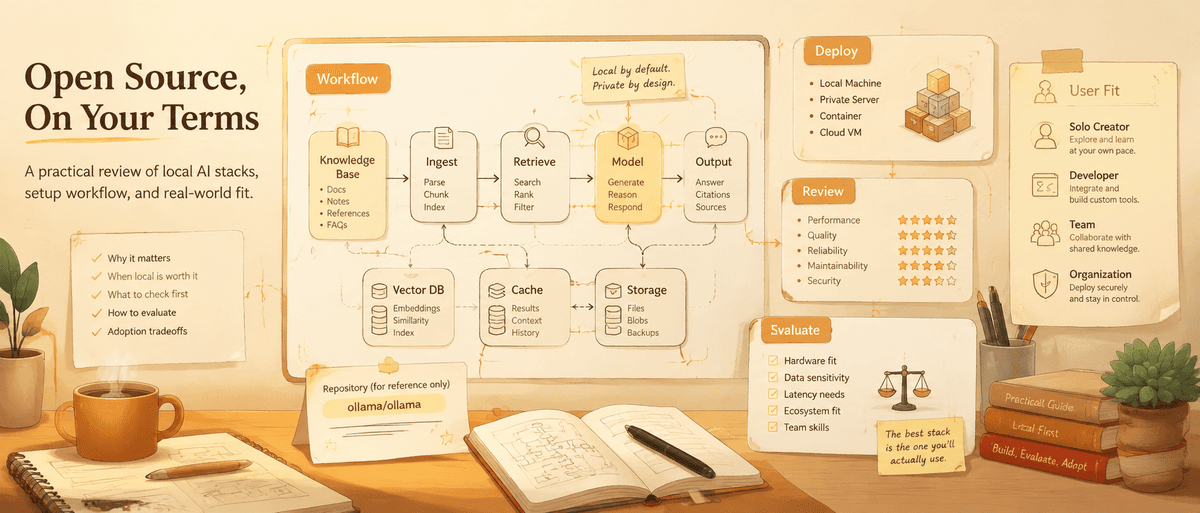
Ollama + Open WebUI: The Local AI Stack Non-Coders Can Actually Understand
A practical guide to why Ollama and Open WebUI keep appearing in social AI discussions, when the local stack is worth it, and what users should check first.
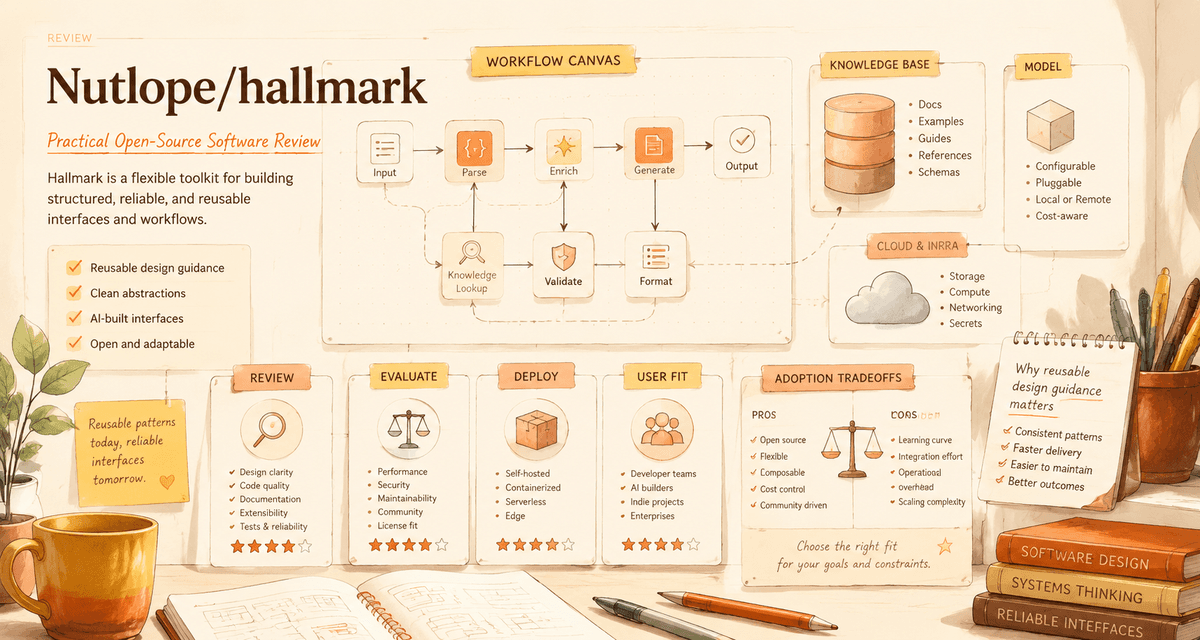
Hallmark and Design Skills: Can Open Source Teach AI Better Taste?
A Git-Stars review of Hallmark, emilkowalski/skills, and why reusable design guidance matters for Codex, Claude Code, and AI-built interfaces.
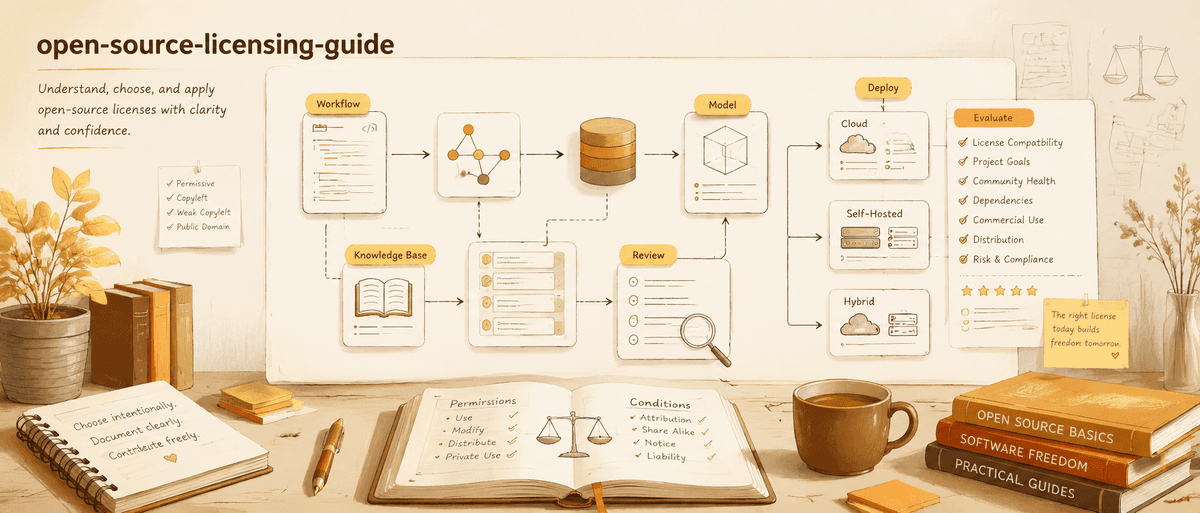
Open-Source Licensing in 2026: A Practical Guide for Developers
Navigate the evolving landscape of open-source licenses, understand what each permits and restricts, and make informed choices for your projects and dependencies.
Newsletter
Join the community
Subscribe to our newsletter for the latest news and updates