Headroom: Context Compression Is Becoming a Real Layer for AI Agents
A Git-Stars analysis of headroom, why token compression matters for coding agents and RAG systems, and where the project fits among MCP and LLM tools.
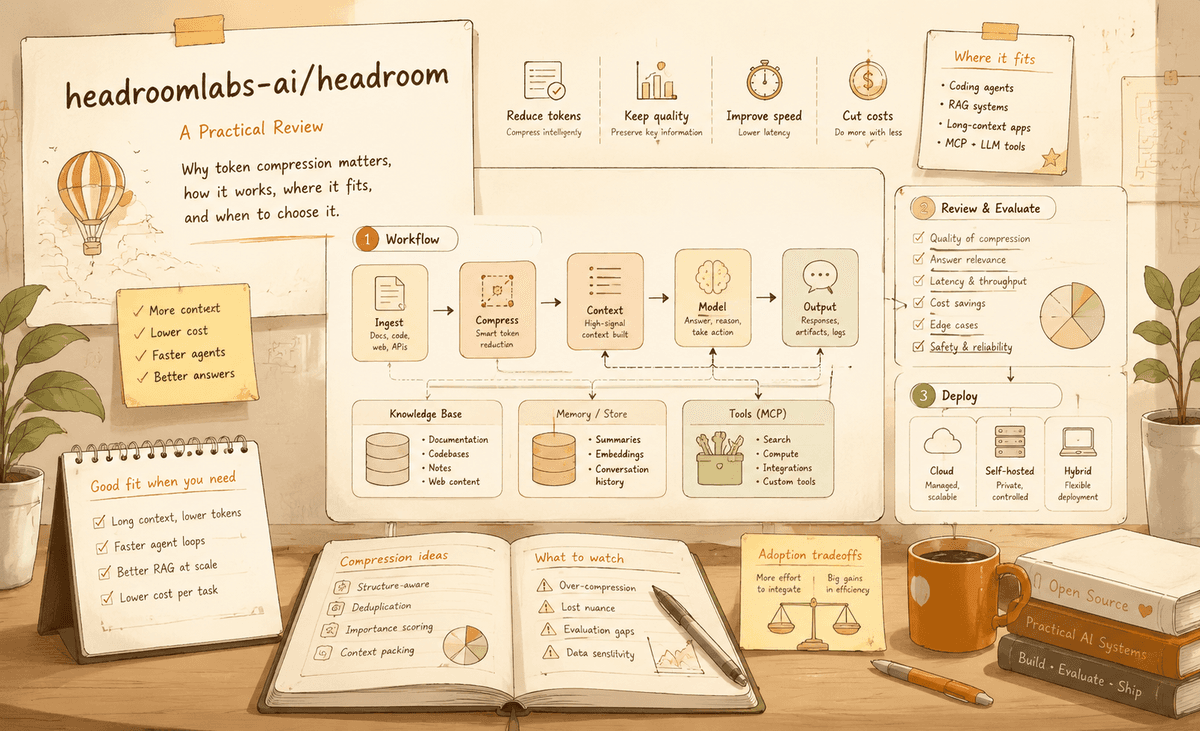
AI agents do not fail only because they lack tools. They fail because the context pipeline between tool outputs and model inference is poorly designed. Logs are too long, JSON responses carry irrelevant metadata, retrieval chunks overlap, and file dumps arrive unfiltered. The result: inflated token counts, degraded attention quality, and higher latency ?all problems that compound in multi-step agent loops.
That makes Headroom worth watching. It describes itself as a way to compress tool outputs, logs, files, and RAG chunks before they reach the LLM. The project appeared in a June 2026 YouTube video about open-source AI projects that TikHub captured with about 148,928 views. Its social placement is revealing: it was not presented as an end-user chatbot, but as a missing layer for people building or operating AI agents.
When checked on August 13, 2026, the repository had about 66,137 GitHub stars, 5,063 forks, an Apache-2.0 license, and recent activity. The topic list included MCP, RAG, context engineering, token optimization, proxy, and coding agents. Those labels match a clear trend: context is becoming infrastructure.
The Problem: More Context Is Not Always Better
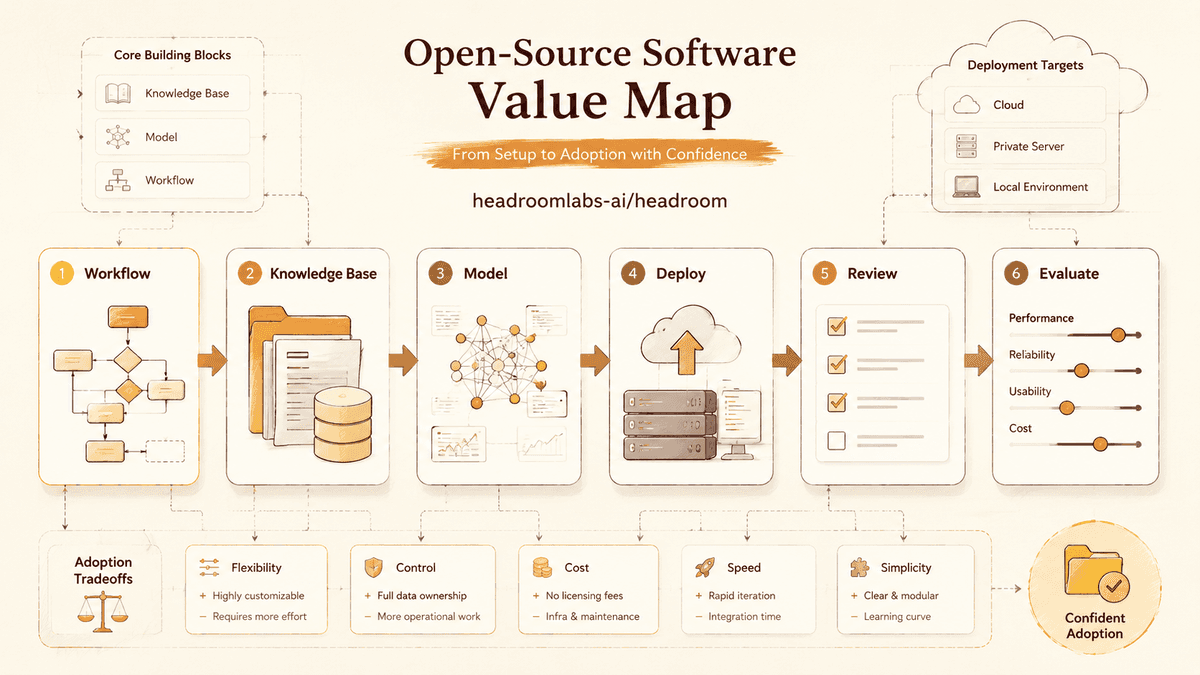
The first generation of LLM apps treated context windows like storage space. If the model could accept more tokens, the system would send more text. That works until cost, latency, and attention quality become problems.
Coding agents show the issue clearly. A build log may contain one useful error and hundreds of lines of repeated output. A repository search may return many near-duplicates. A JSON API response may include metadata the model does not need. Passing everything to the model feels safe, but it can make answers slower, more expensive, and less focused.
Headroom's premise is that context should be prepared before it reaches the model. That is a different layer from retrieval, prompting, or tool execution. It asks: what is the smallest useful representation of this information?
Why Developers Are Paying Attention
The social interest around Headroom is not hard to explain. AI coding tools are spreading, but serious users quickly hit the same wall: the assistant can call tools, but tool results are messy.
This is especially visible with MCP. MCP servers can expose files, browsers, databases, search tools, and SaaS APIs to agents. That is powerful, but it also creates a flood of output. A compression layer can make those tools more useful without changing the underlying model.
The project therefore fits into a broader shift from "prompt engineering" to "context engineering." Prompts still matter, but production systems need retrieval, filtering, compression, routing, evaluation, and observability around the model. Headroom focuses on one of those pieces.
What Users and Reviewers Actually Report
Headroom has drawn attention from both the dev.to and Medium technical communities. A Netflix engineer presented the tool at the Linux Foundation's Open Source Summit North America 2025, claiming production results of 60?5% token reduction on real workloads. Independent reviewers have tested more specific scenarios:
An engineer writing on Medium reported 92% fewer tokens on SRE incident logs with "the same answers" ?but cautioned that the headline is easy to cherry-pick. On structured JSON payloads, compression was closer to 40?0%. On already-concise code files, the savings were minimal and occasionally removed useful context.
Community consensus points:
- Works best on verbose, repetitive tool outputs (build logs, API responses, retrieval dumps)
- Less effective on dense code or already-edited human text
- The proxy mode is the easiest integration path for existing agent setups
- Teams report 3?0x cost reduction on agent loops that previously hit context limits
The most common concern: compression quality is not transparent. Unlike retrieval (where you can inspect chunks), compressed output is harder to debug when answers go wrong. Teams recommend A/B testing compressed vs. uncompressed on critical workflows before committing.
Token Savings by Content Type
| Content Type | Typical Compression | Quality Risk | Best Use Case |
|---|---|---|---|
| Build logs / CI output | 80?5% | Low | Agent debugging loops |
| JSON API responses | 40?0% | Low–Medium | Tool output in MCP |
| RAG retrieval chunks | 30?0% | Medium | Document Q&A pipelines |
| Source code files | 10?0% | High | Avoid or use selectively |
| Conversation history | 50?0% | Medium | Long-running agents |
Deployment Difficulty
Git-Stars score: Medium
Headroom is not a beginner app. The value appears when you already have an agent, a RAG system, or tool outputs worth compressing. If you are simply trying your first AI chatbot, it will feel abstract.
For developers building agent workflows, the setup is more approachable. The repository positions itself as a library, proxy, and MCP server. That gives several integration paths, but also means users must decide where compression belongs: before tool output reaches the agent, inside a retrieval pipeline, or between an API response and the model call.
For non-coders, this is not the first open-source project to install. It is better understood through the tools that benefit from it. If you use Codex or Claude Code and often see long logs, repeated file dumps, or huge JSON output, Headroom explains a real pain even if you do not deploy it yourself.
Commercial Usability
Git-Stars score: High
The repository reports an Apache-2.0 license, which is generally business friendly and includes an explicit patent grant. That makes it attractive for teams building internal AI infrastructure.
Commercial review should still cover data handling. A compression layer may touch logs, code, documents, API payloads, and retrieved chunks. If those contain credentials, customer data, or private source code, the deployment path must be reviewed carefully. The question is not only whether Headroom is open source. The question is where it runs and what information passes through it.
For enterprise use, the strongest pattern is to keep compression close to the system that already has permission to see the data. Avoid introducing a new external service path unless your privacy and security review supports it.
Capability Ceiling
Git-Stars score: High for agent infrastructure, Medium for general users
The ceiling is high because compression compounds across many workflows. If an agent reads logs ten times a day, a better representation of those logs can improve speed, cost, and answer quality repeatedly. If a RAG system sends verbose chunks to the model, compression can help the model focus on the parts that matter.
But Headroom is not a replacement for good retrieval or evaluation. Compressing bad context still produces bad context. If the wrong file is selected, a shorter version of that file does not solve the problem. If a pipeline removes important evidence, compression can become harmful.
The practical ceiling depends on measurement. Teams should compare answer quality, latency, and cost before and after compression. A compression layer is useful only if it preserves the information needed for the task.
Useful Comparisons
Compared with LangChain, Headroom is narrower. LangChain covers agent and app construction; Headroom focuses on preparing context.
Compared with RAGFlow, Headroom is not a full retrieval product. It is a layer that can improve what retrieval or tools send onward.
Compared with agent-skills, Headroom operates at a different level. Skills shape agent behavior. Headroom shapes the information the agent receives. Used together, they attack two common failure modes: poor process and noisy context.
Who Should Watch It
Headroom is most relevant for developers building coding agents, internal AI assistants, RAG systems, MCP servers, or workflow automation that produces large tool outputs. It is also relevant to teams tracking AI infrastructure costs.
It is less relevant if your AI use is mostly short manual prompts, simple chat, or creative writing. In those cases, the overhead may not be worth it.
For Git-Stars, Headroom belongs in the same evaluation family as MCP servers, LLM tools, and agent infrastructure. It is not a consumer app, but it can make consumer-facing AI apps more reliable underneath.
That also connects to the broader pattern we covered in Why AI Agent Repositories Keep Trending on GitHub: the most useful agent projects are increasingly about reliability layers, not only autonomous demos.
Git-Stars Verdict
Headroom is a useful signal of where the AI tooling ecosystem is going. As models become more capable, the bottleneck shifts from "Can the model answer?" to "Did we send the right information in the right shape?"
That is why context compression deserves its own article. It sounds technical, but it affects everyday AI work: faster debugging, cleaner retrieval, fewer wasted tokens, and less noise for agents. Headroom is not the only possible answer, but it is a strong example of the new infrastructure layer forming around serious AI systems.
More Insights
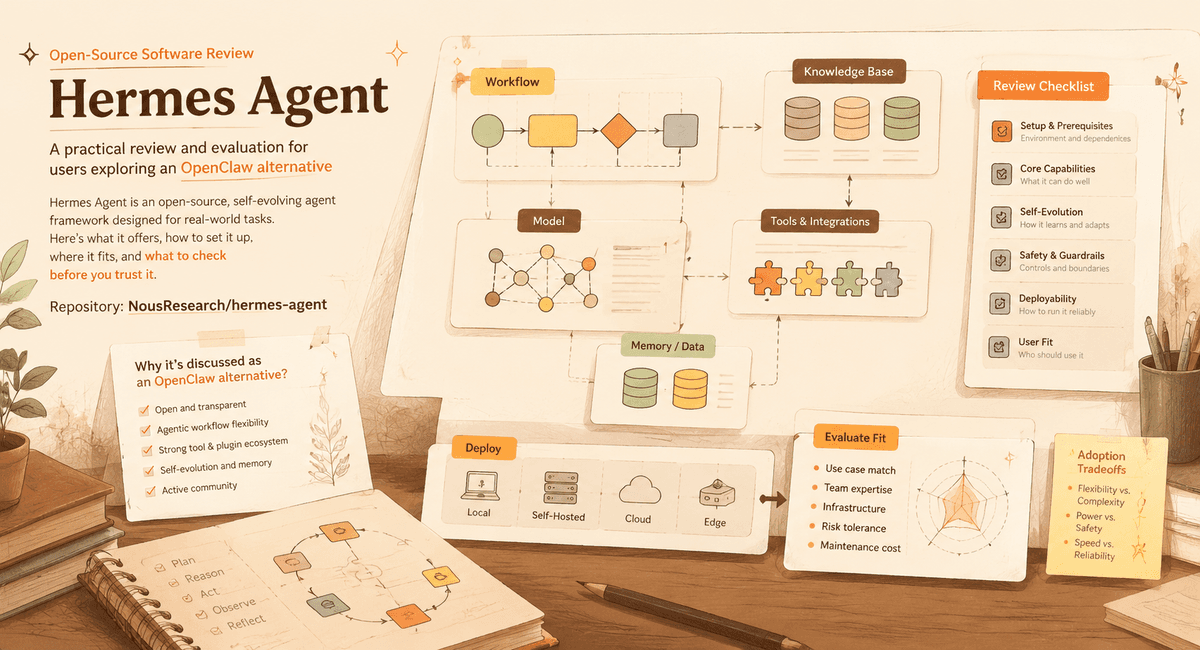
Hermes Agent: Self-Evolving AI Assistant or Another Agent Hype Cycle?
A Git-Stars review of Hermes Agent, why it is being discussed as an OpenClaw alternative, and what users should check before trusting a self-evolving agent.
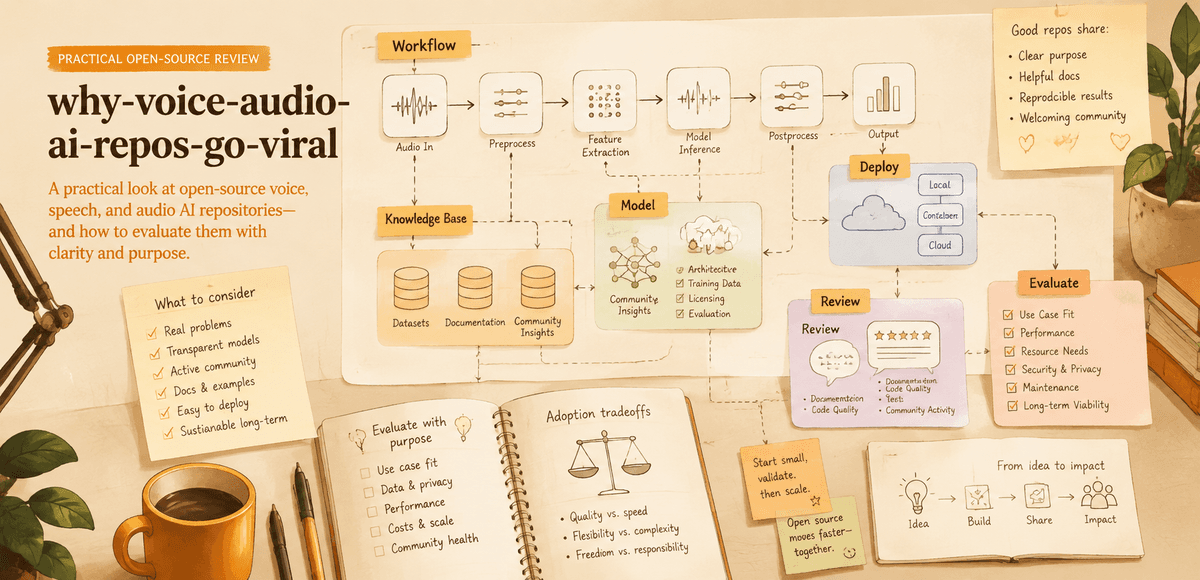
Why Voice and Audio AI Projects Are Becoming Viral
A practical look at why open-source voice, speech, and audio AI repositories attract attention and how users should evaluate them.
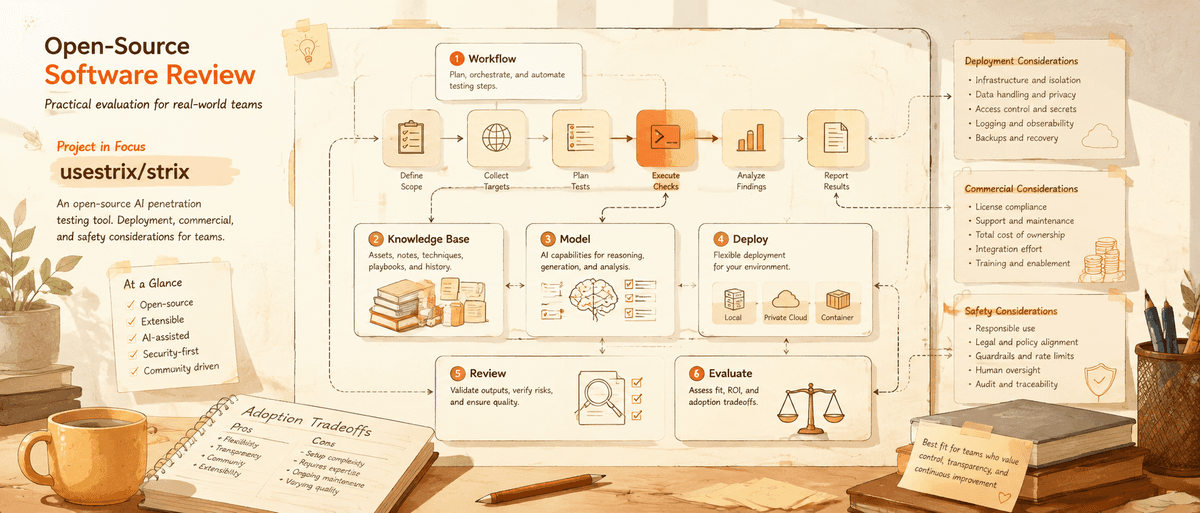
Strix: Where AI Penetration Testing Helps and Where It Needs Guardrails
A practical review of Strix, the open-source AI penetration testing tool, with deployment, commercial, and safety considerations for teams.
Newsletter
Join the community
Subscribe to our newsletter for the latest news and updates