
RAGFlow: Why Retrieval Tools Still Matter in the Agent Era
A practical review of RAGFlow, why RAG remains hard, and what teams should check before adopting a document-heavy AI workflow.
RAG is one of the most overused terms in AI tooling, but the problem behind it is still real. People have documents, PDFs, contracts, manuals, tickets, meeting notes, and internal pages. They want an AI system to answer from that material without inventing unsupported claims.
That is why RAGFlow keeps appearing in social AI discussions. TikHub captured it in a July 2026 YouTube video about AI repositories with 33,282 views, where it was framed as the enterprise-data piece of a self-hosted AI agent stack. Reddit RAG threads are noisier and less structured, but they show the same frustration: many local RAG tools are easy to demo and hard to trust on messy documents.
When checked on August 13, 2026, RAGFlow had about 87,867 GitHub stars, 10,341 forks, recent activity, Go as its main language, and an Apache-2.0 license. Its topics include RAG, agentic retrieval, context engineering, AI agents, and LLM apps. That positioning is important: RAGFlow is not just a chat UI. It is trying to become a context layer.
The Real Problem It Solves
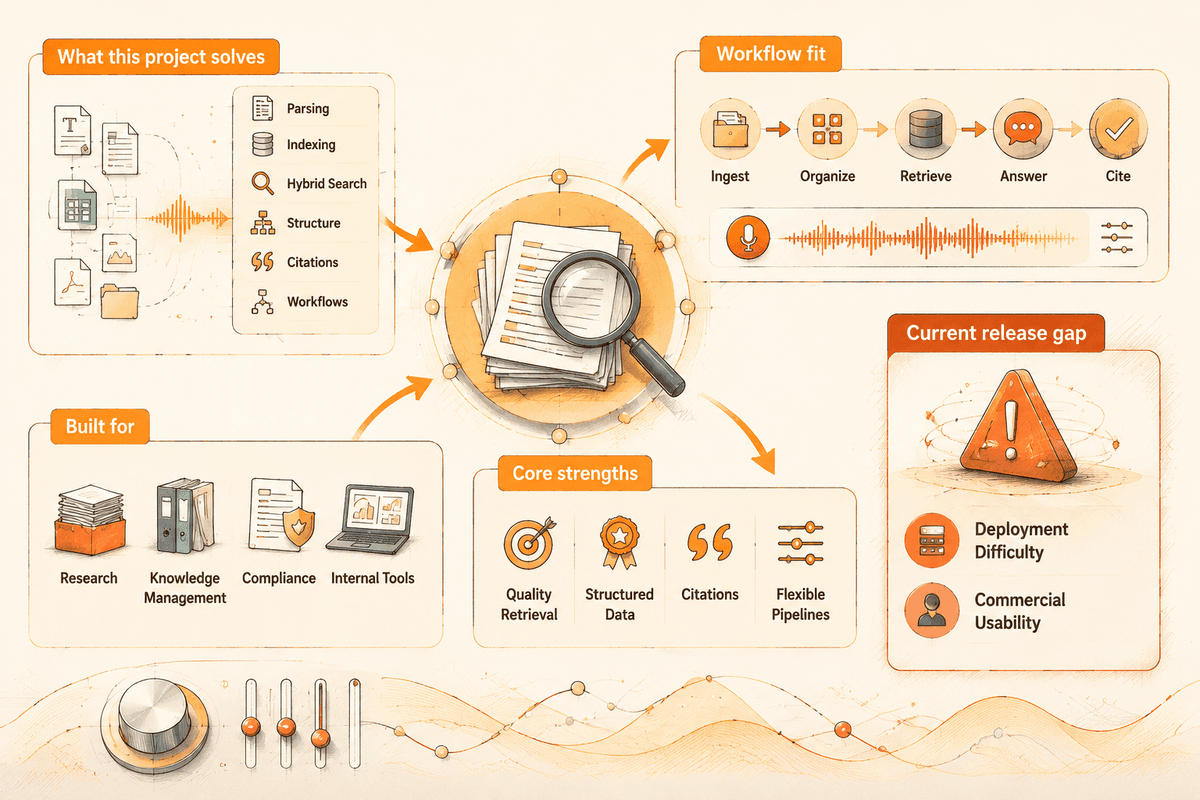
The hard part of RAG is not the chat box. The hard part is getting the right evidence into the model. PDFs can have tables, scanned pages, headers, footers, multi-column layouts, images, and repeated boilerplate. A simple chunking pipeline can lose the structure that made the document meaningful.
RAGFlow focuses on retrieval quality: parsing, indexing, hybrid search, document structure, citation, and workflow around knowledge bases. For teams that need answers grounded in internal files, those details matter more than the model brand.
The practical question is not "Can it answer a demo question?" The better question is "Can users see what evidence supported the answer, and can the system fail gracefully when evidence is missing?"
Why It Went Social
RAGFlow spreads because it connects a familiar pain to a concrete product category. Everyone who has tried document Q&A has seen the failure mode: upload a PDF, ask a reasonable question, receive an answer that sounds confident but misses the relevant page.
Social videos often present RAGFlow as part of an AI agent stack. That framing makes sense. Agents need tools, memory, and retrieval. If retrieval is weak, the agent becomes a faster way to hallucinate.
The caution is that RAGFlow is not a magic "make my documents intelligent" button. It is a system that still requires document preparation, evaluation, permission design, and user training.
Deployment Difficulty
Git-Stars score: High for non-coders, Medium to High for teams
RAGFlow is more serious than a single Python package. It is a product stack. That gives it more capability, but it also means more moving parts: deployment, storage, model providers, embedding models, document ingestion, user access, and operational monitoring.
For developers, Docker-based deployment is realistic, but teams should budget time for configuration and testing. For non-coders, the easiest path is a hosted or assisted setup. If you want to self-host, ask Codex or Claude to inspect the deployment docs, identify required services, and create a step-by-step local checklist before running commands.
The first test should use documents you understand well. Ask questions with known answers, missing answers, tables, and long sections. A RAG system that only succeeds on easy paragraphs is not ready for important work.
Commercial Usability
Git-Stars score: High
RAGFlow reports an Apache-2.0 license, which is generally business friendly and includes a patent grant. That makes the software license easier to approve than many source-available AI tools.
Commercial readiness still depends on the deployment. RAG systems often hold private documents, customer records, contracts, and internal strategy. Teams should decide where embeddings are stored, which model providers see content, who can upload files, and how answers are audited.
The best commercial use case is internal knowledge work with clear permissions: support docs, policy manuals, engineering runbooks, sales enablement, or research libraries. Customer-facing answers need stricter evaluation because a bad citation can become a business problem.
Capability Ceiling
Git-Stars score: High for document-heavy workflows
RAGFlow's ceiling is high because retrieval quality compounds. Better parsing improves indexing. Better indexing improves evidence selection. Better evidence selection improves answers. Better citations improve user trust.
Its ceiling is lower when the source material is poor. If documents are outdated, contradictory, scanned badly, or missing the answer, no RAG product can fully solve the problem. It can expose the weakness, but not invent reliable knowledge.
The most valuable teams will treat RAGFlow as a knowledge product, not only an AI tool. They will maintain documents, evaluate queries, track bad answers, and improve ingestion over time.
Alternatives and Comparisons
Dify can build RAG workflows inside a broader app platform. It may be better when RAG is one part of an AI product.
Langflow is more visual and developer-friendly for experimenting with chains and agents. RAGFlow is more focused on document retrieval.
AnythingLLM is easier for local-first personal or small-team use, but may not offer the same depth for enterprise-style document pipelines.
Open WebUI is familiar for local chat experiences. It can support document features, but RAGFlow is more specialized around retrieval.
Git-Stars Verdict
RAGFlow is worth writing about because RAG remains one of the most practical and most misunderstood AI categories. It is not glamorous, but it determines whether AI systems can answer from real evidence.
Adopt it if your problem is document-heavy and citations matter. Avoid treating it as a simple chatbot install. The teams that benefit most will test retrieval quality, review permissions, and measure answer accuracy before calling it production-ready.
More Insights
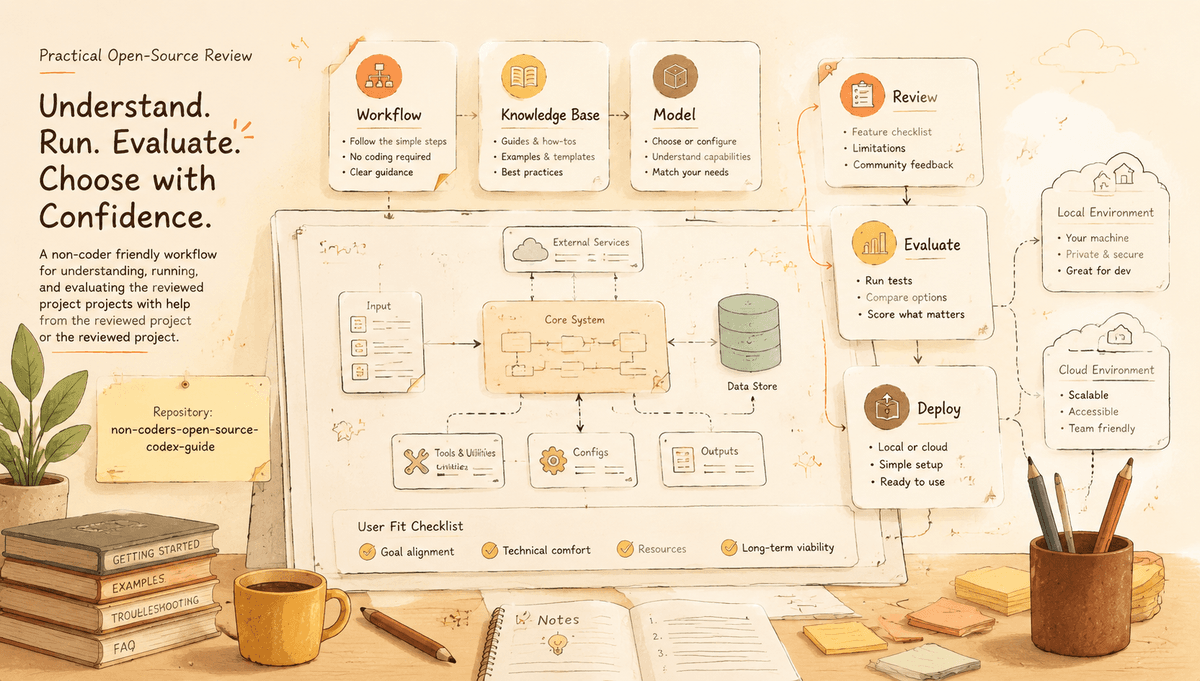
How Non-Coders Can Try Open-Source Tools with Codex
A non-coder friendly workflow for understanding, running, and evaluating GitHub projects with help from Codex or Claude.
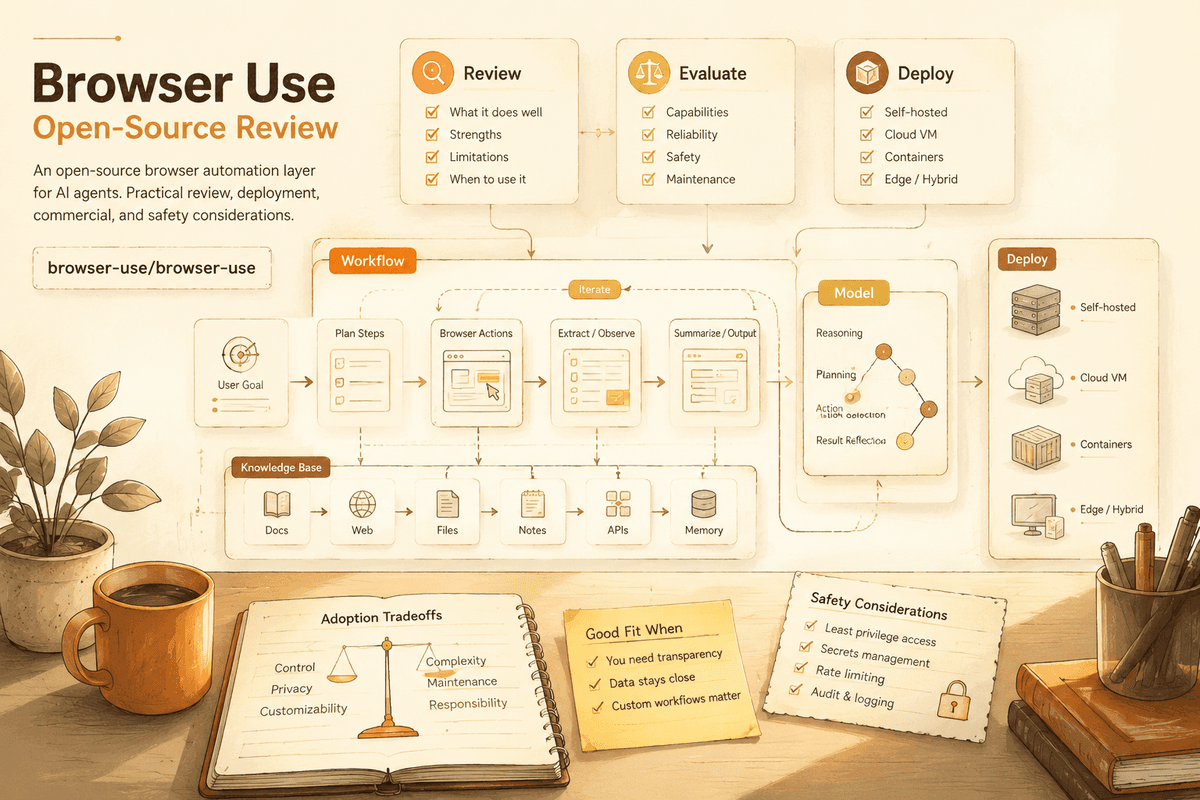
Browser Use: Web Automation Agents Need Permission and Patience
A practical review of Browser Use, the open-source browser automation layer for AI agents, with deployment, commercial, and safety considerations.
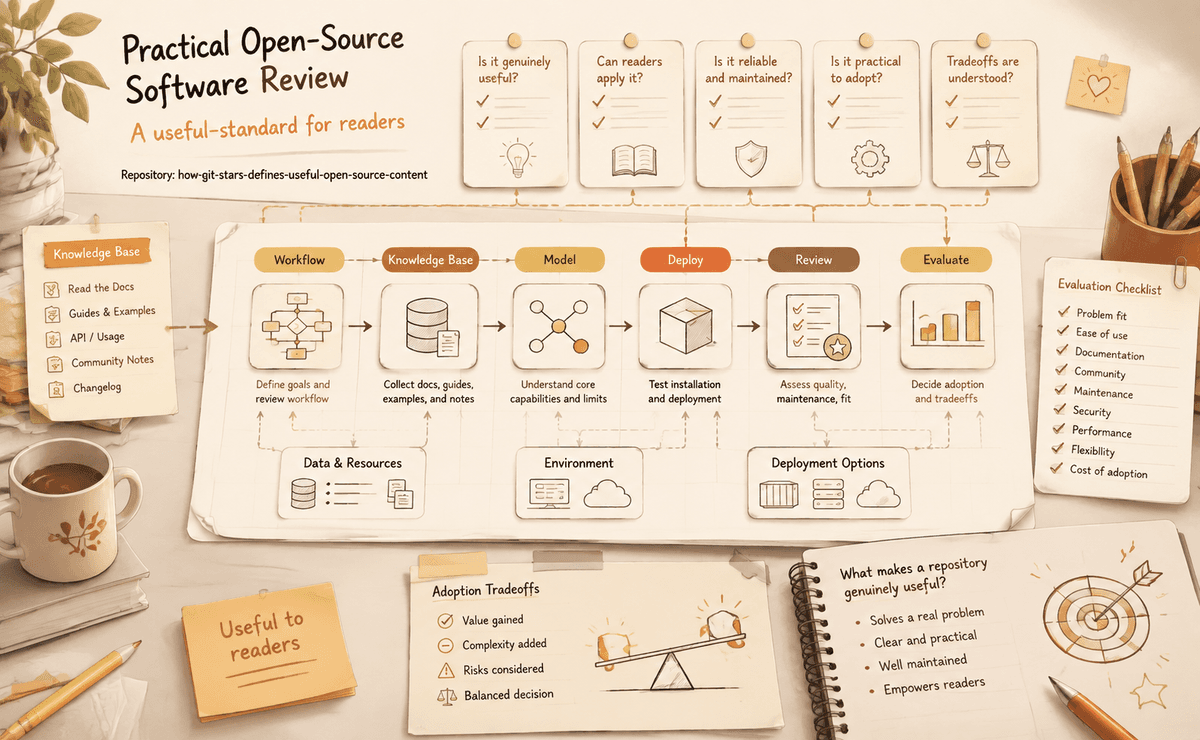
How Git-Stars Defines Useful Open-Source Content
The editorial standard Git-Stars uses to decide whether repository analysis is genuinely useful to readers.
Newsletter
Join the community
Subscribe to our newsletter for the latest news and updates