
OmniRoute: Can a Free AI Gateway Replace Paid Model Routers?
A practical review of OmniRoute, the MIT AI gateway that routes Codex, Claude Code, Cursor, Cline, and other tools across free and paid model providers.
AI coding tools are no longer one app talking to one model. A real workflow may involve Codex for repository edits, Claude Code for long planning, Cursor for interactive coding, Cline for local automation, and smaller models for cheap drafting. Each tool wants API keys, rate limits, model names, provider quirks, and fallback logic.
That is the frustration OmniRoute is trying to package into one product idea: one endpoint that can route requests across many AI providers, including free tiers, while adding quota-aware fallback and token-saving strategies. TikHub captured the project in multiple July 2026 GitHub roundup videos. The strongest source we checked was a July 31, 2026 YouTube roundup about GitHub Trending projects with 6,079 views; a second April 2026 AI GitHub roundup with 2,444 views also included the broader AI gateway and workflow-builder theme.
When checked on August 13, 2026, the repository had about 47,037 GitHub stars, 6,355 forks, recent commits, TypeScript as its main language, and an MIT license. Its topic list included AI gateway, MCP, Codex, Claude Code, Cursor, model-provider proxying, and token-saving workflows. That combination explains why it is spreading: it speaks directly to people who are already juggling several AI subscriptions.
The Real Problem It Solves
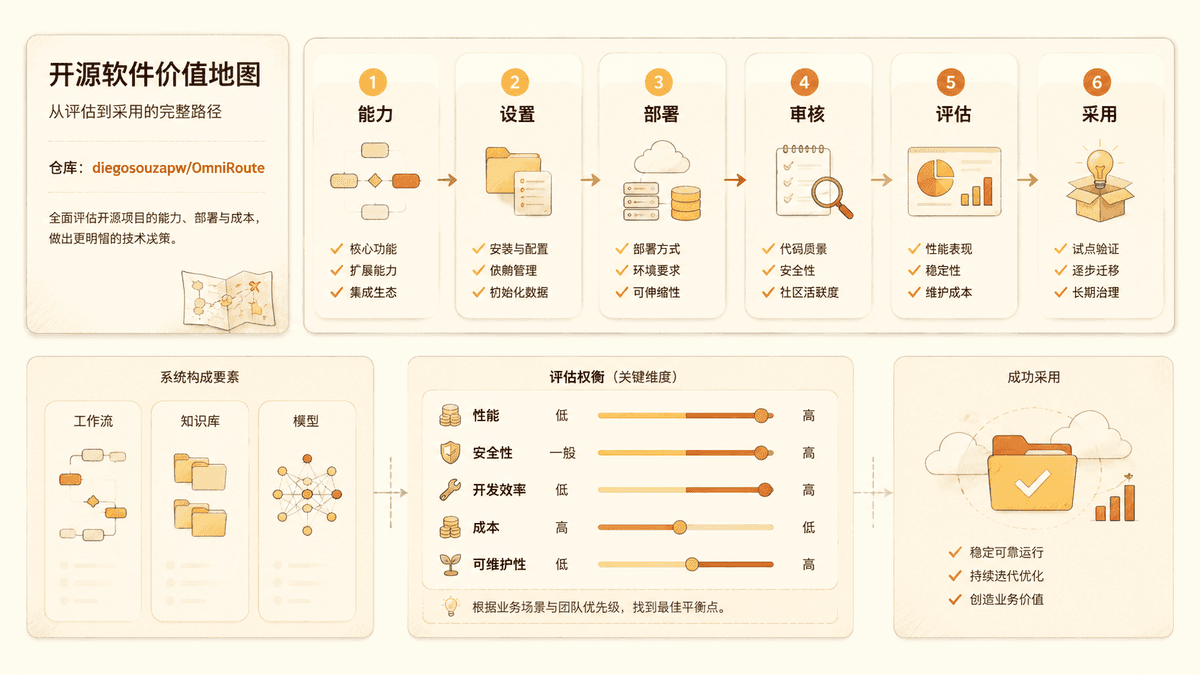
The simple pitch is "free AI routing," but the deeper problem is operational. Developers do not only need access to models. They need a way to keep work moving when one model is slow, one provider hits a quota, another provider is better for a task, and a coding agent expects an OpenAI-compatible endpoint.
Without a gateway, users often solve this with scattered configuration files: one key in a terminal tool, another key in a browser IDE, a third key in a workflow runner, and manual switching when something breaks. That is annoying for one person and messy for a team.
OmniRoute sits in the middle. The value is not that it magically creates free inference. The value is that it turns provider selection, fallback behavior, and budget awareness into a visible layer. For AI coding work, that layer can matter more than raw model benchmarks because the best model is useless if the request never completes.
Why It Went Social
OmniRoute has a shareable promise: "connect your AI tools to one gateway and stop worrying about limits." That is easy to understand even for people who do not run production infrastructure.
The social hook also lands at the right time. Developers are experimenting with AI agents but becoming more cost-aware. A weekend project can burn through a surprising number of tokens when an agent reads files, retries commands, and generates tests. A gateway that claims quota-aware routing and token compression therefore feels practical rather than theoretical.
The more mature reading is less dramatic: OmniRoute is not proof of free unlimited AI. It is an attempt to centralize provider choice. That is still useful, but readers should separate routing convenience from the economics of the underlying providers.
Deployment Difficulty
Git-Stars score: Medium
OmniRoute is easier to understand than to evaluate. The idea is simple: point tools at a gateway. The actual setup depends on which clients you want to use, which providers you configure, how you store API keys, and whether the gateway runs locally, on a server, or as a desktop/PWA-style tool.
For developers, the setup is approachable if you already know environment
variables, local services, and model provider keys. For non-coders, it is not a
one-click consumer app. The safest path is to ask Codex or Claude to inspect
the README, list required keys, create a .env file from the example, and run
the local start command step by step.
The first deployment question should be: where will secrets live? A model gateway often holds multiple provider keys. If it is exposed on a public host without authentication, the risk is obvious. Keep it local until you understand the access model.
Commercial Usability
Git-Stars score: High for code license, Medium for provider terms
The repository reports an MIT license, which is permissive and business friendly for the gateway software itself. That does not mean every routed model or free tier is commercially unrestricted.
This distinction is important. A gateway can be open source while the providers behind it have separate pricing, usage, retention, safety, or redistribution terms. If a business uses OmniRoute, the legal review should cover each provider it enables, not only the repository license.
The strongest commercial use case is internal developer tooling: one team-owned gateway, approved providers, cost visibility, and documented fallback rules. The weakest use case is reselling "free AI" to end users without checking provider terms. The project can reduce friction, but it cannot remove vendor obligations.
Capability Ceiling
Git-Stars score: High for routing, Medium for model quality
OmniRoute's ceiling depends on how well it handles boring operational details: provider health, quota state, request compatibility, model naming, logging, token usage, and safe key management. If those pieces work, it can become a useful control plane for AI coding workflows.
It does not raise the capability of the underlying models. A weak model routed through a good gateway remains a weak model. A task that requires a strong reasoning model still needs the right provider. The gateway helps choose and fallback; it does not replace judgment.
For advanced users, the most interesting ceiling is policy. A team could route cheap drafting tasks to low-cost models, sensitive code tasks to approved providers, and long exploratory tasks to models with better context windows. That turns model choice from a personal habit into infrastructure.
Alternatives and Comparisons
OpenRouter is the obvious comparison. It offers a hosted model routing marketplace with many providers and polished billing. OmniRoute is more self-managed and open-source oriented.
Portkey is closer to production AI gateway infrastructure, with observability and governance concerns. OmniRoute feels more developer-first and coding-tool focused.
LiteLLM is a strong technical alternative for teams that want an OpenAI-compatible proxy across providers. It may be less socially packaged, but it is mature in production AI stacks.
Direct provider SDKs remain best when you only use one or two models and do not need fallback. Adding a gateway too early can create complexity.
Who Should Try It
OmniRoute is worth watching if you already use several AI coding tools, hit rate limits often, or want one place to manage provider access. It is also interesting for small teams trying to standardize AI tool configuration without building their own router.
It is probably too much if you only use ChatGPT or one hosted coding assistant. It is also not a shortcut around paid AI. Free tiers can change, provider terms matter, and reliability still depends on external services.
For Git-Stars, OmniRoute belongs in the same family as LLM gateways, MCP infrastructure, and AI developer tooling. The project is valuable because it turns a messy everyday workflow into a visible layer. The adoption decision should be practical: if provider switching is already painful, a gateway can help. If not, wait until the pain is real.
Git-Stars Verdict
OmniRoute is a useful project because it addresses the unglamorous side of AI adoption: routing, quotas, provider sprawl, and cost visibility. Its MIT license is friendly, its social pitch is strong, and its GitHub activity shows real momentum.
The main caution is not technical hype but operational trust. A gateway that touches many provider keys becomes important infrastructure. Treat it that way: deploy locally first, review provider terms, limit network exposure, and test fallback behavior before relying on it for serious work.
That is also the broader lesson for AI gateway projects. The winner is not the one with the loudest "free tokens" claim. The winner is the one that helps developers keep working with fewer surprises.
更多洞察
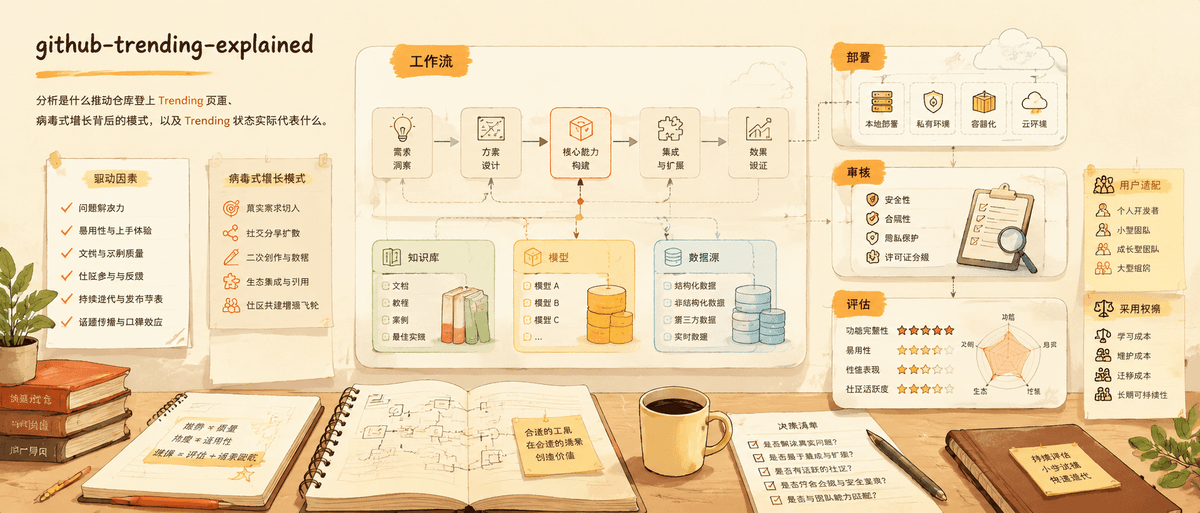
GitHub Trending 解析:仓库如何走红
分析是什么推动仓库登上 GitHub Trending 页面、病毒式增长背后的模式,以及 Trending 状态实际代表什么。

How to Estimate Deployment Difficulty Before You Clone a Repo
A practical framework for predicting whether a GitHub project will be easy, moderate, or difficult to deploy.
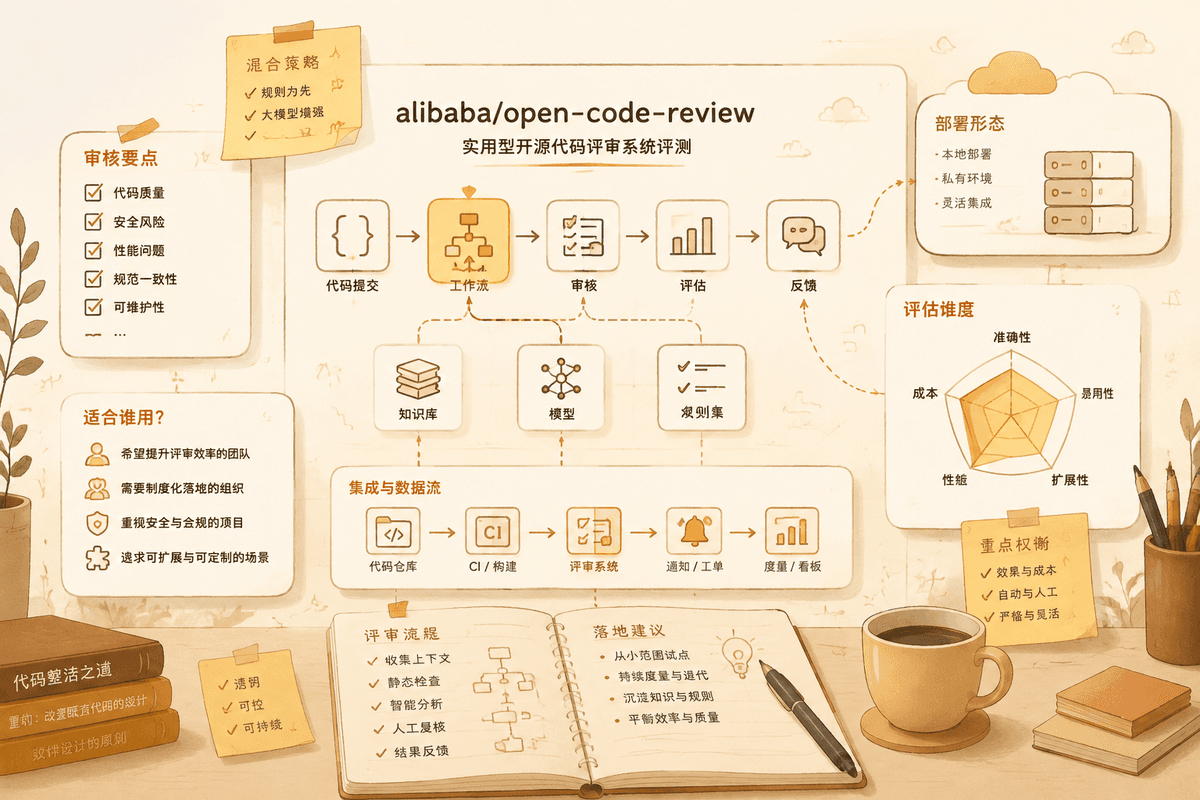
Alibaba Open Code Review: Where AI Review Helps and Where It Should Slow Down
A practical evaluation of Alibaba Open Code Review, its hybrid rules plus LLM approach, and the real limits of AI-assisted code review.
邮件列表
加入我们的社区
订阅邮件列表,及时获取最新消息和更新